A Portrait Steeped in Resilience: Exploring Frida Kahlo’s “Retrato de Don Guillermo Kahlo”
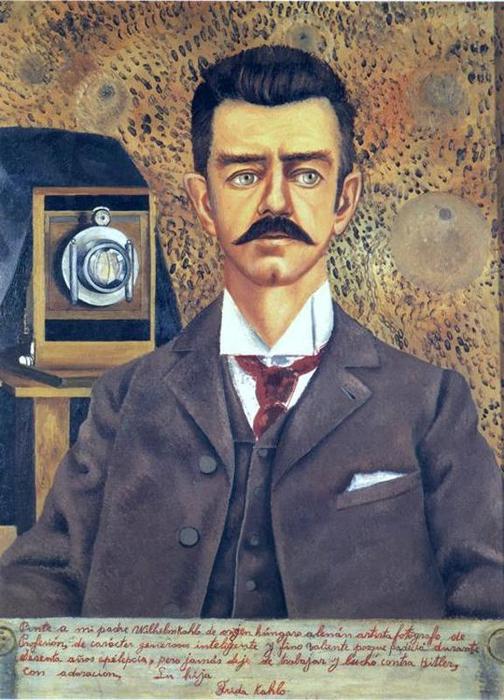
Frida Kahlo's "Retrato de Don Guillermo Kahlo" transcends mere representation; it embodies the artist’s profound engagement with themes of identity, pain, and memory—elements inextricably linked to her own tumultuous life experience. Painted sometime between 1947 and 1950 during a period marked by considerable physical hardship following a serious bus accident that shattered her pelvis, this self-portrait offers a glimpse into Kahlo’s inner world as much as it portrays her father's likeness. The painting isn’t simply a depiction of a man; it’s an assertion of presence, a deliberate act of confronting vulnerability and asserting strength amidst adversity.
- Subject Matter & Composition: The central figure—Kahlo herself—dominates the canvas with unwavering gaze, positioned centrally against a muted backdrop that emphasizes her solitude. Her father, Guillermo Kahlo, is rendered in profile on the left side of the composition, creating a dynamic interplay between stillness and observation. Two clocks are strategically placed – one high up on the right corner and another low down on the left—a recurring motif in Kahlo’s oeuvre symbolizing time, mortality, and the inescapable passage of experience.
- Style & Technique: Kahlo's signature Surrealist style is evident in the painting’s dreamlike quality. She employed meticulous detail to capture her father’s facial features, utilizing a technique reminiscent of photographic portraiture—a conscious choice reflecting her fascination with documenting reality and confronting trauma. The subdued color palette contributes to the melancholic mood, highlighting Kahlo's preoccupation with introspection.
Historical Context: Navigating Trauma Through Artistic Expression
Kahlo’s artistic output was profoundly shaped by her physical suffering—a consequence of polio and subsequent surgeries necessitated by the accident. Rather than shying away from pain, she transformed it into a catalyst for creativity, channeling her emotional turmoil into symbolic imagery that speaks to universal themes of resilience and self-awareness. The painting reflects the broader Surrealist movement’s exploration of subconsciousness and psychological landscapes—artists like René Magritte and Salvador Dalí similarly interrogated reality through fantastical visions.
- Symbolism: The clocks serve as potent symbols of time's relentless march, reminding viewers of Kahlo’s own mortality and the fragility of existence. They also represent a preoccupation with remembering—a desire to preserve moments of experience against the erasure of time. Kahlo’s gaze is unwavering, conveying determination and confronting pain head-on – an embodiment of her spirit.
Emotional Impact & Artistic Legacy
“Retrato de Don Guillermo Kahlo” resonates deeply with audiences due to its unflinching honesty and vulnerability. It’s a portrait not just of a man, but of a woman grappling with profound personal challenges—a testament to Kahlo's ability to transform suffering into artful contemplation. The painting continues to inspire artists and collectors alike, cementing Kahlo’s place as one of the most iconic figures in 20th-century art – an artist who bravely faced adversity and transformed pain into enduring beauty.