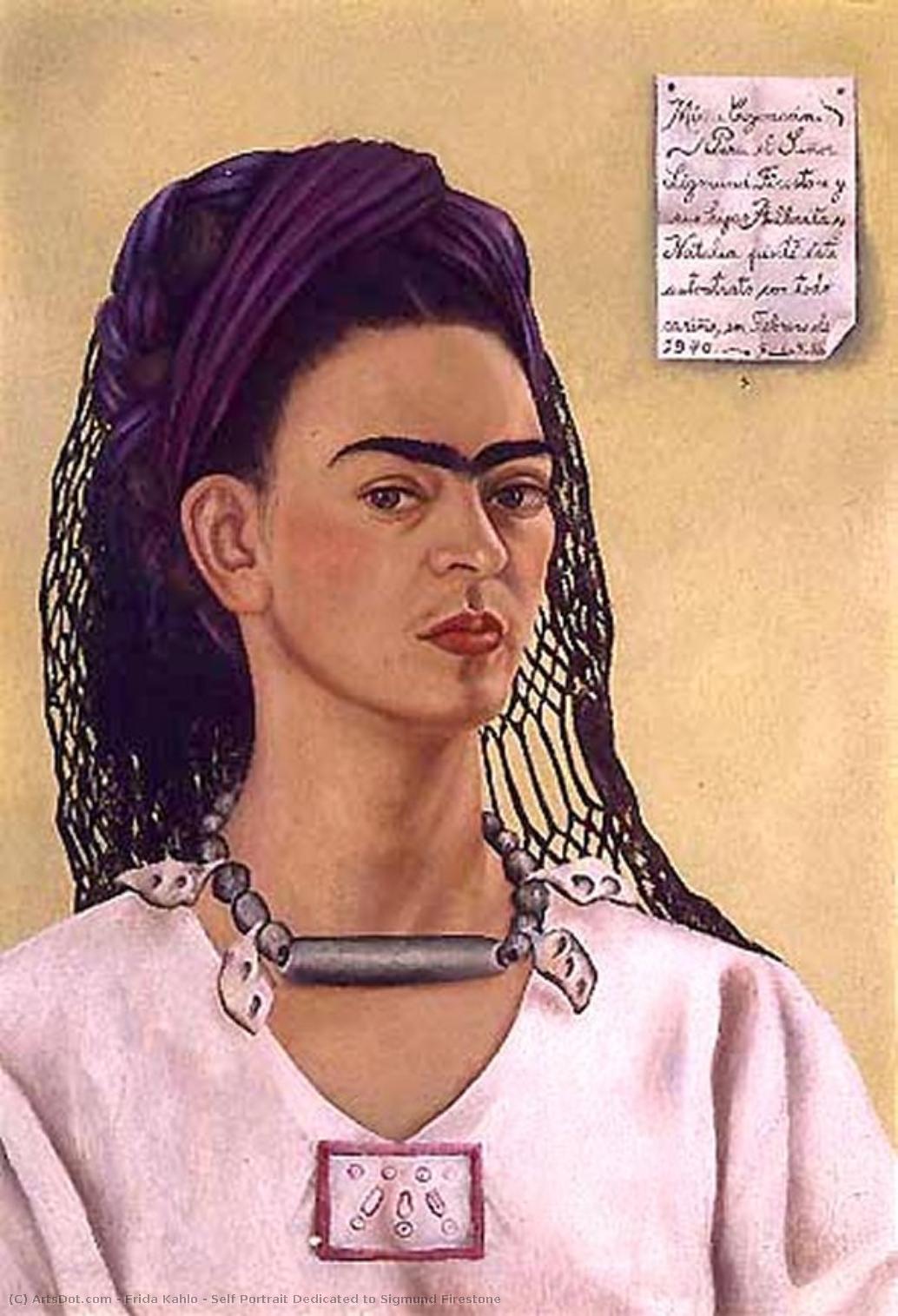
A Portrait of Resilience: Frida Kahlo’s Dedication to Sigmund Firestone
This intimate self-portrait, created in 1940, offers a compelling glimpse into the world of
Frida Kahlo, one of Mexico's most celebrated and enduring artists. Measuring 61 x 43 cm, this work is more than just a likeness; it’s a powerful statement of identity, pain, and cultural pride dedicated to her friend, psychoanalyst Dr. Sigmund Firestone.
Style & Technique: A Fusion of Realism and Surrealism
Kahlo masterfully blends realism with subtle surrealist touches in this portrait. The execution is characteristically precise, rendered in oil paints that allow for rich color saturation and visible brushstrokes – a testament to her skillful technique. While the depiction of her face and attire leans towards realistic representation, there’s an underlying dreamlike quality amplified by the textured golden background. This isn't merely a physical portrayal; it’s a psychological one. The shallow depth of field focuses all attention on Kahlo herself, emphasizing her presence and inner world.
Subject & Symbolism: A Window into Frida’s Identity
The subject is undeniably
Frida Kahlo, presented with unwavering directness. She gazes out at the viewer with an expression that is both vulnerable and defiant. Several symbolic elements are crucial to understanding the portrait's deeper meaning:
- Her iconic unibrow and subtle mustache, deliberately retained, challenged conventional beauty standards and celebrated her Mexican heritage.
- The traditional Tehuana clothing – a style from the matriarchal society of the Isthmus of Tehuantepec – was not merely fashion for Kahlo; it represented strength, independence, and a connection to pre-Columbian Mexican culture.
- Her jewelry, meticulously detailed, adds another layer of cultural significance and personal adornment.
These elements collectively construct an image of a woman deeply rooted in her identity – a blend of personal history, cultural pride, and artistic rebellion.
Historical Context: A Year of Transition
1940 was a pivotal year for Kahlo. Her divorce from
Diego Rivera the previous year had left deep emotional scars, yet she continued to paint prolifically. She was undergoing periods of both physical and emotional turmoil, and her relationship with Dr. Firestone provided a source of support during this difficult time. The dedication of this portrait speaks volumes about their connection and Kahlo’s willingness to share her inner self with those she trusted. It also reflects the growing interest in psychoanalysis within artistic circles at the time.
Emotional Impact & Legacy
This self-portrait is profoundly moving. It conveys a sense of both vulnerability and strength, pain and resilience. Kahlo doesn’t shy away from presenting her authentic self – flaws and all. The portrait invites viewers to contemplate themes of identity, suffering, and the power of self-representation.
It's a testament to the human spirit’s ability to endure and find beauty even in the face of adversity.
As an iconic image from one of the 20th century’s most influential artists, this work continues to inspire collectors, interior designers seeking impactful statement pieces, and art lovers worldwide. A reproduction of this portrait brings a touch of Kahlo's powerful spirit and artistic brilliance into any space.