A Window into Frida’s Soul: Resilience & Symbolism
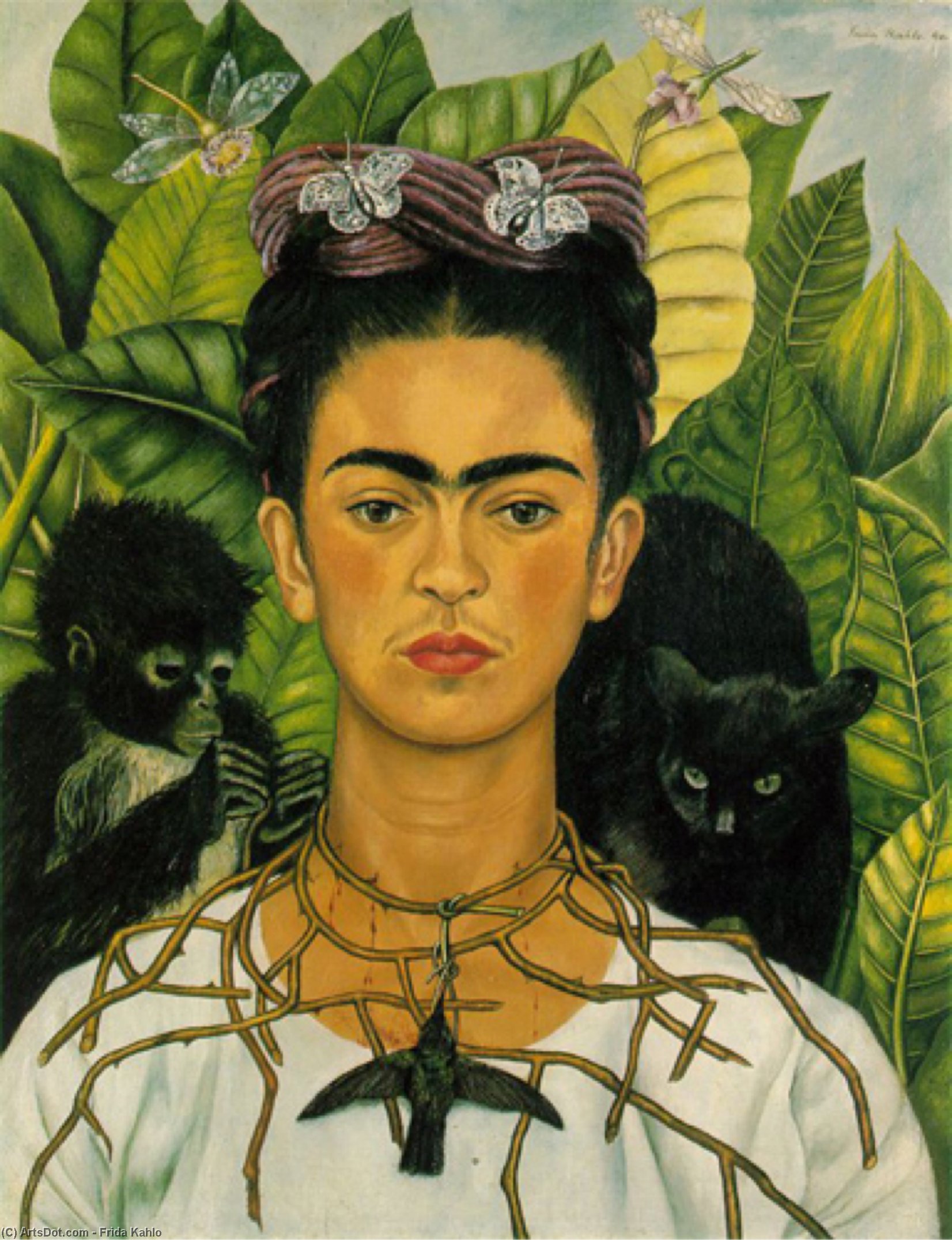
Painted in 1940, this striking self-portrait encapsulates the raw emotionality and complex symbolism that define Frida Kahlo's oeuvre. More than a likeness, it is a profound exploration of pain, resilience, and the intricate relationship between humanity and nature – a testament to her enduring legacy as one of Mexico’s most important artists.
Subject & Composition: Confronting Vulnerability
Kahlo presents herself frontally, meeting the viewer's gaze with unwavering intensity. This directness is immediately arresting, inviting intimate contemplation. Flanking her are carefully chosen animal companions – a playful monkey and a watchful black cat – each contributing to the painting’s layered narrative. The composition is deliberately symmetrical, lending a sense of formality that belies the turbulent emotions simmering beneath the surface. A dense backdrop of lush foliage frames Kahlo, creating both a protective enclosure and a feeling of claustrophobia.
Style & Technique: Blending Realism with Surrealism
This work exemplifies Kahlo’s unique artistic style – a compelling fusion of Mexican folk art traditions and surrealist tendencies. While she resisted being categorized as a Surrealist, the dreamlike quality and symbolic weight of her imagery align with the movement's core principles. Executed with meticulous detail in oil on canvas (or potentially masonite), Kahlo’s technique showcases precise brushwork and a masterful command of color. The smoothness of skin contrasts beautifully with the textured fur of the animals and the intricate patterns within the foliage.
Decoding the Symbolism: A Language of Pain & Hope
Every element in this self-portrait carries symbolic weight. The most prominent feature, the thorn necklace, alludes to both physical and emotional suffering – a poignant echo of Kahlo’s lifelong battle with chronic pain stemming from a childhood illness and a devastating bus accident. Suspended from the necklace is a hummingbird, traditionally a symbol of life, joy, and adaptability, yet here it appears almost lifeless, adding another layer of complexity. The monkey represents mischief or primal instincts, while the black cat embodies mystery and companionship. The vibrant foliage symbolizes nature’s enduring power, offering a glimmer of hope amidst adversity.
Historical Context: Post-Divorce Reflection
Created shortly after her divorce from Diego Rivera, this self-portrait is often interpreted as a reflection on Kahlo's emotional state during that tumultuous period. The painting embodies the artist’s vulnerability and strength in the face of heartbreak. It speaks to themes of loneliness, resilience, and the search for meaning in the aftermath of loss – experiences deeply resonant with audiences even today.
Emotional Impact & Interior Design
This artwork evokes a powerful emotional response, prompting viewers to confront their own vulnerabilities and appreciate the beauty found within imperfection. Its rich color palette—dominated by lush greens contrasted with Kahlo’s pale complexion—and compelling imagery make it a captivating focal point for any interior space. Whether displayed in a modern living room, a sophisticated study, or an eclectic bedroom, this reproduction will undoubtedly spark conversation and inspire contemplation. It's a piece that speaks to the soul, adding depth and character to any collection.