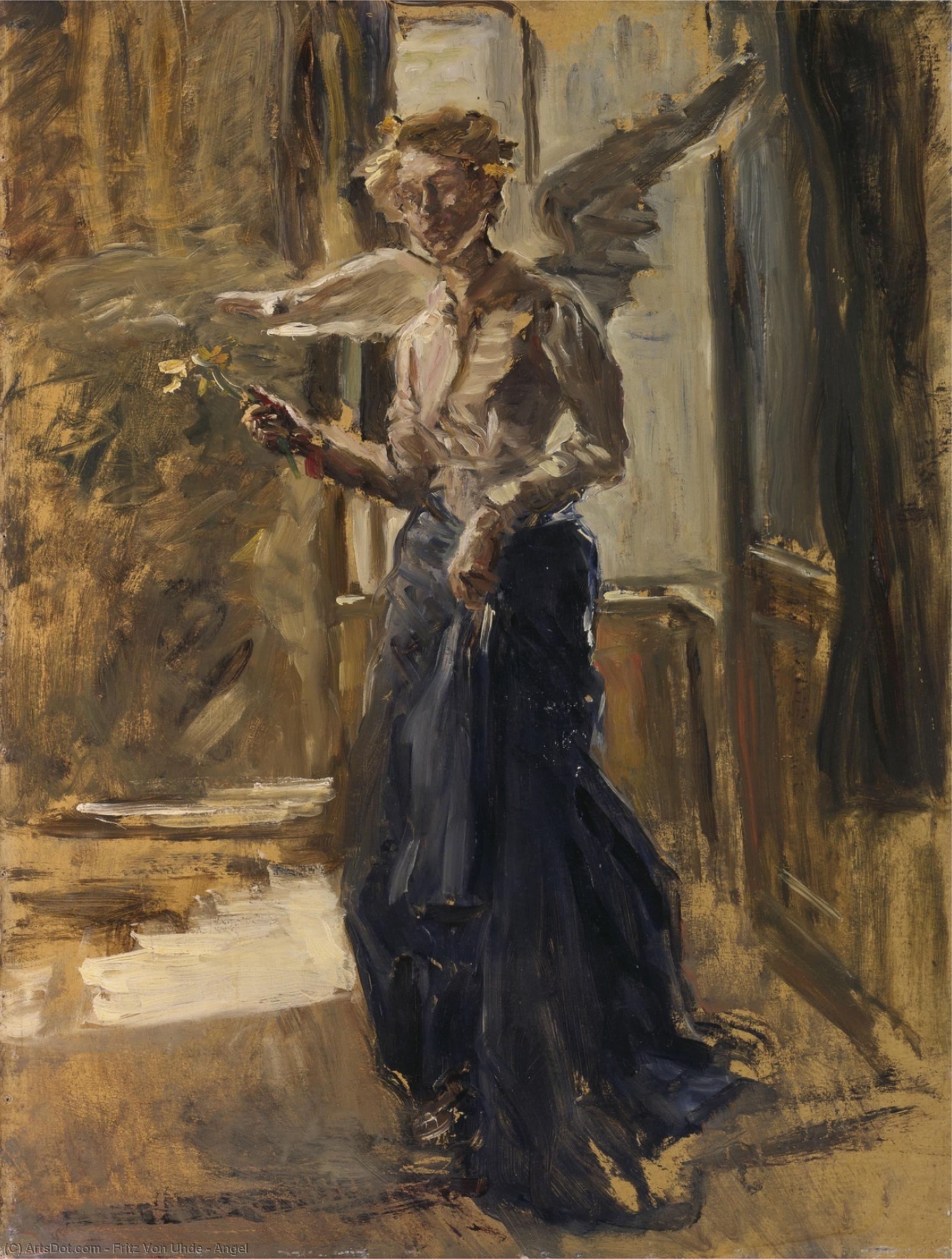
Fritz von Uhde’s "Angel" (1908) – a haunting oil painting blending realism & Symbolism. Explore its dramatic lighting, impasto texture, and melancholic spirituality.
Explore Fritz von Uhde's genre & religious paintings! A German Impressionist known for plein-air art, Dutch influences, & depicting rural life – a key figure in 20th-century German art.
Explore European Art of the 18th & 19th Centuries at Munich's Neue Pinakothek, featuring masterpieces by Rembrandt, Monet, Klimt and more! Currently undergoing renovation until 2030.
Angel – Fritz von Uhde: A Symphony of Light and Sorrow
Fritz von Uhde’s “Angel” (1908) stands as a poignant testament to the intersection of Romanticism and Symbolism, capturing a moment of profound contemplation within a dimly lit interior. More than just a depiction of an angelic figure—a winged being radiating serene grace—the painting delves into themes of spirituality, vulnerability, and perhaps unspoken longing, resonating deeply with viewers even today.
- Subject Matter: The central focus is undeniably the angel itself, positioned slightly off-center against a backdrop suggestive of a window and draped curtains. Its posture conveys stillness and introspection, inviting contemplation on matters beyond the visible realm.
- Style & Influences: Uhde’s artistic vision leans heavily into Romantic sensibilities, prioritizing emotional expression over meticulous realism. However, subtle influences from Symbolism are discernible in the painting's atmospheric mood and deliberate use of symbolic elements – notably, the delicate flower held by the angel.
- Technique: Executed in oil paints on canvas, Uhde employed a masterful technique characterized by thick impasto—layers of paint applied with considerable texture—creating a palpable surface quality that enhances the painting’s dramatic impact. The artist skillfully blended colors directly onto the canvas, maximizing luminosity and capturing the nuances of light and shadow.
- Composition & Perspective: The composition prioritizes vertical space, emphasizing the angel's dominance while subtly flattening perspective to heighten emotional resonance. Lines are loose and gestural, contributing to a dynamic visual experience that transcends mere representation.
- Lighting & Atmosphere: Dramatic lighting plays a crucial role in conveying the painting’s mood—strong highlights illuminate the angel’s face and wings, casting deep shadows across the room and floor. This chiaroscuro effect amplifies the sense of intimacy and underscores the melancholic atmosphere inherent in the scene.
The flower held by the angel serves as a powerful symbol of innocence and fragility—a poignant reminder of beauty’s vulnerability against the backdrop of existential contemplation. Uhde's deliberate choice to depict this quiet tableau speaks volumes about his artistic philosophy: to capture not just what is seen, but what is felt.
- Historical Context: Painted during a period marked by intellectual ferment and shifting artistic conventions, “Angel” reflects the broader Romantic movement’s preoccupation with emotion and imagination. Uhde's pioneering embrace of plein-air painting—a revolutionary step away from studio practice—solidified his position as one of Germany’s foremost artists of his time.
- Material & Support: Primarily oil paints applied to a canvas substrate, Uhde utilized materials that allowed for exceptional textural richness and tonal depth – characteristics essential to achieving the painting's expressive power.
“Angel” remains an enduring masterpiece—a captivating exploration of spirituality and emotion rendered with unparalleled artistic skill. Its luminous surface and evocative atmosphere continue to inspire admiration and offer a profound meditation on themes of beauty, sorrow, and transcendence.