The Intimate World of Gabriel Metsu: A Study in Reflection and Quietude
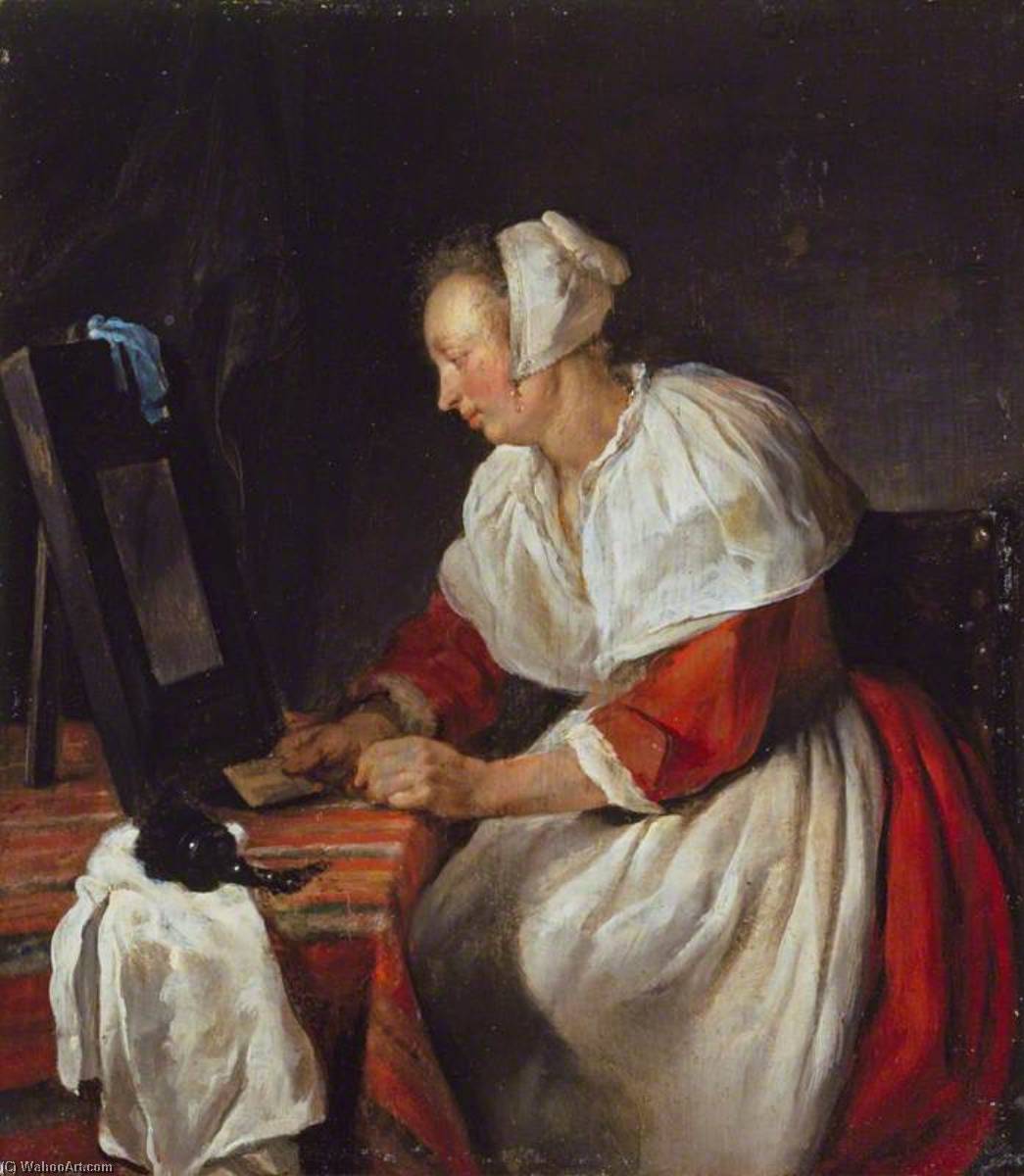
Gabriel Metsu’s “A Woman at Her Mirror,” painted circa 1657-1662, isn't merely a portrait; it’s a carefully constructed tableau of domesticity, introspection, and the subtle dance between appearance and reality. Within the confines of a modestly sized panel, Metsu masterfully captures a fleeting moment – a woman lost in contemplation before her reflection, a scene brimming with quiet dignity and an undercurrent of melancholy. This painting, housed within the Wallace Collection in London, offers a rare glimpse into the private world of a 17th-century Dutch household, revealing a depth of observation rarely found in his contemporaries.
Metsu’s style defies easy categorization. He wasn't bound by the rigid conventions of the Dutch Golden Age, instead favoring an eclectic approach that blended elements of realism with a delicate sensitivity to light and shadow. His figures are rendered with remarkable precision, yet imbued with a palpable sense of humanity – a quality particularly evident in the woman’s posture and expression. Unlike the grand historical scenes favored by Rembrandt or Rubens, Metsu focused on intimate genre paintings, capturing everyday moments with an almost photographic eye. This intimacy is further emphasized by his use of a limited palette—muted browns, creams, and subtle greens—that evokes a sense of stillness and understated elegance.
Decoding the Symbolism: Mirrors, Identity, and the Female Gaze
The mirror itself is undeniably central to the painting’s meaning. It's not simply a reflective surface; it acts as a portal into another realm – a space where the woman confronts her own image, inviting us to consider the complexities of self-perception. Metsu cleverly utilizes the reflection to subtly shift our perspective, presenting both the woman’s back and her face simultaneously. This creates a disorienting effect, forcing us to question what we see and how we interpret it. The slight turn of her head, directed downwards towards the table, suggests a moment of quiet contemplation, perhaps even a subtle dissatisfaction with her reflection.
The inclusion of small details—the dressing table, the box, the earring—adds layers of symbolic significance. The box likely contains cosmetics or personal adornments, hinting at the woman’s efforts to maintain an idealized appearance. The earring, gleaming in the mirror's light, represents vanity and perhaps a desire for social acceptance. These seemingly minor elements contribute to a richer narrative, suggesting that the painting is not just about a single moment but about the broader themes of beauty, identity, and the pressures faced by women within 17th-century society.
Technique and Light: A Masterclass in Atmospheric Realism
Metsu’s technical skill is evident in his masterful manipulation of light and shadow. He employs a subtle chiaroscuro technique—a dramatic contrast between light and dark—to create a sense of depth and volume, drawing the viewer's eye to key elements within the composition. The diffused light filtering through the window casts soft shadows across the room, lending it an intimate and atmospheric quality. Notice how Metsu carefully renders the texture of the fabrics, the sheen of the mirror, and the delicate details of the woman’s hair – each element meticulously observed and rendered with remarkable precision.
The painting's composition is deceptively simple yet profoundly effective. The placement of the figure within the room, the diagonal lines created by the furniture, and the strategic use of negative space all contribute to a sense of balance and harmony. Metsu’s ability to capture such subtle nuances of light, shadow, and form speaks volumes about his artistic talent and his deep understanding of human psychology. “A Woman at Her Mirror” remains a testament to Metsu's quiet genius—a poignant meditation on the complexities of self-awareness and the enduring allure of reflection.