A Moment Frozen in Time: The Intimacy of Gabriel Metsu
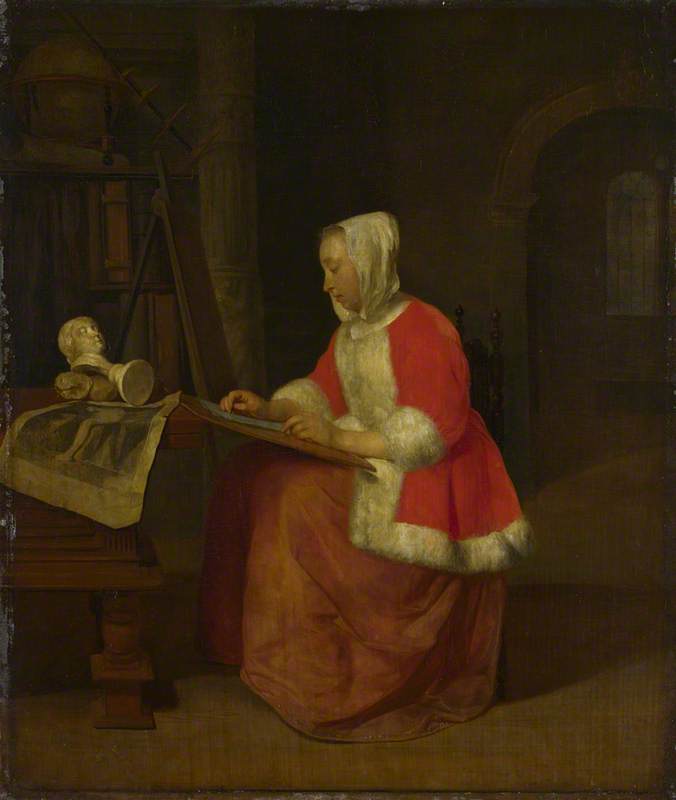
In the quiet corners of the Dutch Golden Age, where the light of a single window could transform a mundane room into a stage for profound human emotion, Gabriel Metsu captured a scene of singular grace. A Young Woman seated drawing is not merely a portrait; it is an invitation into a private sanctuary of thought and creativity. As we gaze upon this masterpiece from 1655, we find ourselves transported to a mid-17th-century interior, where the soft rustle of paper and the steady rhythm of a focused mind are almost audible. The subject, a young woman lost in her artistic pursuit, serves as a window into an era that celebrated the beauty of domestic tranquility and the intellectual depth of the individual.
Metsu, an artist renowned for his incredible versatility, demonstrates here his mastery of genre painting—a style that finds the extraordinary within the ordinary. The composition is a delicate dance of light and shadow, reminiscent of the atmospheric depth found in the works of Vermeer, yet infused with a unique, eclectic warmth. Every element, from the heavy texture of the books to the glint of light on a glass bottle, is rendered with a precision that speaks to the artist's devotion to realism. For the discerning collector or interior designer, this piece offers more than just visual appeal; it provides a focal point of contemplative elegance that can anchor a room with its historical weight and serene presence.
The Language of Objects and Light
Beyond the central figure, the painting is rich with a silent vocabulary of symbolism. The presence of books—both in the woman's hands and resting upon a nearby dining table—suggests a life enriched by literacy and the pursuit of knowledge, a hallmark of the rising Dutch middle class. A clock hangs silently on the wall, a poignant memento mori reminding the viewer of the fleeting nature of time, even as the woman remains seemingly suspended in an eternal moment of creation. The scattered items within the room, such as the vase and the bottles, are not mere decorations; they are carefully placed elements that ground the scene in a tangible, lived-in reality.
The technique employed by Metsu is nothing short of masterful. His ability to manipulate light to create volume and texture allows the viewer to feel the weight of the furniture and the softness of the woman's attire. The interplay between the brightly lit desk area and the deeper, more mysterious shadows of the room creates a sense of three-dimensional space that draws the eye inward. This careful balance of light and dark—the chiaroscuro effect—imbues the work with an emotional resonance that is both soothing and intellectually stimulating. It is this very quality that makes a high-quality reproduction of such a work so transformative for modern interiors, bringing a sense of historical soul and quiet sophistication to any space.
An Enduring Legacy for the Modern Collector
To possess a piece inspired by Gabriel Metsu is to hold a fragment of the Dutch Golden Age. His ability to blend history painting with the intimate details of daily life ensures that his work remains eternally relevant. For those seeking to curate an environment of intellectual depth and aesthetic harmony, this painting offers unparalleled inspiration. It serves as a reminder that beauty is often found in the most quiet, focused moments of our lives.
Whether placed in a sunlit study or a grand living area, the reproduction of A Young Woman seated drawing acts as a bridge between centuries. It invites conversation, sparks curiosity about the past, and provides a timeless aesthetic that transcends fleeting trends. In an age of digital noise, the stillness of Metsu's world offers a much-needed sanctuary of peace and artistic devotion.