A Quiet Intimacy in the Dutch Golden Age
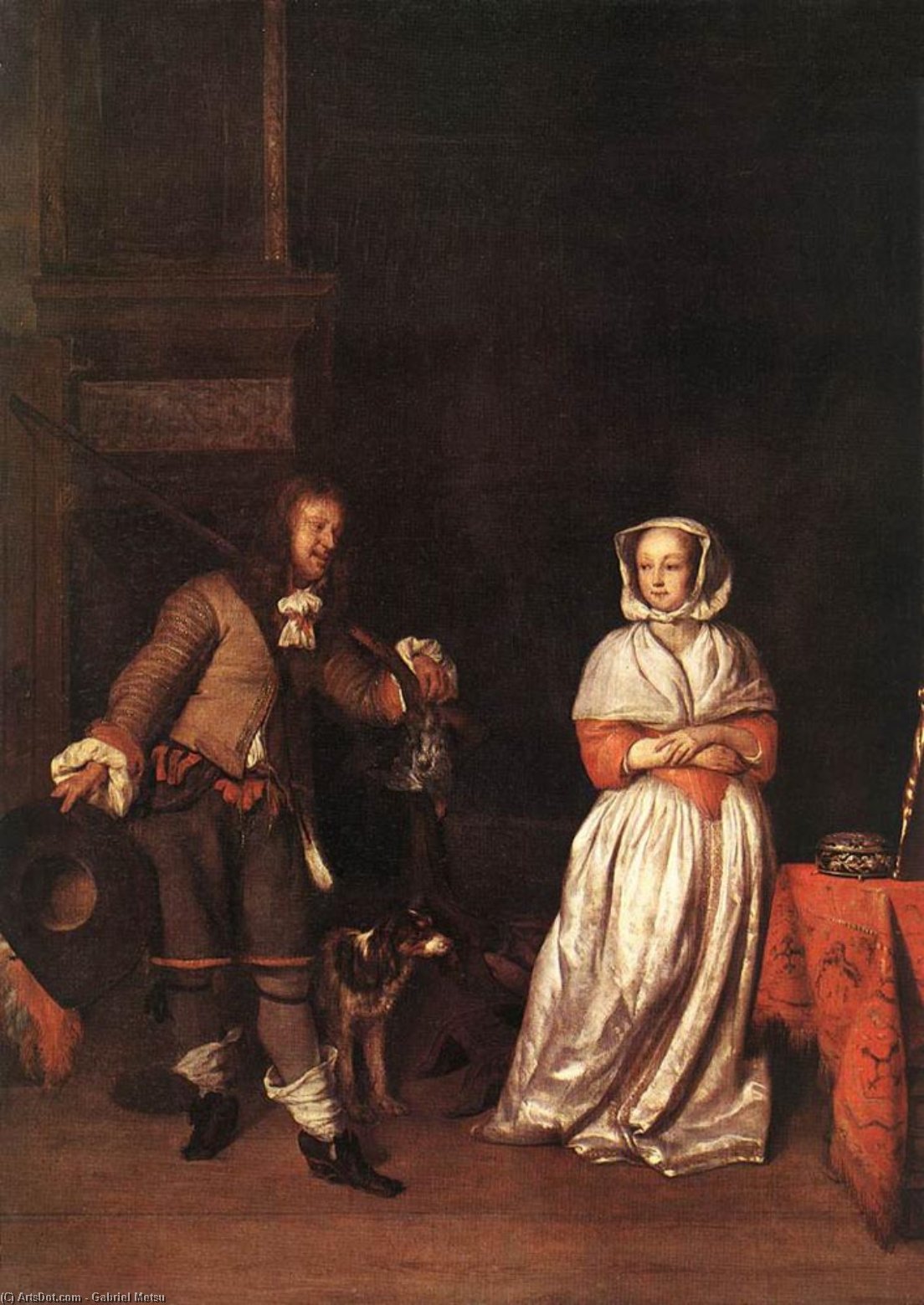
In the soft, flickering glow of a seventeenth-century interior, Gabriel Metsu captures a moment that feels both profoundly private and eternally suspended. The Hunter and a Woman is not merely a depiction of two figures; it is an invitation into a world of whispered emotions and subtle psychological depth. Painted around 1664, during the height of the Dutch Golden Age, this masterpiece exemplifies the era's fascination with genre painting—scenes of everyday life elevated to the level of high art through meticulous detail and symbolic complexity. As we gaze upon the man and woman seated within this dimly lit chamber, we are drawn into a narrative that transcends the boundaries of time, offering a sense of peace and contemplation that remains as potent today as it was three centuries ago.
The composition is anchored by a masterful use of chiaroscuro, a technique where dramatic contrasts between light and shadow create a palpable sense of volume and atmosphere. A warm, amber light emanates from a nearby fireplace, casting long, velvety shadows that dance across the room. This lighting does more than just illuminate the subjects; it sculpts them. The man, dressed in the fashionable doublet and puffed sleeves of the upper class, possesses a posture of quiet vigilance, yet his downward gaze suggests a mind lost in introspection. Opposite him, the woman sits with a poised modesty, her hands clasped in a gesture of gentle reflection. This interplay of light and shadow serves to heighten the emotional tension, making the air between the two figures feel heavy with unspoken thoughts.
The Artistry of Texture and Symbolism
For the discerning collector or interior designer, the true allure of Metsu’s work lies in his extraordinary ability to render texture. Every inch of the canvas serves as a testament to his technical virtuosity. One can almost feel the weight of the heavy fabrics, the crispness of the linen, and the smooth, cool surface of the decorative objects resting upon the mantelpiece. Metsu, born into a family of textile artists, possessed an innate understanding of how light interacts with different surfaces—from the sheen of silk to the matte finish of earthenware. This tactile realism brings a breathtaking dimension to the painting, making the scene feel less like a distant memory and more like a living, breathing space.
Beyond the surface beauty, the painting is steeped in the symbolic language of the Baroque period. The presence of the dog lying at their feet is a classic motif, often representing fidelity and domestic harmony, grounding the human drama in a sense of loyalty and stability. Even the small sculptures and books scattered in the background hint at a life of intellectual leisure and refined taste. For those looking to adorn a space with this reproduction, it offers more than just aesthetic elegance; it provides a focal point of narrative richness. Whether placed in a contemporary study or a classic library, The Hunter and a Woman acts as a window into a sophisticated past, bringing an aura of historical prestige and soulful tranquility to any interior design scheme.