The Sleeping Sportsman: A Dutch Golden Age Intimacy
Gabriel Metsu’s “The Sleeping Sportsman,” painted in 1659, isn't merely a portrait; it’s a carefully constructed tableau of domestic tranquility and subtle social commentary. Emerging from the bustling artistic landscape of Leiden and finding his final home in Amsterdam, Metsu carved out a unique niche within the Dutch Golden Age, eschewing grand historical narratives for intimate scenes of everyday life. This particular work, measuring a modest 40 x 35 centimeters, offers a rare glimpse into the private world of a wealthy family, revealing a quiet drama beneath the surface of apparent repose.
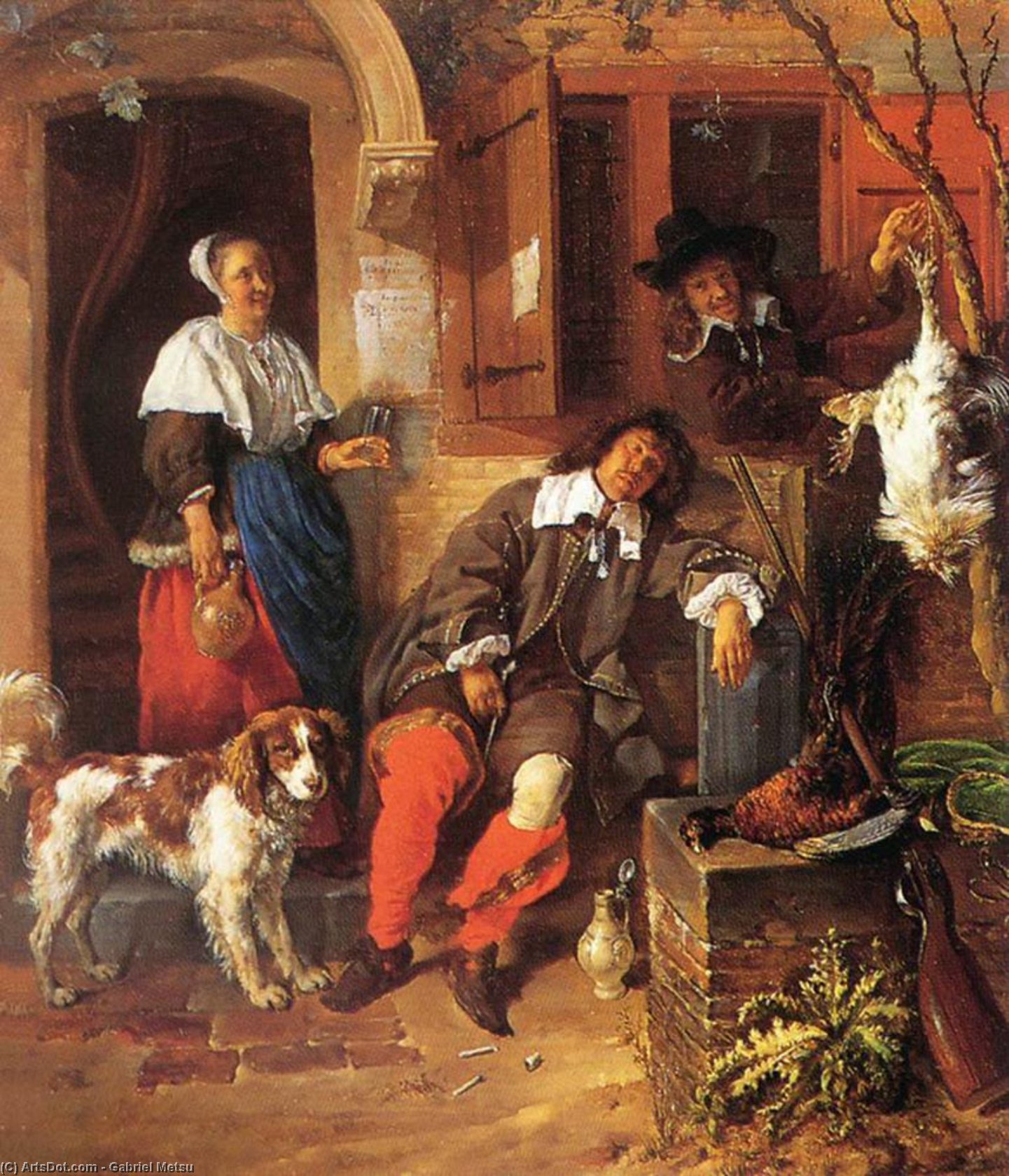
The scene unfolds within a richly appointed room – a fireplace anchors the composition, radiating warmth and suggesting a haven from the outside world. A man lies sprawled on the floor, seemingly lost in slumber, his face partially obscured by a cushion. Beside him stands a figure, likely his wife or a close female relative, engaged in quiet activity; she’s meticulously arranging a small table laden with simple objects: a cup, a bowl, and two birds perched delicately upon them. The inclusion of these details—the carefully placed fruit, the attentive care given to the animals – speaks volumes about the values of prosperity and domestic harmony prevalent during this era. The painting's palette is dominated by warm browns, ochres, and muted reds, creating a sense of cozy intimacy and reinforcing the feeling of a comfortable, well-established home.
Metsu’s Eclectic Style and Leiden’s Influence
Gabriel Metsu was renowned for his “highly eclectic artist” status – a label that perfectly captures his refusal to be confined by any single artistic style. Trained initially under Gerrit Dou in Leiden, he absorbed the meticulous detail and subtle modeling characteristic of the Leiden School, but quickly developed his own distinctive approach. Unlike many of his contemporaries who favored dramatic lighting and bold brushstrokes, Metsu cultivated a remarkably restrained technique, employing delicate gradations of tone and meticulously rendering textures with an almost photographic precision. This is particularly evident in the depiction of the sleeping sportsman’s garments – each fold and wrinkle rendered with painstaking detail.
The influence of Leiden's “fijnschilders” (fine painters) became increasingly apparent as Metsu settled in Amsterdam, adopting their penchant for small-scale genre scenes and a focus on capturing fleeting moments of human interaction. The painting’s composition—a carefully arranged still life within a domestic setting—is a testament to this evolving style. The subtle gestures of the figures – the woman's attentive gaze, the sportsman’s relaxed posture – invite the viewer to contemplate their relationship and the quiet rhythms of their lives.
Symbolism and Social Commentary
Beyond its surface depiction of domesticity, “The Sleeping Sportsman” is rich in symbolic meaning. The sleeping figure himself represents a state of repose, perhaps suggesting contentment or even indulgence. The presence of the birds, often associated with fidelity and loyalty, hints at the stability and security of the household. The carefully arranged objects on the table—the fruit, the bowl, the animals—are not merely decorative; they are emblems of wealth, abundance, and the virtues of a prosperous life.
Furthermore, the scene subtly critiques the social hierarchy of the time. While the figures appear comfortable and secure within their domestic sphere, the painting’s intimate scale and quiet demeanor contrast sharply with the grand, heroic narratives favored by many other artists of the period. Metsu's focus on the everyday—on the simple pleasures and private moments of a wealthy family—offers a refreshing alternative, inviting viewers to contemplate the beauty and significance of ordinary life.
A Legacy of Intimacy
“The Sleeping Sportsman” remains one of Gabriel Metsu’s most celebrated works, admired for its exquisite detail, subtle symbolism, and profound sense of intimacy. It exemplifies the artist's unique ability to capture the essence of human experience within a small, carefully composed space. Reproductions of this captivating painting offer a window into the world of 17th-century Dutch society—a world where domestic tranquility, quiet contemplation, and subtle social commentary were valued above all else. Its enduring appeal lies in its ability to evoke a sense of warmth, nostalgia, and a profound appreciation for the beauty of everyday life.