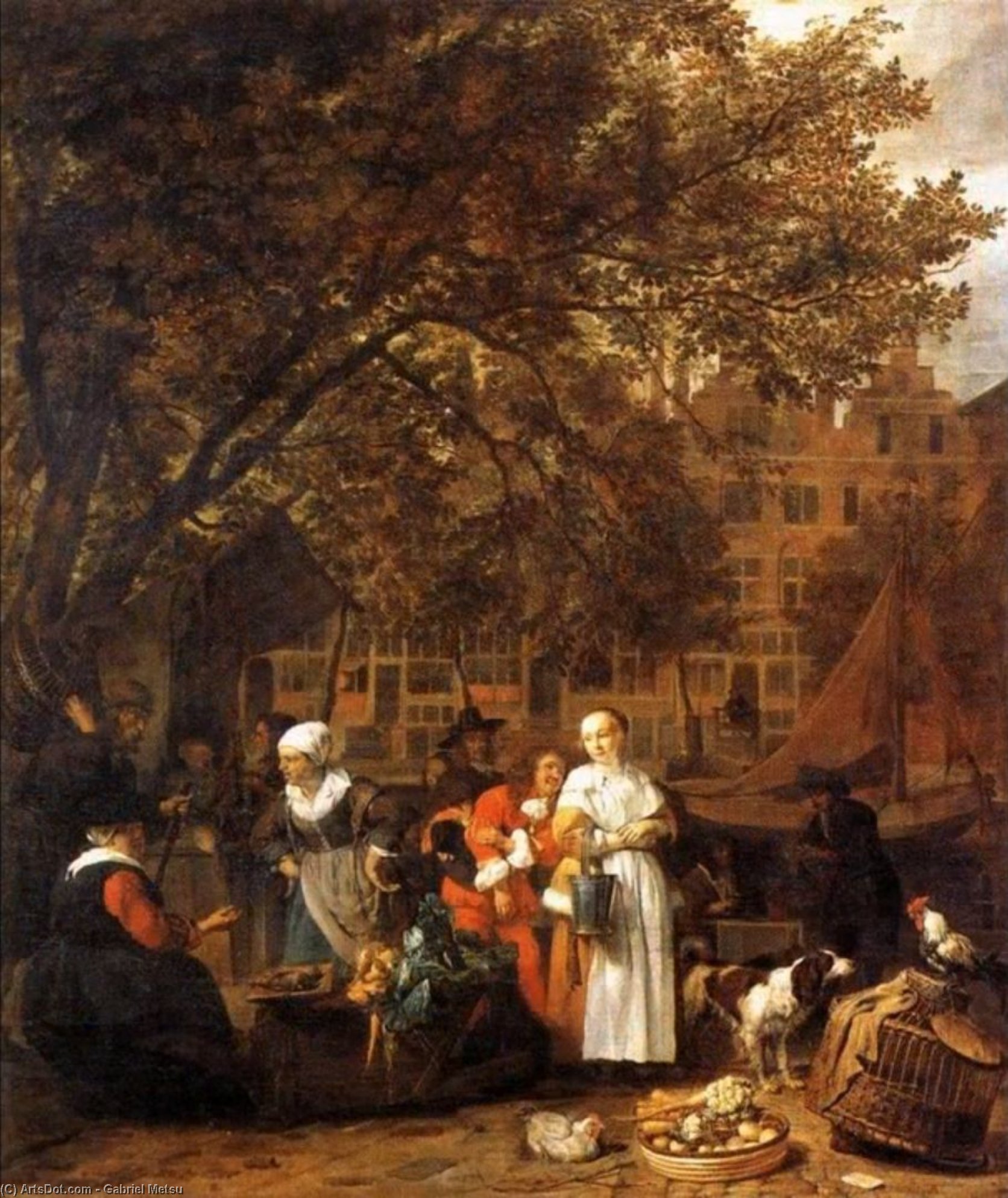
Gabriel Metsu’s ‘Vegetable Market in Amsterdam’ captures the vibrant energy of 17th-century Dutch life with masterful trompe-l'œil realism and a quiet brilliance. Explore this iconic Golden Age painting and bring its timeless beauty into your home.
Discover Gabriel Metsu (1629-1667), a Dutch Golden Age painter celebrated for his genre scenes, portraits & interiors. Influenced by Rembrandt & Vermeer, Metsu's art captured daily life with exquisite detail and symbolism.
Explore the Louvre Museum in Paris! Home to iconic masterpieces like the Mona Lisa & Venus de Milo, journey through art history from ancient Egypt to Renaissance icons. Plan your visit today!
A Snapshot of Amsterdam’s Vibrant Soul: Gabriel Metsu's Vegetable Market
The painting “Vegetable Market in Amsterdam,” executed by Gabriel Metsu in 1661, stands as a quintessential emblem of the Dutch Golden Age—a testament to meticulous observation and an understated mastery of artistic technique. More than just a depiction of commerce, it’s a window into the daily life and social fabric of seventeenth-century Amsterdam, capturing a moment frozen in time with remarkable clarity and emotional resonance.
Subject Matter and Composition
Metsu's subject matter is deceptively simple: a bustling vegetable market scene unfolding within a modest interior space. Yet, within this seemingly commonplace tableau lies a profound richness of detail. The painting portrays several individuals engaged in various activities—negotiating prices, examining produce, tending to their purchases—creating an atmosphere brimming with energy and human interaction. A watchful dog rests calmly near the edge of the table, adding another element of realism to the composition. Metsu skillfully arranges these figures around a central table laden with fruits and vegetables, utilizing geometric principles to guide the viewer’s eye across the canvas.
Style and Technique: The Quiet Brilliance of Trompe-l'œil
Metsu’s artistic style is characterized by its restraint and precision—a hallmark of Dutch Baroque painting. Unlike some contemporaries who favored dramatic gestures and opulent ornamentation, Metsu opted for a subtle palette and meticulous rendering of textures. He employed the technique of *trompe-l'œil*, or illusionistic painting, to create an astonishingly convincing impression of depth and spatial realism. Through careful manipulation of light and shadow—particularly reflected on surfaces like the table and the floor—Metsu convincingly simulates the ambient illumination of a Dutch interior. This masterful use of chiaroscuro enhances the sense of atmosphere and draws attention to specific areas within the scene, emphasizing the textures of the fruits and vegetables themselves.
Historical Context: Amsterdam’s Economic Powerhouse
Amsterdam in 1661 was arguably Europe's foremost economic powerhouse—a global hub for trade and finance driven by maritime expansion and entrepreneurial spirit. The vegetable market depicted by Metsu reflects this prosperity, showcasing a diverse array of goods sourced from across the globe. More importantly, it captures the everyday realities of ordinary citizens—farmers, merchants, housewives—who constituted the backbone of Amsterdam’s society. Understanding the historical context illuminates the painting's significance as an emblem of Dutch cultural identity and economic success during its formative years.
Symbolism: Domestic Tranquility Amidst Urban Activity
Despite the lively activity surrounding the market table, Metsu imbues the scene with a sense of quiet domestic tranquility. The muted colors—primarily earthy tones—contribute to this mood, creating an environment that feels both familiar and comforting. Furthermore, the presence of the dog symbolizes loyalty and companionship—values deeply ingrained in Dutch culture at the time. The artist’s deliberate choice of subject matter speaks to a broader preoccupation with portraying idealized representations of human life—a desire to capture beauty and harmony within the complexities of urban existence.
Emotional Impact: A Moment Preserved
“Vegetable Market in Amsterdam” transcends mere visual representation; it evokes a palpable emotional response. The painting’s serene atmosphere invites contemplation, prompting viewers to consider themes of community, labor, and the passage of time. Metsu's meticulous attention to detail—the subtle variations in color and texture—creates an immersive experience that transports us back to seventeenth-century Amsterdam. Ultimately, it is a portrait not just of a place but also of a particular way of life—a testament to Metsu’s ability to distill the essence of his subject matter into a timeless masterpiece.