A Moment Frozen in Time: The Quiet Grace of Gabriel Metsu
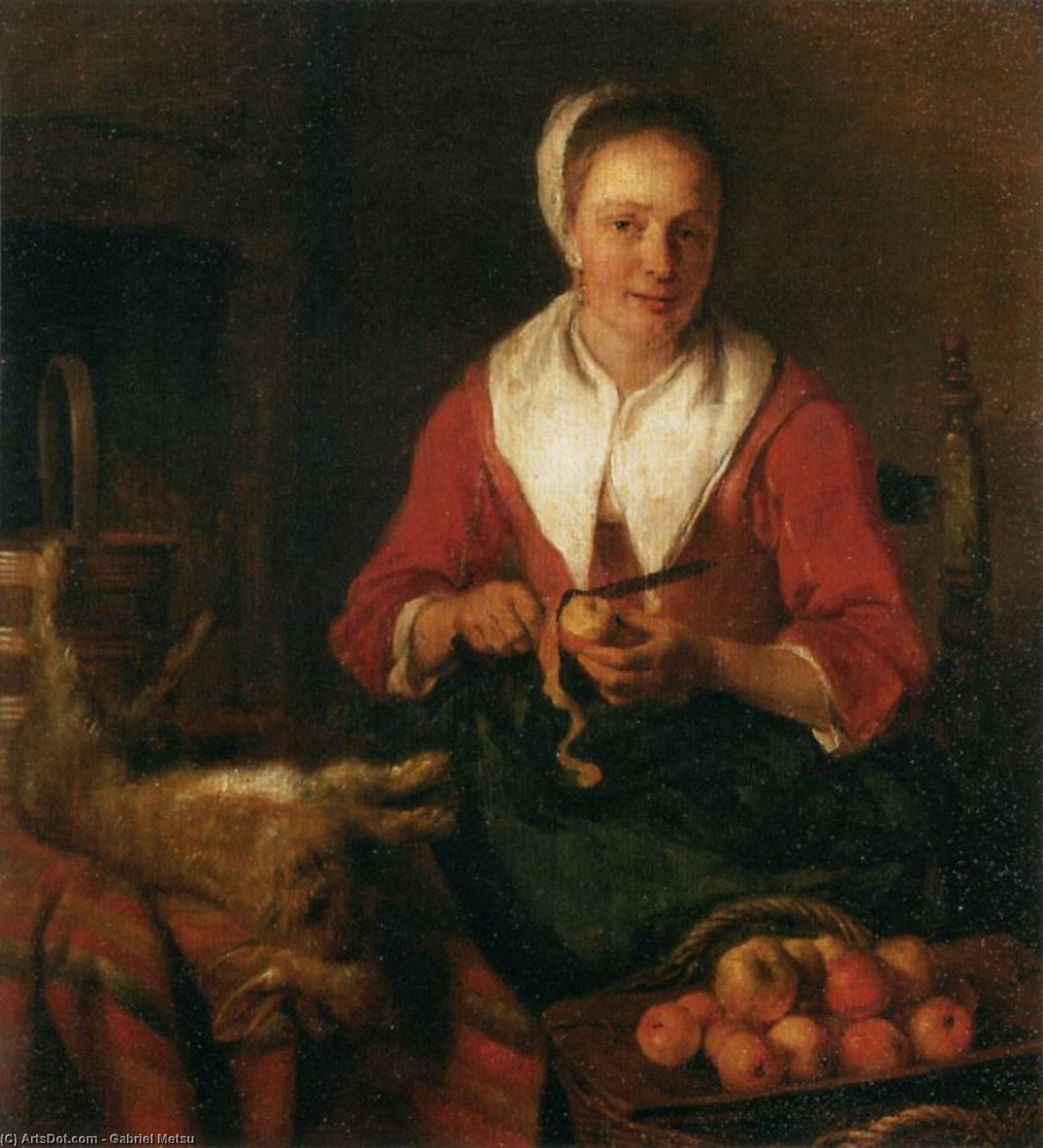
In the soft, amber glow of a seventeenth-century Dutch interior, a single moment of domesticity is elevated to the level of high art. Gabriel Metsu’s "Woman Peeling an Apple," painted in 1655, invites the viewer into a sanctuary of stillness and profound contemplation. At first glance, the scene appears deceptively simple—a woman focused intently on her task, the rhythmic motion of peeling fruit captured in a state of eternal pause. Yet, beneath this surface of everyday tranquility lies a masterful exploration of the human experience. Metsu, a painter of remarkable sensitivity, eschews the grand, sweeping narratives of his contemporaries to find the extraordinary within the ordinary, turning a mundane kitchen chore into a poetic meditation on presence and peace.
The painting serves as a quintessential emblem of the Dutch Golden Age, an era where the prosperity of the Netherlands fostered a deep appreciation for the beauty of domestic life. The subject, draped in a rich, vibrant red dress, becomes the focal point of a carefully composed world. As she peels the apple, her concentration creates an intimate atmosphere that draws the observer into her private sphere. This sense of intimacy is further enriched by the subtle presence of a cat at her feet and the careful arrangement of bowls and furniture, elements that ground the scene in a tangible, cozy reality. For the collector or interior designer, this piece offers more than mere decoration; it provides an emotional anchor, bringing a sense of historical depth and soulful calm to any curated space.
The Mastery of Light and Texture
Metsu’s technical prowess is nothing short of extraordinary, particularly in his ability to manipulate light to create a palpable sense of three-dimensional space. Utilizing the technique of sfumato, he employs thin, translucent glazes of oil paint to soften the edges of his subjects, allowing light to diffuse across the woman's skin and the folds of her crimson garment with an ethereal, lifelike quality. This is beautifully contrasted by his use of chiaroscuro, where dramatic shifts between shadow and illumination sculpt the forms within the room. The way the light catches the edge of the apple and the glint of the knife creates a sensory experience that makes the textures—the smoothness of the fruit, the weight of the fabric, the rustic wood of the setting—feel almost touchable.
This meticulous attention to detail serves a higher purpose than mere realism. The interplay of light and shadow acts as a visual metaphor for the fleeting nature of time. In the Dutch tradition, such precision was often used to highlight the ephemeral beauty of life. By capturing the way light interacts with the surfaces of her domestic world, Metsu reminds us to find value in the transient moments that define our existence. For those seeking to adorn a home with art that inspires wonder, this painting offers a masterclass in how technique can be harnessed to evoke deep, resonant emotion.
Symbolism and the Soul of the Dutch Interior
Beyond its aesthetic brilliance, "Woman Peeling an Apple" is steeped in the symbolic language of the 17th century. In the context of Dutch genre painting, everyday objects often carried hidden meanings related to virtue, morality, and the domestic sphere. The act of peeling an apple can be seen as a metaphor for the careful cultivation of one's character or the stripping away of superficiality to reach the essence of truth. The presence of the cat, often a symbol of domesticity and even watchfulness, adds a layer of liveliness and protection to the scene, suggesting a home that is both nurtured and secure.
The composition itself—a balanced arrangement of light, shadow, and carefully placed objects—reflects the societal values of the era: harmony, order, and the quiet dignity of labor. To possess a reproduction of this work is to invite this sense of historical stability and refined taste into one's environment. It is an invitation to slow down, to appreciate the textures of life, and to find inspiration in the quiet, unobserved moments of beauty that surround us every day.