A Symphony of Opulence: Exploring "Boschi Di Stefano Home: Dining Room" by Gabriele Carelli
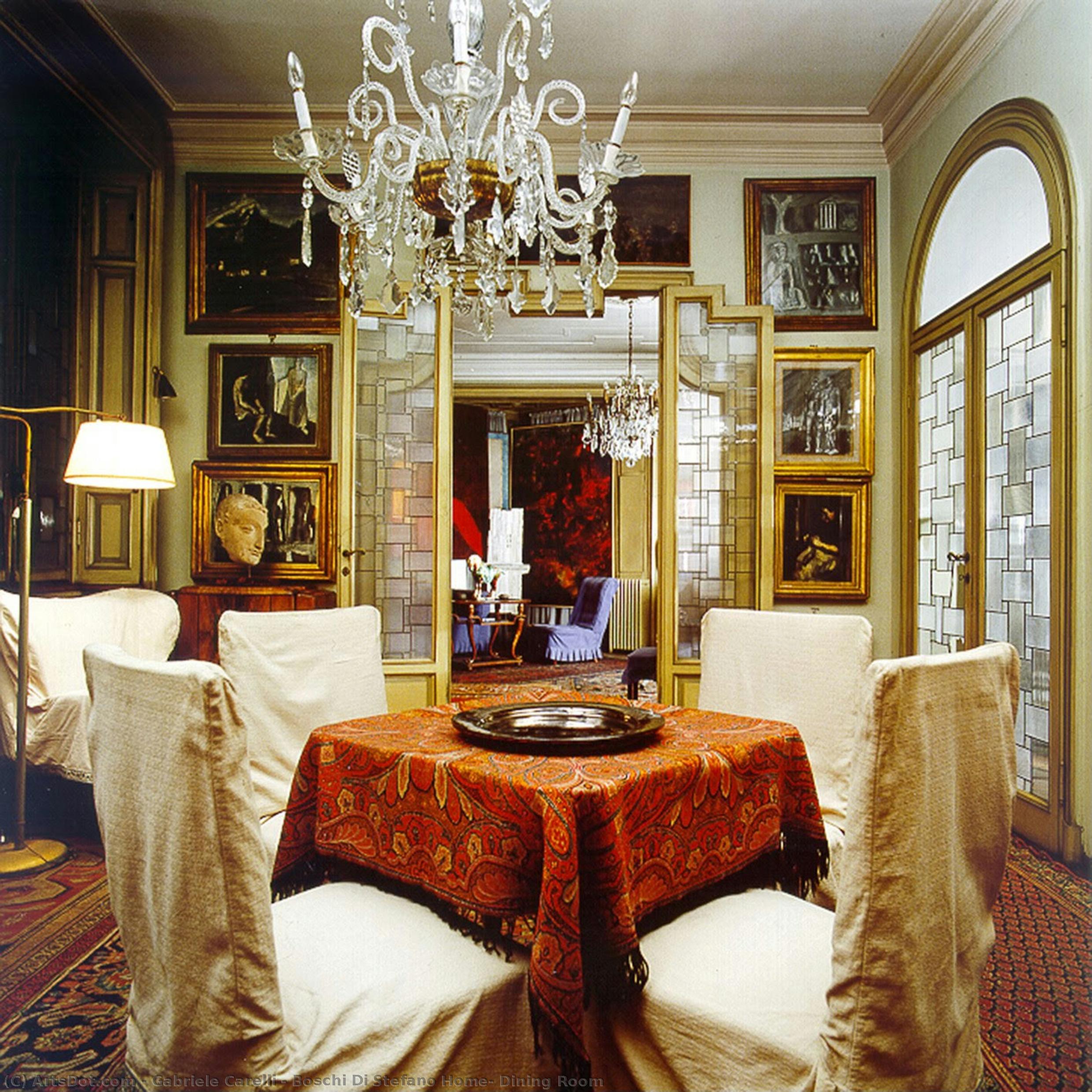
Gabriele Carelli’s “Boschi Di Stefano Home: Dining Room,” painted in 1982, offers a captivating glimpse into the heart of European aristocratic life during the 19th century. This meticulously rendered interior, likely based on photographs, transcends mere documentation; it's an immersive experience of luxury, history, and carefully cultivated taste. The scene unfolds within a grand dining room – a space designed not just for sustenance but as a powerful statement of wealth and social standing. The symmetrical composition immediately establishes a sense of formality, drawing the viewer’s eye towards the dominating presence of the ornate chandelier, a focal point that elevates the entire room with its warm glow.
Artistic Roots and Provenance
- Artist: Gabriele Carelli (1821-1900), born in Naples, Italy.
- Carelli’s artistic lineage is deeply rooted in the Posillipo school of landscape painting, inheriting a tradition of capturing the beauty and drama of the Italian coastline. His father, Raffaele Carelli, was also a prominent painter of this style.
- His travels, particularly his extended tours with the 6th Duke of Devonshire across Sicily, Greece, Asia Minor, and Constantinople, profoundly shaped his artistic vision. These journeys provided him with an unparalleled understanding of diverse landscapes and cultures, which he skillfully integrated into his work.
Technique and Materiality: A Photographic Echo
The painting’s style is undeniably photographic in its approach, utilizing studio lighting to enhance the textures and colors of the opulent materials. The flattened perspective suggests a direct translation from a photograph, rather than an entirely independent artistic creation. Note the careful layering – furniture in the foreground, a glimpse into another room in the background, and the receding walls – all techniques employed to create depth within this photographic representation. The artist’s skillful manipulation of light and shadow further emphasizes the richness of the velvet fabrics, polished wood surfaces, and gleaming metal of the chandelier. Materials such as wood, velvet, linen, glass, and metal were expertly utilized to evoke a sense of tactile luxury.
Symbolism and Emotional Resonance
Beyond its aesthetic beauty, “Boschi Di Stefano Home: Dining Room” is laden with symbolic meaning. The abundance of artwork – portraits, landscapes, and decorative pieces – serves as a visual declaration of status and refined taste. It’s a carefully curated collection designed to impress and reflect the homeowner's wealth and cultural sophistication. The overall mood is one of nostalgia and formality, evoking a sense of timeless elegance. The controlled chaos of the densely populated room—a deliberate aesthetic choice—suggests a space where order and beauty are meticulously maintained. The painting’s emotional impact lies in its ability to transport us to a world of privilege and grandeur, inviting contemplation on themes of wealth, legacy, and the enduring power of art.