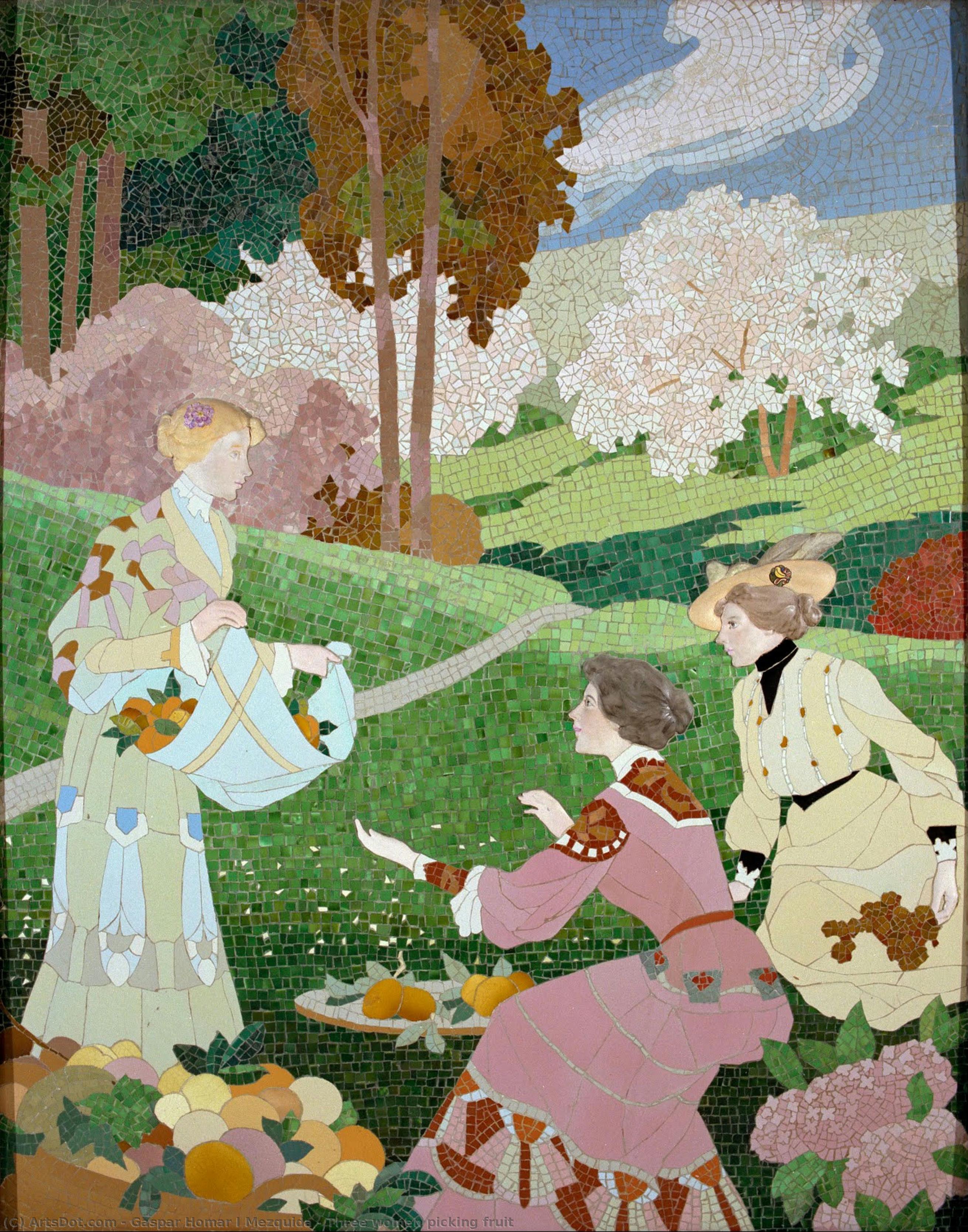
Gaspar Homar i Mezquida’s ‘Three Women Picking Fruit,’ a serene 1906 masterpiece exemplifies Catalan Modernisme with its curving lines and naturalistic forms, capturing a peaceful scene of women gathering fruit in a shaded garden – discover this exquisite hand-painted reproduction.
A Moment of Leisure: Gaspar Homar's "Three Women Picking Fruit"
Gaspar Homar i Mezquida’s “Three Women Picking Fruit,” painted in 1906, is more than a simple depiction of rural life; it’s a carefully constructed evocation of the Catalan Modernista aesthetic – a movement that sought to revitalize art and design through a profound connection with nature and a rejection of academic formalism. This large-scale canvas (1425 x 1870 cm) offers a serene glimpse into a timeless scene, capturing the quiet beauty of women engaged in a commonplace activity within the dappled shade of an orchard.
- Subject Matter: The painting’s subject – three women harvesting fruit – was a deliberate choice reflecting the Modernista interest in portraying everyday life with dignity and artistic merit. It moves away from grand historical or mythological narratives, focusing instead on the beauty inherent in ordinary labor.
- Style & Technique: Homar's brushwork is characterized by loose, expressive strokes that contribute to the painting’s overall feeling of movement and spontaneity. The use of color is particularly noteworthy; a rich palette of greens, yellows, and browns evokes the vibrancy of the orchard while subtly hinting at the polychromy – the deliberate use of multiple colors – that was a hallmark of Modernista design.
The Language of Modernisme
Homar’s artistic vision is deeply rooted in the principles of Catalan Modernisme, an influential movement that flourished in Barcelona during the late 19th and early 20th centuries. Influenced by the Arts and Crafts movement and the designs of William Morris, Homar embraced asymmetry, flowing curves, and a fascination with natural forms – particularly those found in the Mediterranean landscape. The undulating lines of the trees, the graceful postures of the women, and the scattered apples all contribute to this organic aesthetic. The innovative use of materials—iron, glass, ceramics, and concrete—reflects the Modernista desire to integrate art into everyday life, moving beyond traditional artistic boundaries.
- Asymmetry & Natural Forms: The composition deliberately avoids rigid symmetry, mirroring the natural world’s inherent irregularity.
- Polychromy: Homar's bold use of color aligns with the Modernista emphasis on vibrant hues and decorative effects.
Symbolism and Emotional Resonance
"Three Women Picking Fruit" transcends a mere representation of a rural scene; it’s imbued with symbolic meaning. The act of gathering fruit can be interpreted as a metaphor for labor, abundance, and the cyclical nature of life. The women themselves represent fertility, nourishment, and connection to the land – themes central to Modernista ideology. The painting's serene atmosphere evokes a sense of tranquility and contentment, inviting the viewer to share in this moment of peaceful leisure. This work reflects Homar’s broader artistic contributions, including his interior design projects for iconic Barcelona landmarks like Casa Martí and Palau de la Música Catalana.
A Legacy of Innovation
Painted in 1906, “Three Women Picking Fruit” stands as a testament to Gaspar Homar i Mezquida’s pioneering role in Catalan Modernisme. Its enduring appeal lies not only in its beautiful depiction of rural life but also in its embodiment of the movement's core values: a reverence for nature, an embrace of innovation, and a commitment to creating art that enriches everyday experience. This hand-painted reproduction offers a unique opportunity to own a piece of this significant artistic heritage.