The Canvas of a Moment: Gentile Bellini’s “A Turkish Janissary”
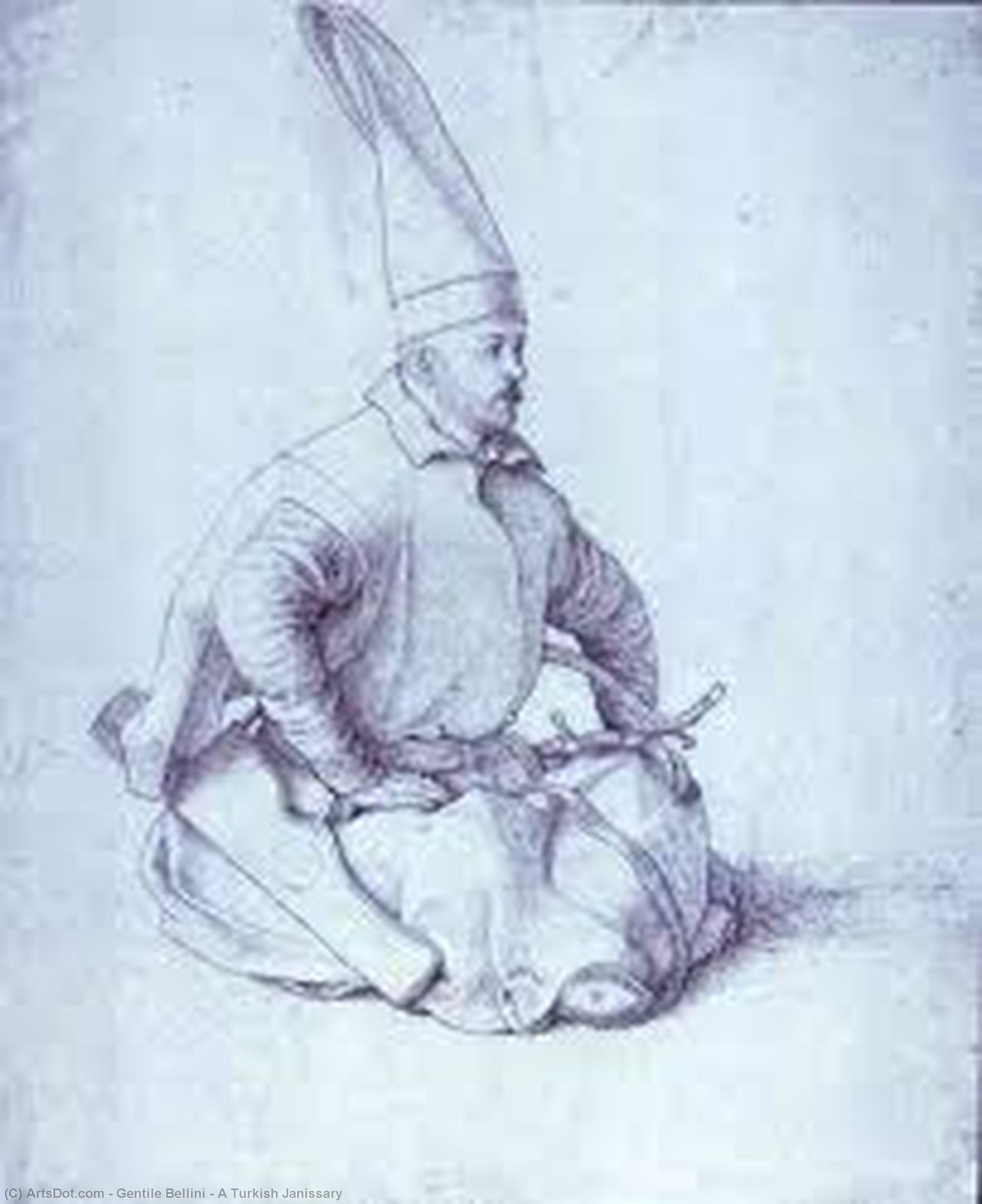
Gentile Bellini's "A Turkish Janissary," painted circa 1480-1481, isn’t merely a depiction of a soldier; it’s a vibrant snapshot of a pivotal moment in Ottoman and Venetian history. This arresting portrait transcends the typical military subject matter, offering a glimpse into the complex interplay between two vastly different cultures – Venice, the maritime republic, and the burgeoning Ottoman Empire. Bellini, a master painter deeply influenced by Eastern aesthetics, skillfully captures the figure of a Janissary, the elite infantry force that formed the backbone of the Sultan’s army, within a meticulously rendered Venetian setting.
The painting immediately draws the eye to the central subject: a powerfully built man seated on the ground, his posture radiating both authority and a subtle weariness. His attire—a richly adorned tunic, a feathered hat, and the distinctive weaponry of a Janissary – speaks volumes about his status and role within the Ottoman military hierarchy. Bellini’s masterful use of chiaroscuro, the dramatic contrast between light and shadow, imbues the scene with an almost theatrical quality. The strong directional lighting highlights the figure's musculature and armor, emphasizing his strength and readiness for battle, while simultaneously casting a sense of solemnity over the composition.
- Style: Early Renaissance – blending Venetian realism with influences from the East.
- Technique: Primarily tempera on panel, showcasing Bellini’s innovative use of oil paint for richer colors and smoother transitions.
- Composition: A dynamic arrangement that balances formality and intimacy, reflecting the subject's importance.
Echoes of the Devşirme System and Imperial Ambition
Understanding “A Turkish Janissary” requires acknowledging the historical context surrounding its creation. The painting emerged during a period of intense diplomatic and military exchange between Venice and the Ottoman Empire. The Venetian Senate, recognizing the strategic importance of maintaining a balance of power in the Eastern Mediterranean, dispatched Bellini to Constantinople as part of an official delegation. This mission wasn’t solely artistic; it was also a calculated attempt to foster goodwill and secure trade agreements. The Janissaries themselves were products of the ‘devşirme’ system – a unique Ottoman practice of forcibly recruiting Christian boys from the Balkans, converting them to Islam, and training them as elite soldiers. This system, both brutal and ingenious, provided the Ottomans with a highly disciplined and loyal military force.
Bellini's decision to portray a Janissary in such detail—capturing his armor, weaponry, and even subtle facial expressions—suggests a genuine interest in understanding this enigmatic warrior culture. The inclusion of two other figures in the background, though less distinct, hints at a broader scene, perhaps depicting the Janissary’s duties or interactions within Ottoman society. The painting subtly reflects the ambition of both empires – Venice seeking to maintain its maritime dominance and the Ottomans striving to consolidate their power across vast territories.
Symbolism and the Fusion of Cultures
Beyond a simple portrait, “A Turkish Janissary” is laden with symbolic meaning. The Janissary’s pose—seated on the ground, holding his weapons—evokes both strength and vulnerability. The contrast between the soldier's attire and the Venetian landscape underscores the cultural divide between East and West. Bellini’s use of vibrant colors – particularly the rich reds and blues – reflects the opulent aesthetic favored in Ottoman art, a deliberate attempt to bridge the gap between these two distinct visual traditions.
The inclusion of the Janissary's bow suggests his role as a skilled archer, highlighting his military prowess. The carefully rendered details of his armor and weaponry speak to the sophistication of Ottoman military technology.
A Legacy of Artistic Exchange
“A Turkish Janissary” stands as a remarkable testament to the artistic exchange that occurred between Venice and the Ottoman Empire during this period. Bellini’s painting not only provides valuable insights into the lives and customs of the Janissaries but also reveals the Venetian artist's fascination with Eastern cultures. Reproductions of this iconic work continue to captivate audiences today, offering a window into a fascinating chapter in European and Ottoman history—a story told through the evocative brushstrokes of one of Venice’s greatest masters.