Gentile Bellini’s Portrait of Ottoman Dignity
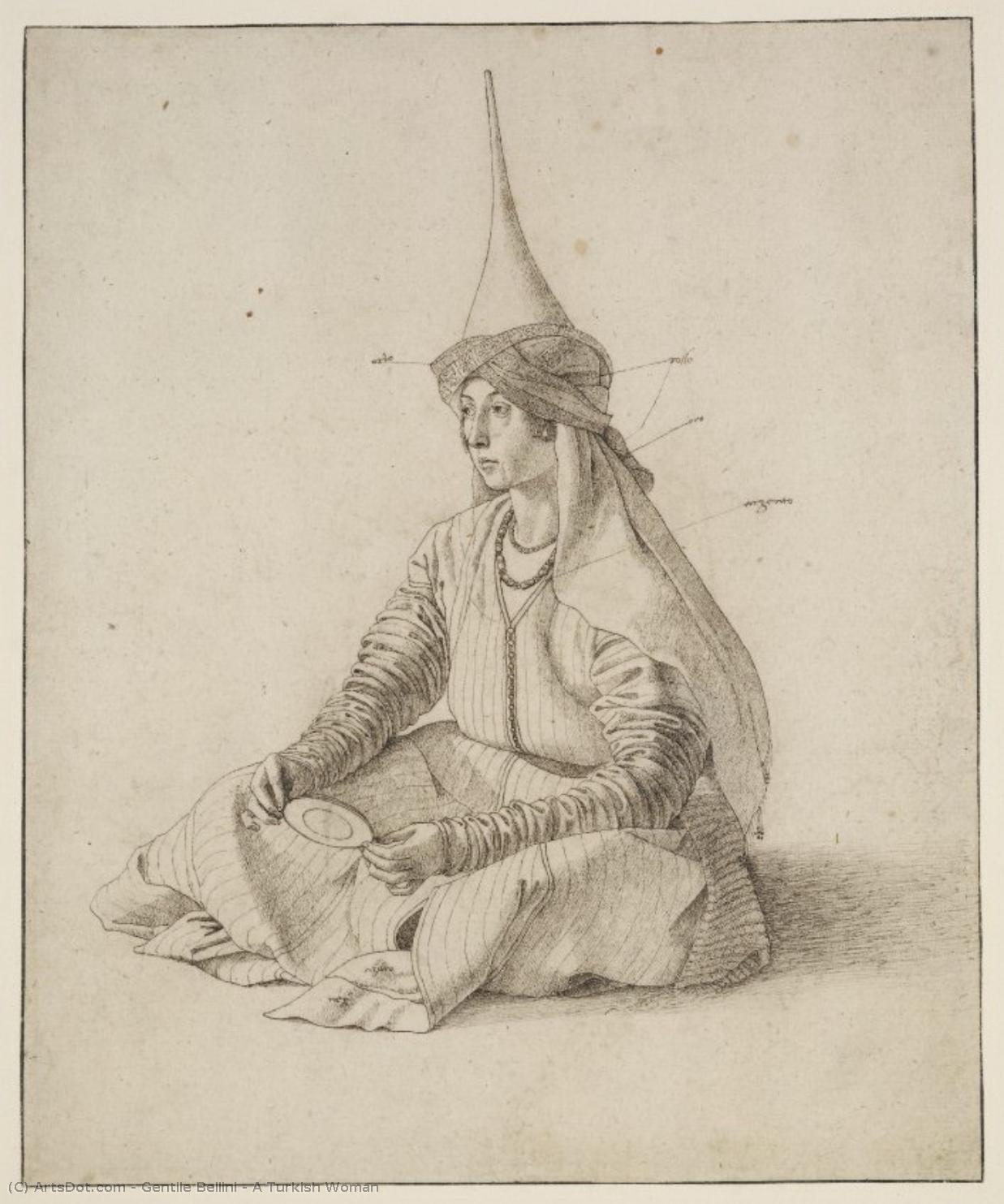
Gentile Bellini's “A Turkish Woman,” created around 1480, stands as a remarkable testament to the Venetian Renaissance’s fascination with Eastern cultures and its mastery of meticulous observation. This pencil drawing transcends mere representation; it captures not only the likeness of an individual but also embodies the spirit of a period defined by diplomatic engagement and artistic innovation.
- Subject Matter: The artwork depicts a Turkish woman seated gracefully, her gaze directly confronting the viewer—a bold gesture indicative of confidence and intellectual curiosity. Her attire reflects the opulent traditions of Ottoman Persia, highlighting Bellini’s awareness of broader cultural influences beyond Venice itself.
- Style & Technique: Rooted firmly in Renaissance portraiture, “A Turkish Woman” exemplifies Bellini's dedication to realism. The artist skillfully employs hatching and cross-hatching techniques—a hallmark of Venetian art—to build up tonal values with astonishing precision. Fine lines delineate facial features, while thicker strokes define the contours of clothing, creating a palpable sense of texture.
- Composition & Lighting: Centered on the woman’s figure, the composition directs the viewer's eye towards her hands delicately holding what appears to be embroidery or needlework—a subtle symbol of domesticity and artistic skill. Diffused lighting contributes to an atmosphere of serenity, emphasizing the subject’s stillness and conveying a dignified composure.
- Historical Context: Bellini undertook this commission as part of an embassy dispatched by Venice to Constantinople (Istanbul), marking a pivotal moment in Venetian diplomacy. The portrait served not only as documentation but also as a reflection of Venetian perceptions—and aspirations—regarding the East, demonstrating the artist’s engagement with contemporary political and cultural currents.
- Symbolism & Emotional Impact: Beyond its technical brilliance, “A Turkish Woman” resonates emotionally through the woman's unwavering gaze. It speaks to notions of intelligence, self-assurance, and perhaps even a quiet defiance—qualities valued within Renaissance ideals of beauty and virtue. The meticulous rendering of fabric textures underscores Bellini’s artistic prowess and invites contemplation on the complexities of cultural exchange.
This drawing exemplifies Bellini's unparalleled ability to translate observation into art, securing his place as one of Venice’s most influential portraitists and cementing “A Turkish Woman”’s legacy as a masterpiece of Early Renaissance artistry. Its enduring appeal lies in its understated elegance and profound psychological insight.