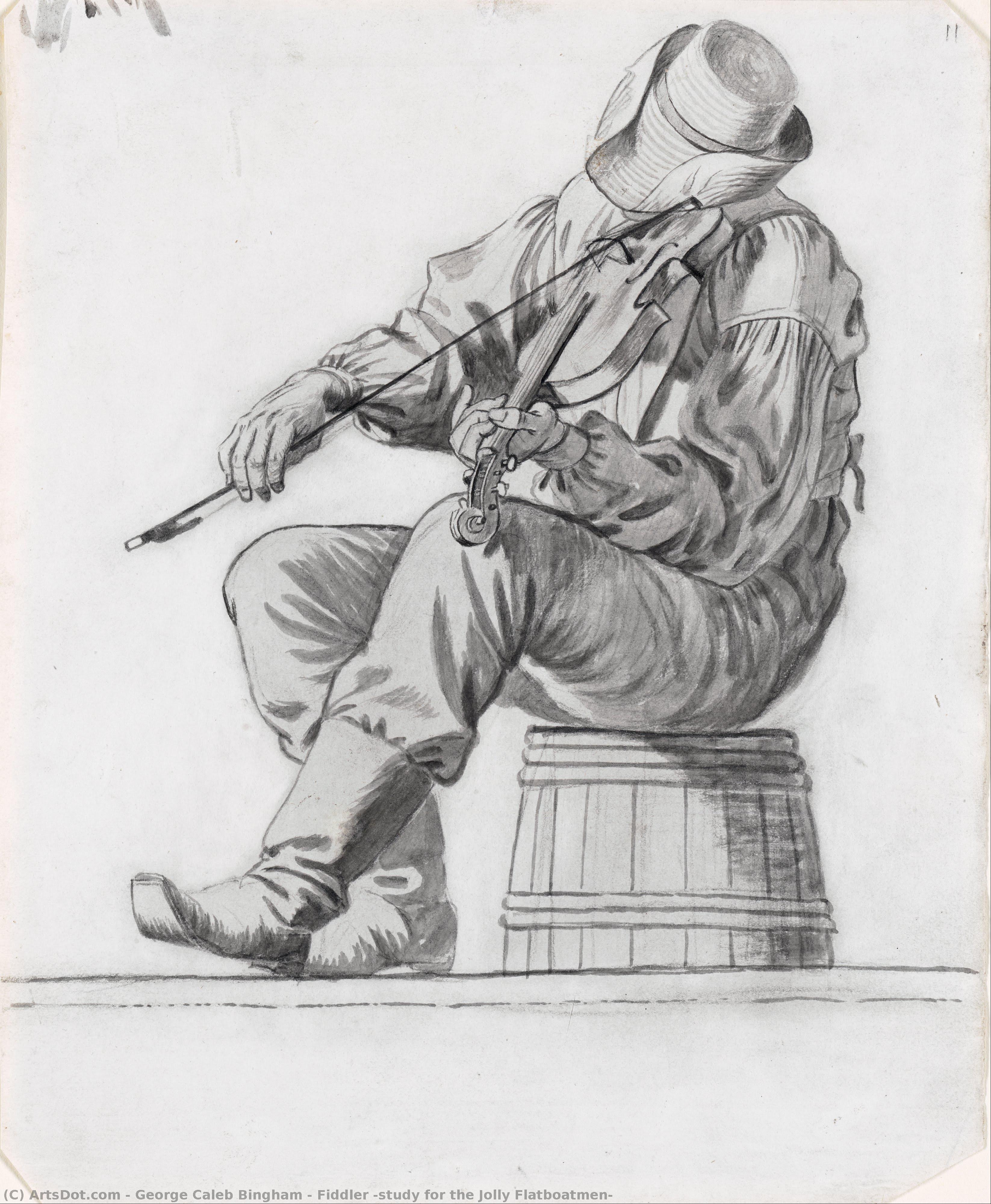
A Moment Frozen in Time: Study for ‘The Jolly Flatboatmen’
This preparatory sketch, “Fiddler (study for the Jolly Flatboatmen),” offers an intimate glimpse into the creative process of George Caleb Bingham, a pivotal figure in American folk art. Dating back to 1846, this unassuming drawing – executed primarily with graphite pencils – is far more than just a preliminary study; it’s a concentrated distillation of Bingham's vision for his monumental painting, “The Jolly Flatboatmen,” and a powerful testament to the burgeoning spirit of the American frontier. The work captures a solitary moment: a fiddler, deeply engrossed in his music, seated upon a barrel on what appears to be a flatboat. It’s a scene brimming with quiet dignity and an undeniable sense of nostalgia for a bygone era of river life.
Technical Mastery and the Language of Line
- Technique: The artist's skill lies in his masterful use of hatching and cross-hatching. These techniques, meticulously applied, build up tonal values with remarkable precision, creating a rich sense of form and volume within the figure and his surroundings. The loose, expressive lines suggest a deliberate choice – a preference for capturing the *essence* of the scene over photographic realism.
- Materials: Likely created on paper using graphite pencils, the drawing demonstrates a deep understanding of how to manipulate light and shadow through line alone. The varying densities of lines create textures that range from the rough fabric of the fiddler’s clothing to the smooth surface of his violin.
Symbolism and the American Narrative
More than just a portrait, this sketch embodies the core themes of Bingham's work: the lives of ordinary Americans on the frontier. The fiddler represents leisure, skill, and perhaps even a touch of melancholy – qualities deeply rooted in the experiences of those who lived along the rivers of Missouri. The flatboat itself is a potent symbol of American ingenuity and adaptability, reflecting the nation’s westward expansion and its reliance on river transport. This piece speaks to a time when community was forged around shared labor and simple pleasures, a sentiment that resonates powerfully even today.
A Window into Bingham's Process
As a study for “The Jolly Flatboatmen,” this sketch reveals the meticulous planning behind Bingham’s grand composition. The flattened perspective, characteristic of his style, allows the viewer to focus entirely on the fiddler and his immediate environment. It’s a deliberate choice, emphasizing the narrative power of the scene and highlighting the individual within the collective. This “Fiddler (study)” offers a rare opportunity to connect directly with the artist's thought process, providing valuable insight into the creation of one of America’s most beloved folk art masterpieces. The work’s monochromatic palette further intensifies its emotional impact, drawing attention to the subtle nuances of light and shadow that define Bingham’s remarkable talent.