A Window into a Vanishing World
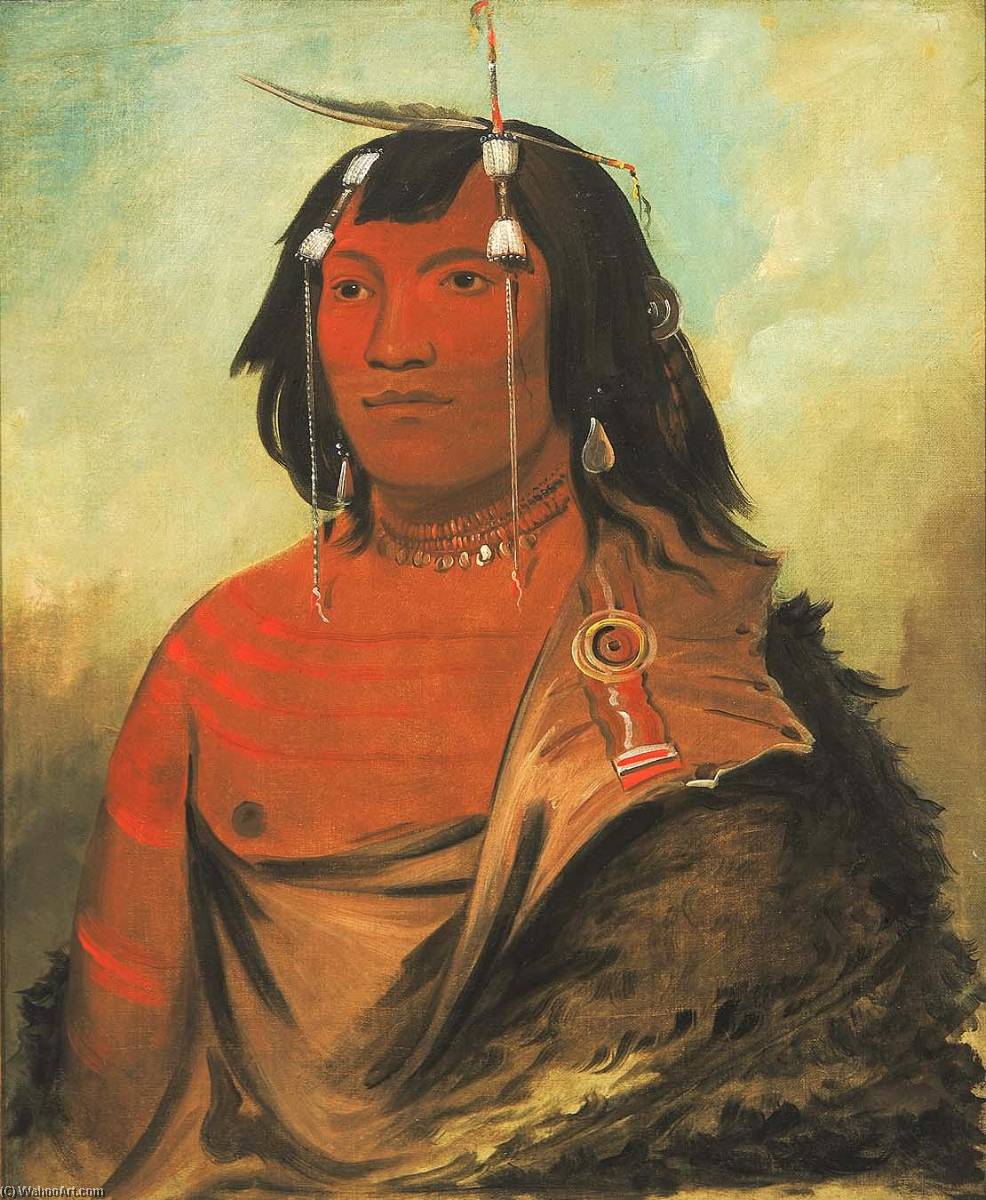
In the profound stillness of George Catlin’s 1832 masterpiece, Bi éets ee cure, Very Sweet Man, we are invited to witness more than just a portrait; we are granted an intimate audience with a soul from a bygone era. The painting presents a Native American man of striking presence, his long, flowing hair and regal feather hengress serving as a testament to a rich cultural heritage. As his gaze meets the viewer, there is a palpable sense of peace—a quiet dignity that transcends the canvas. Catlin, driven by an almost prophetic urge to document the traditions of the American frontier before they were lost to time, captures not only the physical likeness of the subject but the very essence of his spirit. The composition is subtly layered, with figures in the periphery engaged in the rhythms of daily life, creating a sense of a living, breathing community that exists both within and beyond the frame.
The technique employed by Catlin reflects his unique position as both an artist and a chronicler. His brushwork, while maintaining a certain painterly fluidity, is deeply rooted in a commitment to ethnographic accuracy. Every detail—from the intricate textures of the necklace and earrings to the delicate arrangement of the headdress—is rendered with a meticulous eye that honors the subject's status. The interplay of light and shadow across the man's face lends a three-dimensional quality to his expression, making his serene countenance feel remarkably present. For the discerning collector or interior designer, this piece offers a sophisticated depth, where the earthy tones and classical portraiture style harmonize beautifully with both traditional and contemporary decor, providing a focal point that is as intellectually stimulating as it is aesthetically pleasing.
Historical Resonance and Emotional Depth
To understand the weight of this work, one must consider the historical urgency that fueled George Catlin’s artistry. Born in Pennsylvania and shaped by the frontier legends of his youth, Catlin abandoned a legal career to pursue a mission of preservation. This painting was created during a period of immense transition in North America, a time when the landscapes and cultures of Native American tribes were facing unprecedented pressures. Consequently, Bi éets ee cure, Very Sweet Man functions as a vital historical document. The symbolism within the attire—the feathers, the ornaments, the specific arrangement of regalia—serves as a silent language of identity and pride, preserved forever through Catlin's devotion to his craft.
Beyond its historical value, the emotional impact of the painting lies in its ability to evoke empathy and reflection. There is a haunting beauty in the subject's peaceful expression, a stillness that contrasts sharply with the turbulent history of the era. For those seeking to adorn their spaces with art that tells a story, this reproduction offers an opportunity to bring a sense of timelessness and profound human connection into a home or gallery. It is a piece that invites long periods of contemplation, prompting the viewer to reflect on the enduring strength of human dignity and the importance of remembering the voices of the past.