The Dignity Captured on Canvas
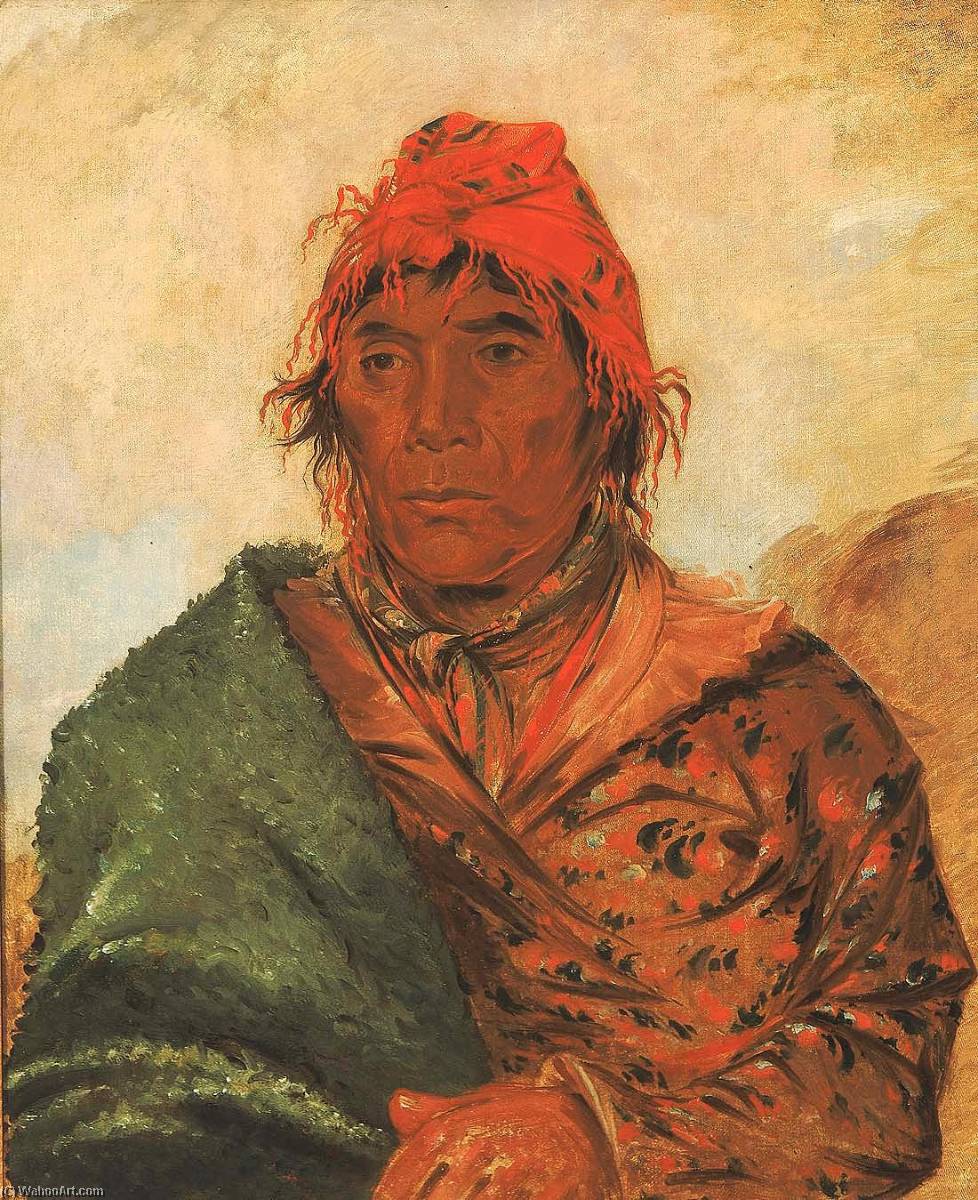
Before us rests a profoundly moving portrait, George Catlin’s evocative depiction of Ee mat lá , King Phillip, Second Chief. This 1838 work transcends mere representation; it is a solemn meditation on culture, resilience, and the passing of time. The subject commands attention with an undeniable dignity that seems to emanate from within the very texture of the paint. Catlin has gifted us not just a likeness, but a window into a vanishing world, capturing the gravitas of an Indigenous leader whose life story is woven into the rich tapestry of his bearing. The composition is intimate, drawing the viewer close to the subject’s face and upper form, allowing for a near-whisper of connection across the decades.
Mastery in Expressive Technique
Technically, the painting speaks volumes about Catlin's skill as an observer and an artist. The application of paint is remarkably tactile; one can almost feel the impasto build-up under the surface, giving the reds, browns, and deep greens a physical weight. The brushwork itself is loose and expressive, eschewing sharp academic lines for something more visceral and immediate. This gestural quality lends the portrait an undeniable energy, suggesting the speed of memory or the urgency of documentation. While the background dissolves into soft, blurred suggestion—a shallow depth that keeps all focus squarely on the man—the details of his patterned cloak and headdress remain richly textured, anchoring the narrative within the visible artistry.
A Historical Echo: The Frontier Encounter
To understand this piece is to understand its context. Created in 1838, it stands at a pivotal moment in American history—a time of profound cultural collision and immense change on the Pacific Northwest Coast. George Catlin himself was positioned as an outsider chronicler, driven by a need to record what he perceived as ephemeral traditions. This portrait is thus imbued with the weight of ethnographic art; it serves as both a tribute and a historical artifact. It compels us to consider the gaze of the artist, the significance of the subject’s presence against the backdrop of inevitable change.
Symbolism and Emotional Resonance
The symbolism within the attire—the vibrant red accents and the intricate patterns of his garments—are not merely decorative; they are cultural signifiers, speaking volumes about status and belonging. Yet, beyond these tangible symbols lies a palpable emotional current. There is a quiet contemplation here, perhaps tinged with melancholy or an enduring sense of stoic resilience. For the collector or decorator, this piece offers more than just striking color; it offers depth. It invites moments of pause, encouraging reflection on heritage and the enduring spirit that art can preserve.