A Glimpse into a Vanishing World
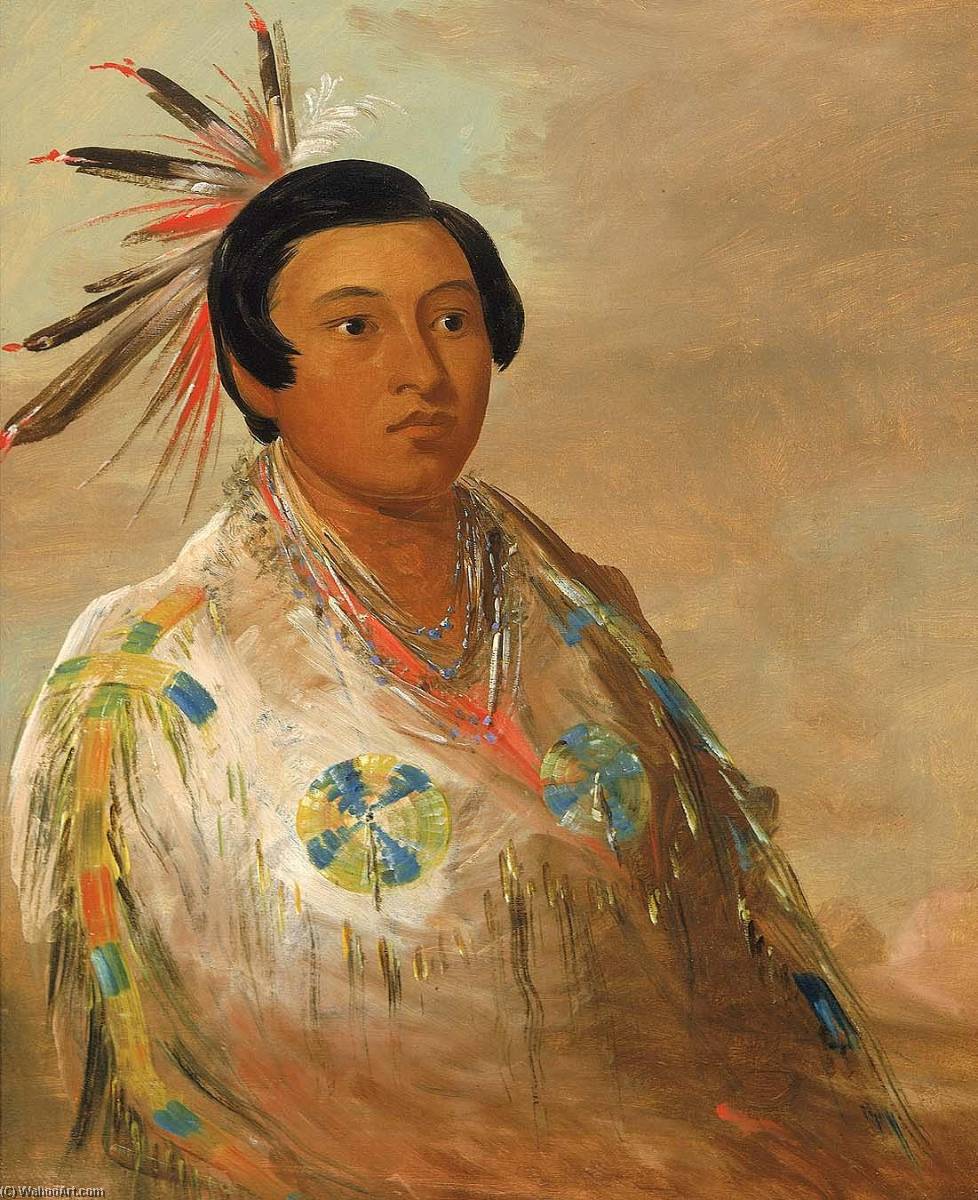
In the profound stillness of George Catlin’s 1839 masterpiece, Hee doh'ge ats, a Young Man, we are invited to meet a soul from a bygone era. This striking portrait serves as more than just a depiction of an individual; it is a window into the dignity and cultural richness of Native American life during a period of immense historical transition. The subject, a young man of commanding presence, gazardes at the viewer with an expression that balances stoic resilience with a quiet, piercing intelligence. Every detail, from the flowing locks of his hair to the regal arrangement of his feathered headdress, speaks to a deep-seated pride and a connection to the natural world that Catlin sought so desperately to preserve.
The painting is a triumph of observational realism, where the artist’s brush captures the tactile reality of the subject's adornments. The intricate patterns woven into the headdress and the subtle textures of his necklaces and bracelets are rendered with a meticulous care that honors the craftsmanship of the culture depicted. Catlin utilizes a palette of rich, vibrant tones that breathe life into the canvas, ensuring that the warmth of the skin and the brilliance of the feathers command immediate attention. This mastery of color and light creates a sense of three-dimensionality, making the subject feel as though he might step forward from the frame and engage in silent conversation with the modern observer.
The Legacy of George Catlin
To understand the emotional weight of this portrait, one must consider the hand that held the brush. George Catlin was not merely a painter; he was a self-appointed historian of the American frontier. Driven by a haunting realization that the traditions and appearances of the Native American tribes were rapidly fading under the pressure of westward expansion, Catlin abandoned a legal career to document these vanishing ways of life. His work is characterized by an urgent, almost ethnographic precision, yet it is infused with a romanticism born from his own childhood fascination with the wild landscapes of the West. In Hee doh'ge ats, a Young Man, we see this duality perfectly realized—the clinical accuracy of a documentarian blended with the soulful empathy of an artist.
For the discerning collector or interior designer, this piece offers a profound sense of narrative depth. It is an artwork that demands contemplation, providing a focal point that is both aesthetically magnificent and intellectually stimulating. Whether placed in a curated gallery setting or as a centerpiece in a sophisticated living space, the painting brings an air of historical gravity and timeless elegance. It serves as a reminder of the enduring strength of human identity and the power of art to bridge the gap between centuries, allowing us to hold onto the beauty of a heritage that continues to inspire awe and respect across the globe.