A Glimpse Through Time: The Encounter on the Frontier
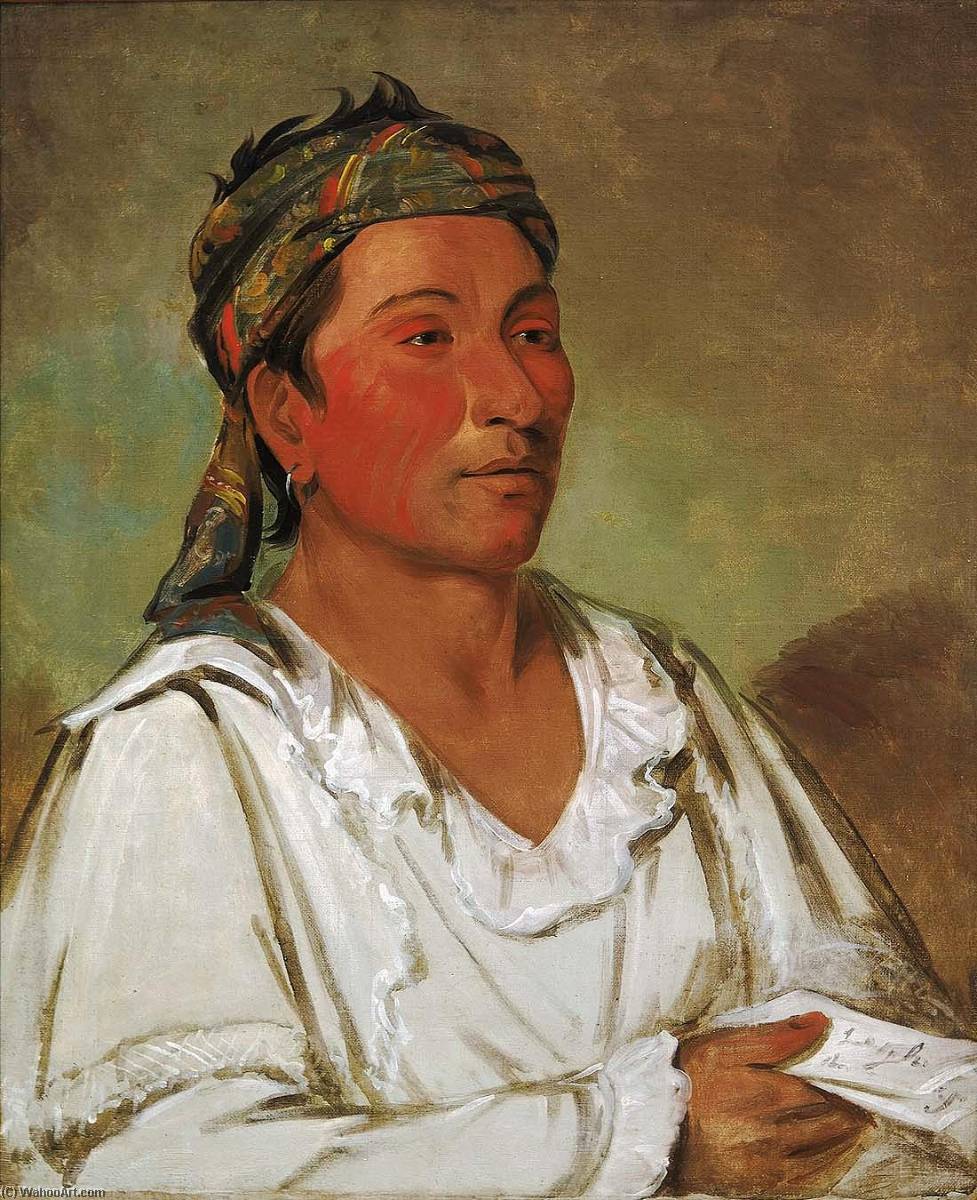
George Catlin’s evocative canvas, "Lay lóo ah pee ái shee kaw, Grass, Bush, and Blossom, Semicivilized," transports us to a pivotal moment in American history—a meeting point between two vastly different worlds. Painted in 1830, this work is more than a mere portrait; it is a profound visual document of cultural collision. The subject, a Native American woman adorned with striking red face paint and dressed in what appears to be a white dress accented by a headscarf, embodies the complex identity suggested by the title itself: "Semicivilized." Catlin masterfully captures her poise, suggesting both deep cultural roots and an engagement with encroaching external influences. The very act of holding what seems to be paper or a book in her hand becomes a potent symbol, inviting contemplation on assimilation, knowledge transfer, and the enduring spirit of tradition.
Mastery in Oil on Canvas: Technique and Presence
The technical execution speaks to Catlin’s skill as an observer and artist. Rendered in oil on canvas, the medium allows for rich depth and nuanced tonal shifts, giving the figures a palpable sense of three-dimensionality. One can almost feel the texture of the fabric against her skin, or the subtle brushstrokes defining the wild grasses and blossoms surrounding her. Catlin’s approach is characterized by meticulous detail juxtaposed with an overall romanticism. The composition places the figure centrally, allowing the natural elements—the grass, bush, and blossom—to frame her like a living diorama. This careful balance between the portraiture of the individual and the lush backdrop grounds the piece in both human drama and untamed nature.
The Weight of History: Context and Symbolism
To view this painting is to engage directly with the fraught history of the American frontier. George Catlin himself was a man caught between worlds, an artist driven by the urgent need to record vanishing cultures before they were irrevocably altered. This work reflects that historical tension. The red paint on her face, the white dress, and the surrounding flora are not arbitrary details; they function as symbolic markers of transition. They speak to resilience, adaptation, and the complex negotiation of identity when faced with overwhelming change. For the collector or designer, this piece offers a powerful narrative anchor—a conversation starter that speaks volumes about cultural exchange and the passage of time.
An Emotional Resonance for Modern Spaces
Bringing this artwork into a contemporary setting infuses any room with an immediate sense of depth and storied history. Its emotional impact is one of quiet dignity mixed with poignant melancholy. It encourages the viewer to pause, to listen to the untold stories held within the gaze of the subject. Whether displayed in a formal study that appreciates historical gravitas or a more bohemian space celebrating global artistry, this reproduction serves as an eloquent focal point. Owning this piece means curating not just decoration, but a tangible piece of American cultural narrative, rendered with enduring artistic grace.