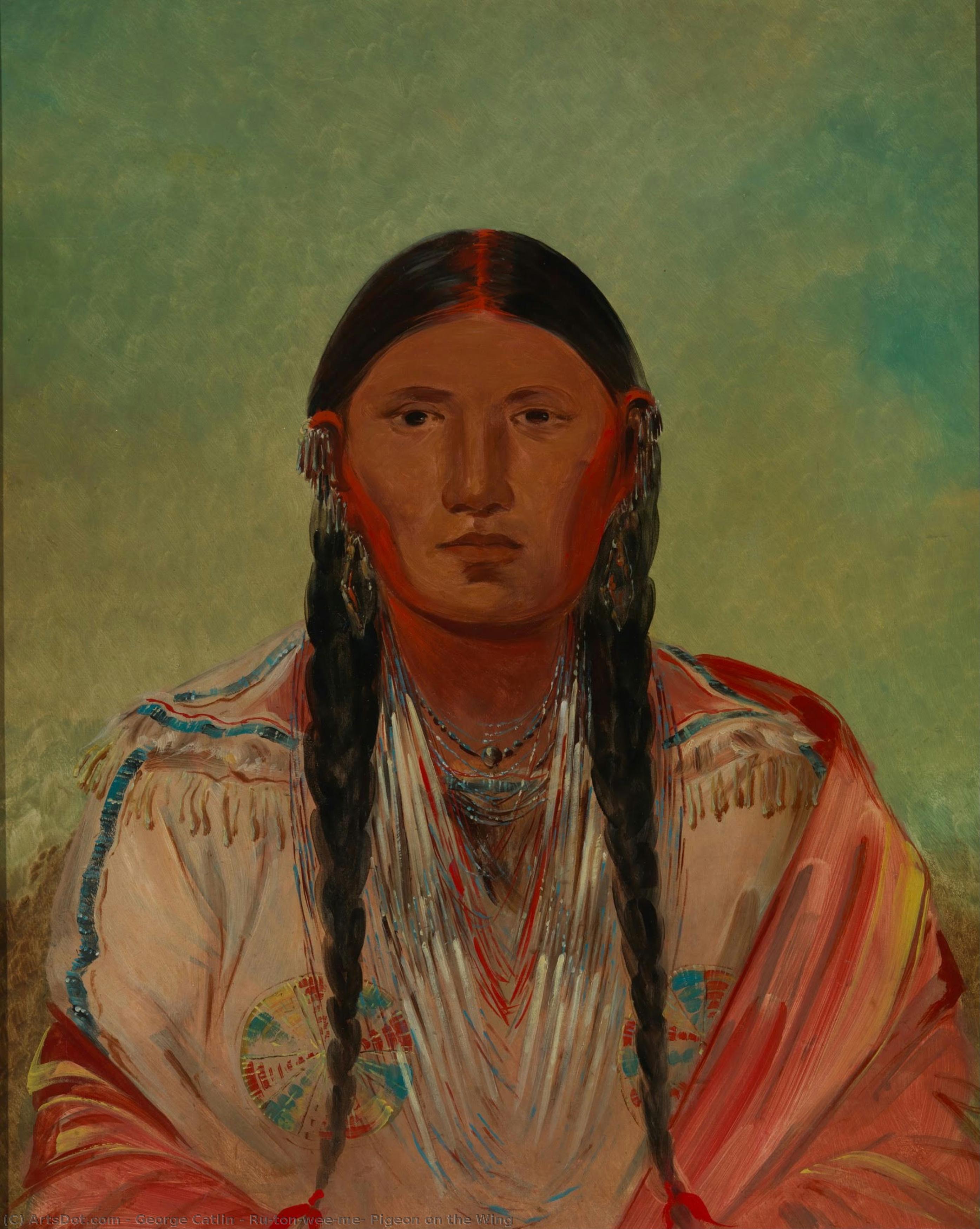
Ru-ton-wee-me, Pigeon on the Wing: A Window into Catlin’s Frontier Vision
George Catlin's "Ru-ton-wee-me, Pigeon on the Wing," painted in 1844, is more than just a portrait; it’s a poignant document of a vanishing world. This arresting image of a Native American woman, rendered with meticulous detail and imbued with a palpable sense of dignity, offers a rare glimpse into the lives of the tribes Catlin sought to preserve through his art. Measuring 73 x 60 cm, the oil on canvas captures the subject – identified as a member of the Pawnee tribe – in a moment of quiet contemplation, her direct gaze challenging the viewer to confront the realities of westward expansion and its impact.
The Artist's Mission: Documenting the Frontier
- George Catlin (1796-1872): A pivotal figure in American art history, Catlin dedicated his career to depicting Native Americans and their way of life. His work stemmed from a deep empathy and a growing fear that these cultures were disappearing before the eyes of the nation.
- Early Influences: Catlin’s fascination with the frontier began in childhood, fueled by stories recounted by his mother about her own experiences during an Indian raid. This formative exposure shaped his artistic vision, driving him to capture the essence of the West – its beauty, its danger, and its profound cultural significance.
- A Race Against Time: Created just four years before Catlin’s death, “Ru-ton-wee-me” exemplifies his urgent desire to document these cultures before they were irrevocably altered by American settlement. The painting serves as a powerful reminder of the fragility of indigenous traditions in the face of relentless progress.
Style and Technique: Catlin’s “Wild West” Aesthetic
Catlin's style is immediately recognizable, characterized by its dramatic compositions and almost theatrical presentation. "Ru-ton-wee-me" exemplifies this approach, employing a low horizon line to emphasize the vastness of the landscape – a key element in Catlin’s deliberate attempt to convey the scale and grandeur of the frontier. The meticulous detail with which he rendered the woman's clothing, jewelry, and facial features reflects his commitment to accuracy and respect for the subject. His use of rich, saturated colors further enhances the painting’s dramatic effect, creating a visually arresting image that draws the viewer into its world.
Symbolism and Interpretation: The ‘Pigeon on the Wing’
The title itself, “Ru-ton-wee-me,” translates to "Pigeon on the Wing" in Pawnee. This likely holds a symbolic significance within the tribe's cosmology – pigeons often representing messengers or spiritual guides. The woman’s stern expression and direct gaze suggest strength, resilience, and perhaps a quiet defiance in the face of encroaching change. The painting can be interpreted as a visual lament for a way of life that was rapidly disappearing, a plea to remember and honor the traditions of these Native American communities.
A Timeless Masterpiece: Reproduction Possibilities
"Ru-ton-wee-me, Pigeon on the Wing" is a captivating artwork that continues to resonate with audiences today. ArtsDot offers meticulously crafted hand-painted reproductions of this iconic piece, allowing you to bring its beauty and historical significance into your home or office. Our skilled artisans employ traditional oil painting techniques to faithfully recreate Catlin’s original vision, ensuring an authentic and enduring representation of this remarkable work. Perfect for collectors, interior designers seeking a touch of the frontier aesthetic, or anyone captivated by American art history, our reproduction offers a unique opportunity to own a piece of cultural heritage.