A Glimpse into a Vanishing World: The Portrait of Steeh tcha kó me co
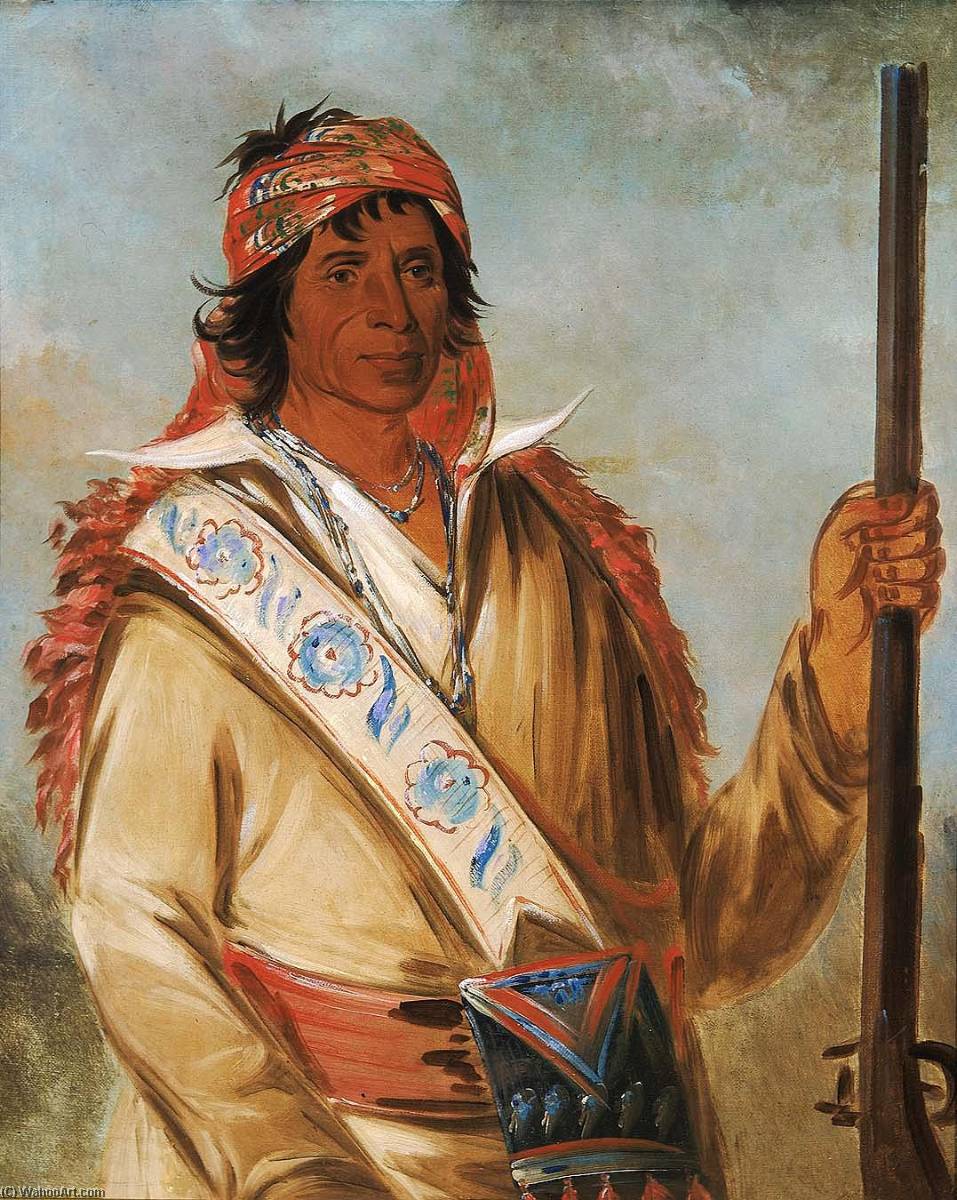
To stand before George Catlin’s Steeh tcha kó me co, Great King (called Ben Perryman), a Chief is to step across the threshold of time itself. This arresting portrait, executed in 1834, is far more than a mere likeness; it is a profound historical document rendered with the passionate brushstrokes of Romanticism. Catlin, forever drawn to the edges of civilization, captured here the dignity and complex spirit of an Indigenous leader. The subject commands attention through his direct gaze, which seems to meet the viewer’s own across the expanse of decades. He is presented not just as a man, but as a symbol—a living embodiment of a culture at a pivotal, fragile moment in history.
Mastery of Technique and Atmosphere
The technical brilliance evident in this oil painting on canvas is breathtaking. Catlin employs a realism that borders on the ethnographic, yet it is softened by an expressive handling characteristic of his era. Observe the visible texture of the paint; the layering suggests hours of meticulous work, allowing the rough materiality of the canvas to contribute to the narrative depth. The artist masterfully controls the light, which falls upon the chief’s face and accoutrements with a soft, diffused quality. This lighting sculpts the planes of his features, lending an almost sculptural weight to his presence. While the background dissolves into muted washes of blue and brown—a suggestion of the vast, untamed outdoors—it serves only to push the figure forward, anchoring all focus upon the man himself.
Symbolism Woven in Feathers and Wood
Every element within the composition speaks volumes. The feathered headdress is not merely ornamentation; it signifies status, lineage, and spiritual connection. Similarly, the beaded sash catches the light, hinting at intricate tribal artistry passed down through generations. And then there is the rifle, held with a practiced ease—it represents both the inherent power of the warrior and the encroaching realities of conflict that defined this era. Catlin’s genius lies in balancing these symbols: the deep cultural resonance embodied by the regalia set against the stark reality of modern weaponry. It creates a poignant tension, inviting contemplation on themes of resilience, sovereignty, and change.
A Connection for the Modern Collector
For the collector or designer seeking art with narrative weight, this piece offers unparalleled depth. Owning a reproduction of Steeh tcha kó me co is acquiring more than just decoration; it is commissioning a conversation starter, an object that demands thoughtful engagement. The rich palette—dominated by earthy ochres and deep browns, punctuated by vibrant accents of red and blue—lends itself beautifully to various interior décors, whether in a study meant for contemplation or a grand hall celebrating cultural heritage. It carries the gravitas of history while retaining the immediate emotional pull of a masterful portrait.