A Window into Colonial Serenity
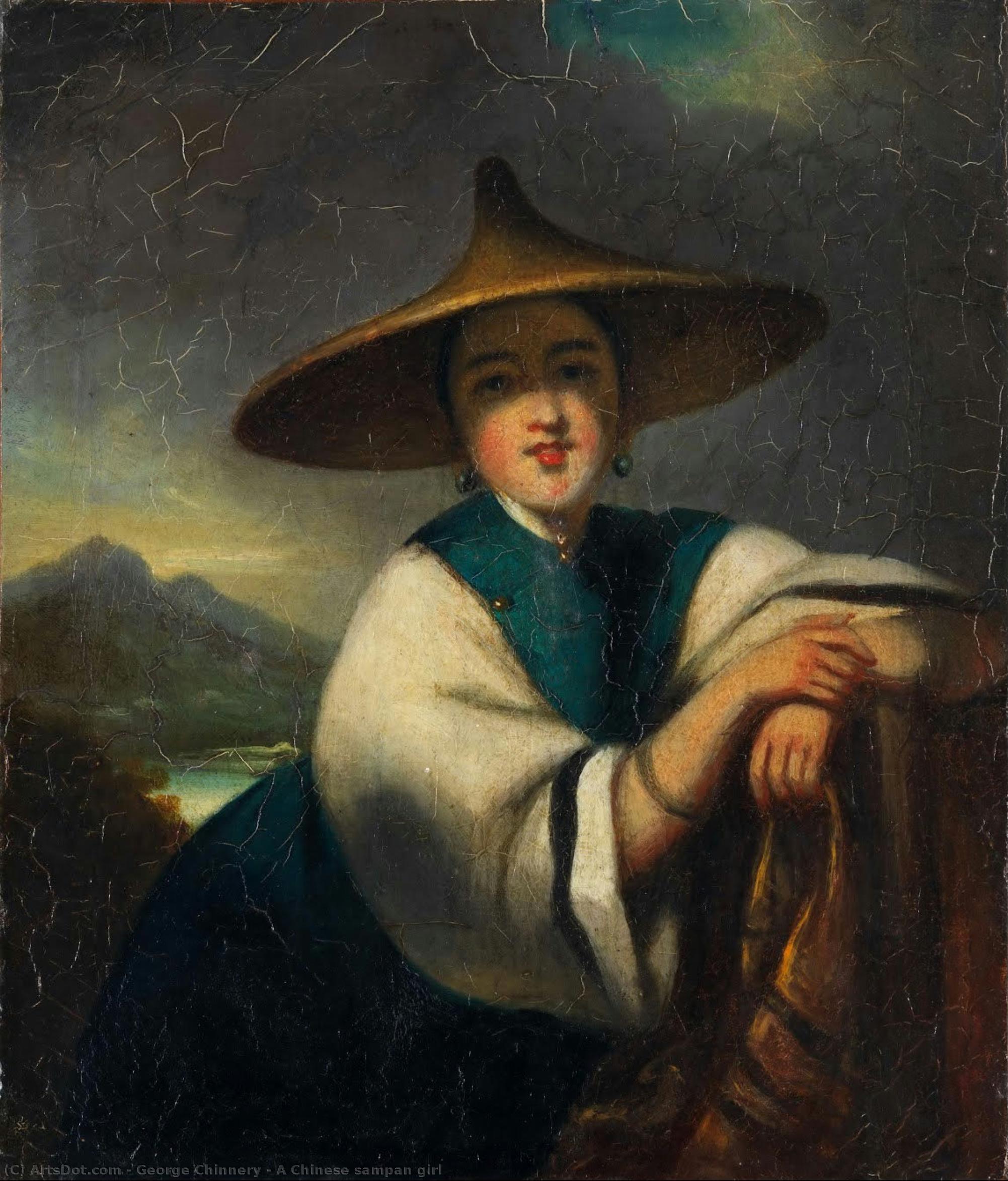
In the delicate brushstrokes of George Chinnery’s "A Chinese Sampan Girl," we find much more than a mere portrait; we encounter a poignant intersection of cultures and eras. Painted around 1845, this work serves as a captivating emblem of the Victorian era's profound fascination with the Far East. The subject, a young woman captured in a moment of quiet repose, wears a hat adorned with a striking blue ribbon—a detail that acts as a focal point of color and symbolic charm amidst the softer tones of the composition. As she gazes toward the viewer, there is an undeniable sense of intimacy, as if the boundaries of time have dissolved, allowing us to share in her serene presence. The background, featuring distant, misty mountains and the subtle suggestion of a boat in the foreground, provides a sense of vastness and depth, grounding the portrait within the lush, maritime landscape of the era.
The technical mastery displayed in this piece reflects Chinnery’s prestigious training at the Royal Academy Schools in London. He employs a sophisticated use of chiaroscuro, utilizing dramatic contrasts between light and shadow to breathe life into the subject's features. This technique creates luminous tonal gradations that lend a palpable, three-dimensional quality to her skin and the fabric of her dress. His ability to blend pigments with such precision allows for a soft, atmospheric effect that captures the humid, heavy air of the coastal regions he frequented. For the discerning collector or interior designer, this mastery of light offers a sophisticated texture that can anchor a room, providing a sense of classical elegance and historical weight.
The Echoes of an Imperial Era
To understand the soul of this painting, one must look to the historical landscape of Madras and Southern China during the mid-nineteenth century. George Chinnery was a pivotal figure in the British colonial artistic circle, moving through the bustling hubs of the East India Company's influence. This period was defined by an intense interplay of economic expansion and cultural exchange. Through his eyes, we see the quiet, domestic side of this grand imperial narrative. While history books often focus on the movements of armies and merchants, Chinnery’s work captures the human element—the faces and lives that existed within the colonial sphere. The presence of other figures in the periphery of the scene suggests a lived-in world, a bustling maritime life that continues just beyond the frame.
For those looking to incorporate fine art into a curated space, "A Chinese Sampan Girl" offers an unparalleled emotional resonance. It is a piece that invites contemplation, evoking feelings of nostalgia and wanderlust. Whether placed in a sunlit study or a grand hallway, the painting’s subtle palette and evocative subject matter provide a sophisticated touch of storytelling. Owning a high-quality reproduction of this work allows one to preserve this fragment of history, bringing the grace of a bygone age into a modern setting and sparking endless conversation about the beauty of cultural convergence.