The painting
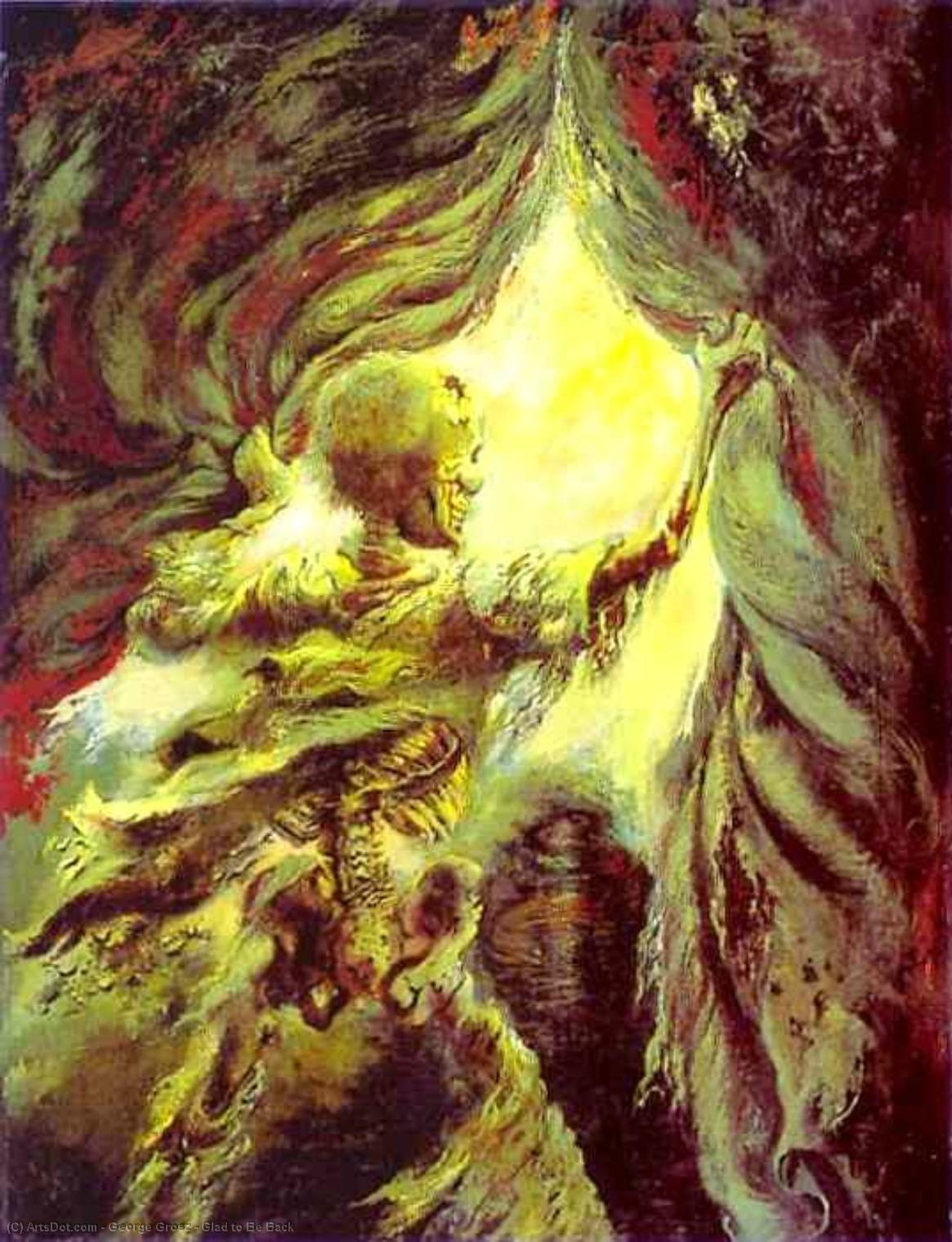
Glad to Be Back by
George Grosz is a captivating example of the Verism art movement. Created in 1943, this oil on panel artwork measures 71 x 50 cm and showcases the artist's unique style. The Verism movement, which emerged in Roman art during the late Roman Republic, is characterized by an exaggeration of imperfections to highlight the subject's age and gravitas.
Understanding Verism
Verism is a realistic style that emphasizes the portrayal of everyday life and people. It is often associated with portraiture, where the subject's flaws and imperfections are accentuated to convey their character and social status. The term
veristic comes from the Latin word "verus," meaning true or real. As seen in
The Verism Art Movement, this style is all about capturing the essence of reality.
Analysis of "Glad to Be Back"
In
Glad to Be Back,
George Grosz depicts a man with a skeleton face, wearing a robe and peeking out from behind a curtain. The subject's face has a skull-like appearance, adding to the overall sense of mystery and intrigue. The red background of the painting creates a dramatic atmosphere, drawing the viewer's attention to the subject. This artwork is a prime example of
George Grosz's ability to blend realism with social commentary.
- The use of a skeleton face as the subject's face adds a sense of mortality and impermanence to the painting.
- The curtain, which the subject is peeking out from behind, may symbolize the veil between life and death.
- The red background creates a sense of drama and tension, highlighting the subject's emotions.
George Grosz's work can be found on
ArtsDot.com, where you can discover more about his style and artistic vision. The
Palace of Capodimonte (Naples, Italy) is also home to many notable artworks, including those by
Andrea da Salerno.
The Verism movement has had a significant influence on modern art, with artists like
Edvard Munch creating iconic works that continue to inspire and captivate audiences today. As seen in the
The eyes of omega, the Expressionism style is closely related to Verism, emphasizing the portrayal of emotions and inner experiences.