The
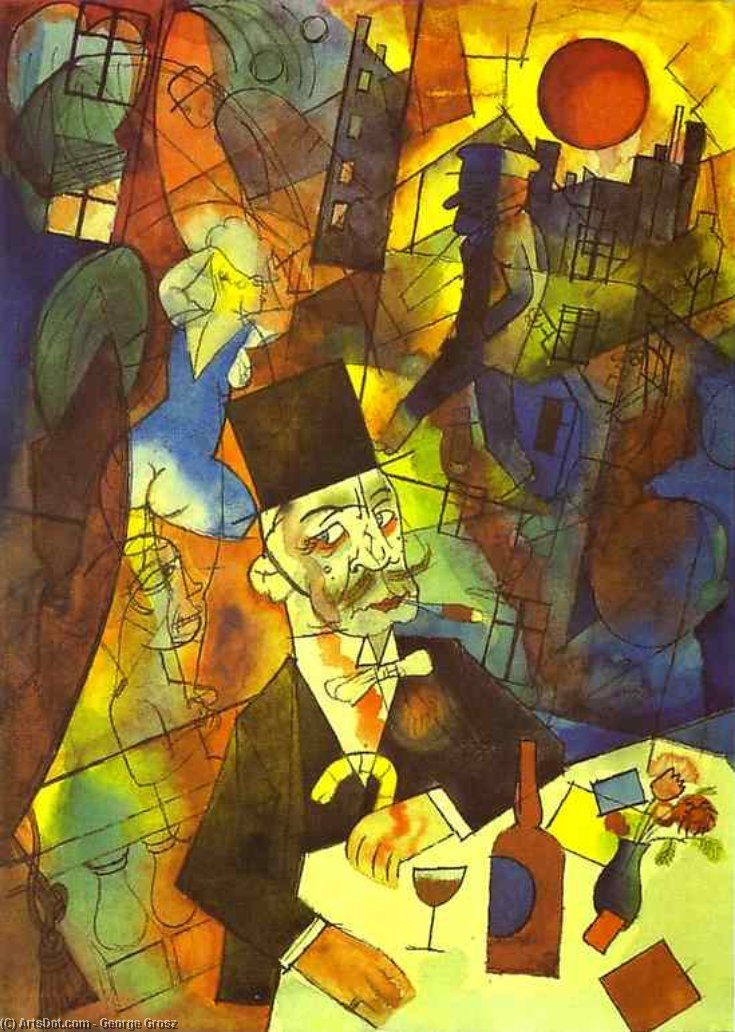
White Slave Trader is a thought-provoking painting by
George Grosz, created in 1918. This cubist artwork measures 31 x 23 cm and is a testament to the artist's skill and attention to detail. The scene features a man sitting at a dining table with several wine glasses in front of him, showcasing a sense of luxury and excess.
Artistic Style and Influences
George Grosz was a German artist known for his contributions to the
Cubism movement. His work often incorporated elements of satire and social commentary, reflecting the complexities of modern society. The
White Slave Trader is a prime example of this style, with its bold lines and vibrant colors. As seen in other works by Grosz, such as those featured on
ArtsDot.com, the artist's use of cubism adds a sense of depth and complexity to the painting.
Symbolism and Interpretation
The
White Slave Trader is more than just a still life; it is a commentary on the social ills of the time. The wine glasses and bottle on the table symbolize the excesses of the wealthy, while the figure in the background represents the exploitation of the poor. This theme is reminiscent of other works by Grosz, such as those found in the collection of the
Museo Nacional Centro de Arte Reina Sofia. For more information on
George Grosz and his artwork, visit
Wikipedia.
- The painting is a cubist artwork, characterized by its bold lines and vibrant colors.
- The scene features a man sitting at a dining table with several wine glasses in front of him.
- The White Slave Trader is a commentary on the social ills of the time, including exploitation and excess.
Handmade oil painting reproductions of the
White Slave Trader are available on
ArtsDot.com, allowing art lovers to own a piece of history. These reproductions are created using high-quality materials and techniques, ensuring that they are both durable and visually stunning.
The
White Slave Trader is a powerful example of
George Grosz's skill as an artist and his ability to convey complex social commentary through his work. As a masterpiece of cubism, it continues to inspire and provoke audiences today.