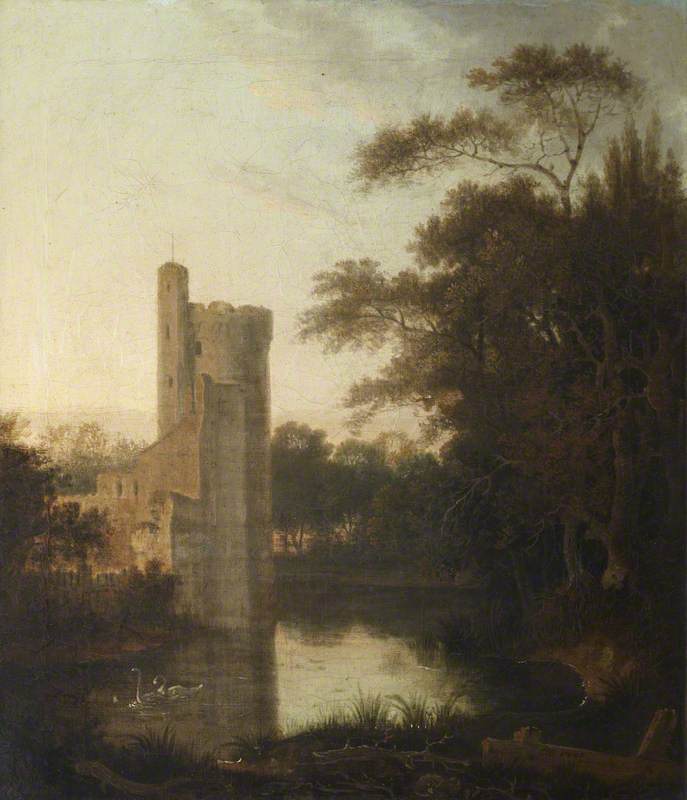
George Howland Beaumont's "Caister Castle, Norfolk" captures the serene beauty of the historic castle amidst lush landscapes. A romantic painting from 1785 showcasing timeless elegance and architectural detail.
Sir George Howland Beaumont (1753-1827) was a British art patron & amateur painter who founded the National Gallery. Explore his landscapes, Old Master collection & legacy!
Explore Cambridgeshire's rich heritage & stunning nature! Discover stately homes, ancient wetlands, and vibrant gardens at the National Trust – a journey through time awaits.
A Serene Vision of Norfolk’s Past
George Howland Beaumont's "Caister Castle, Norfolk" isn’t merely a depiction of a medieval fortress; it’s a carefully constructed evocation of a bygone era, imbued with the quiet melancholy and romantic sensibility characteristic of the late 18th-century British landscape. Painted in 1785, this oil on canvas transports us to the windswept shores of Norfolk, capturing not just the castle's imposing silhouette but also the subtle atmosphere of a place steeped in history and imbued with a sense of timelessness. Beaumont, a prominent art patron and amateur painter himself, possessed an astute eye for detail and a deep appreciation for the picturesque – a movement that sought to elevate ordinary landscapes into subjects of sublime beauty through careful composition and evocative lighting. The painting’s muted palette—dominated by earthy browns, greys, and subtle greens—creates a sense of atmospheric depth, drawing the viewer into the scene with an almost palpable stillness.
The Castle as a Symbol
Caister Castle itself holds significant historical weight. Originally built in the 15th century by Sir John Fastolf, a figure shrouded in legend and intrigue (often linked to the Shakespearean character Falstaff), the castle’s story is intertwined with tales of rebellion, betrayal, and shifting power dynamics. Beaumont's choice to portray the castle partially obscured by trees and mist isn’t accidental; it subtly acknowledges its turbulent past, hinting at a sense of decay and abandonment while simultaneously celebrating its enduring presence within the landscape. The castle represents more than just a physical structure; it embodies the weight of history, the passage of time, and the echoes of generations long gone. The strategic location overlooking the sea further emphasizes this symbolic role – a watchful guardian of the coastline, bearing witness to centuries of change.
Technique and Romanticism
Beaumont’s brushwork is remarkably loose and expressive, contributing significantly to the painting's overall mood. He employs broad strokes and washes of color to create an impressionistic effect, prioritizing atmosphere and feeling over precise detail. This technique aligns perfectly with the tenets of the Romantic movement, which emphasized emotion, imagination, and the sublime power of nature. Notice how he uses light—a diffused, almost ethereal glow—to illuminate the castle’s stonework, suggesting a sense of mystery and inviting contemplation. The inclusion of the small boat on the left shore adds a touch of human scale to the vast landscape, reminding us that even amidst centuries of history, life continues along the coast. The reflections in the water are skillfully rendered, adding depth and complexity to the composition.
A Glimpse into Beaumont’s World
Understanding George Howland Beaumont's personal context is crucial to appreciating this artwork fully. A baronet himself, Beaumont was a man of considerable wealth and influence, yet he eschewed a career in politics or military service, dedicating his life instead to art collecting and amateur painting. His extensive collection of Old Master paintings profoundly shaped his artistic sensibilities, inspiring him to seek out similar beauty in the natural world. His travels through Italy ignited a passion for capturing the essence of landscapes – not just their literal appearance but also their emotional resonance. “Caister Castle, Norfolk” is therefore a testament to Beaumont’s refined taste and his ability to translate that sensibility onto canvas. The painting reflects his deep appreciation for the English countryside, particularly its dramatic coastal scenery.
Reproductions and Legacy
Today, "Caister Castle, Norfolk" stands as a captivating example of British landscape art from the late 18th century. ArtsDot offers high-quality reproductions that faithfully capture the painting’s atmospheric depth and evocative mood. Whether displayed in a grand hall or a cozy study, this artwork will undoubtedly serve as a timeless reminder of England's rich history and enduring beauty. Consider commissioning a custom size reproduction to perfectly complement your interior design scheme – allowing you to bring Beaumont’s serene vision into your own home.