A Symphony of Silence: The Soul of North Conway
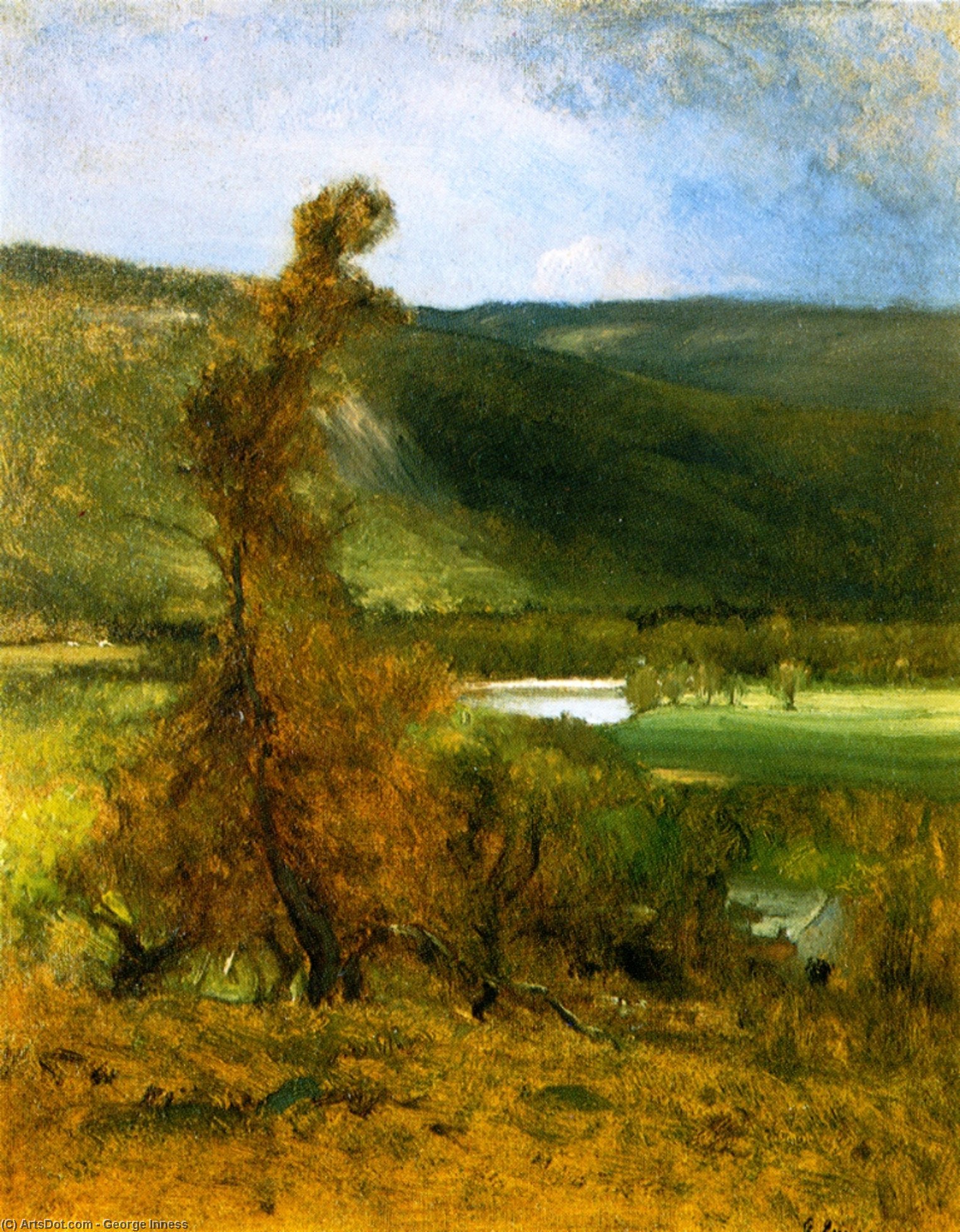
In the quietude of 1875, George Inness captured more than just a landscape; he captured a moment of profound spiritual resonance in North Conway, White Horse Ledge. As a master of the Tonalist movement, Inness moved away from the dramatic, sweeping vistas of the Hudson River School to embrace a more intimate, atmospheric approach to nature. This oil on canvas serves as a breathtaking window into the American wilderness, where the mountains of New Hampshire are not merely geological formations but vessels for emotion. The painting invites the viewer into a world where light and shadow dance in a delicate, melancholic rhythm, creating an atmosphere that feels both deeply personal and universally transcendent.
The composition is anchored by a striking foreground element: a skeletal, leafless tree that stands as a silent sentinel over the valley. This dead tree acts as a poignant memento mori, a subtle symbol of the inevitable cycle of life, death, and rebirth that governs the natural world. Yet, even amidst this sense of decay, there is an undeniable vitality present in the scene. A small bird, perched delicately in the upper right corner, breathes life into the stillness, while two distant figures wander near the base of the tree. These figures provide a vital sense of scale and human connection, suggesting that while we are small within the vastness of nature, we are intimately woven into its very fabric.
The Mastery of Tonalism and Light
Technically, North Conway, White Horse Ledge is a triumph of color harmony and atmospheric perspective. Inness utilizes a muted, tonal palette to evoke the soft, hazy light characteristic of his signature style. Rather than relying on sharp outlines, he employs loose, expressive brushstrokes that allow colors to bleed into one another, mimicking the way mist clings to mountain ridges. This technique creates a sense of depth that pulls the eye through the layers of the landscape, from the textured bark of the foreground tree to the ethereal, blue-tinted peaks in the far distance.
For the discerning collector or interior designer, this piece offers an unparalleled opportunity to introduce a sense of tranquility and contemplative depth into a living space. The painting’s ability to evoke "mood" over "detail" makes it a versatile masterpiece, capable of anchoring a room with its serene energy. Whether displayed in a sunlit gallery or a cozy study, a high-quality reproduction of this work brings the restorative power of the American landscape indoors. It is not merely a decoration; it is an invitation to pause, to breathe, and to reconnect with the quiet beauty that exists in the periphery of our busy lives.