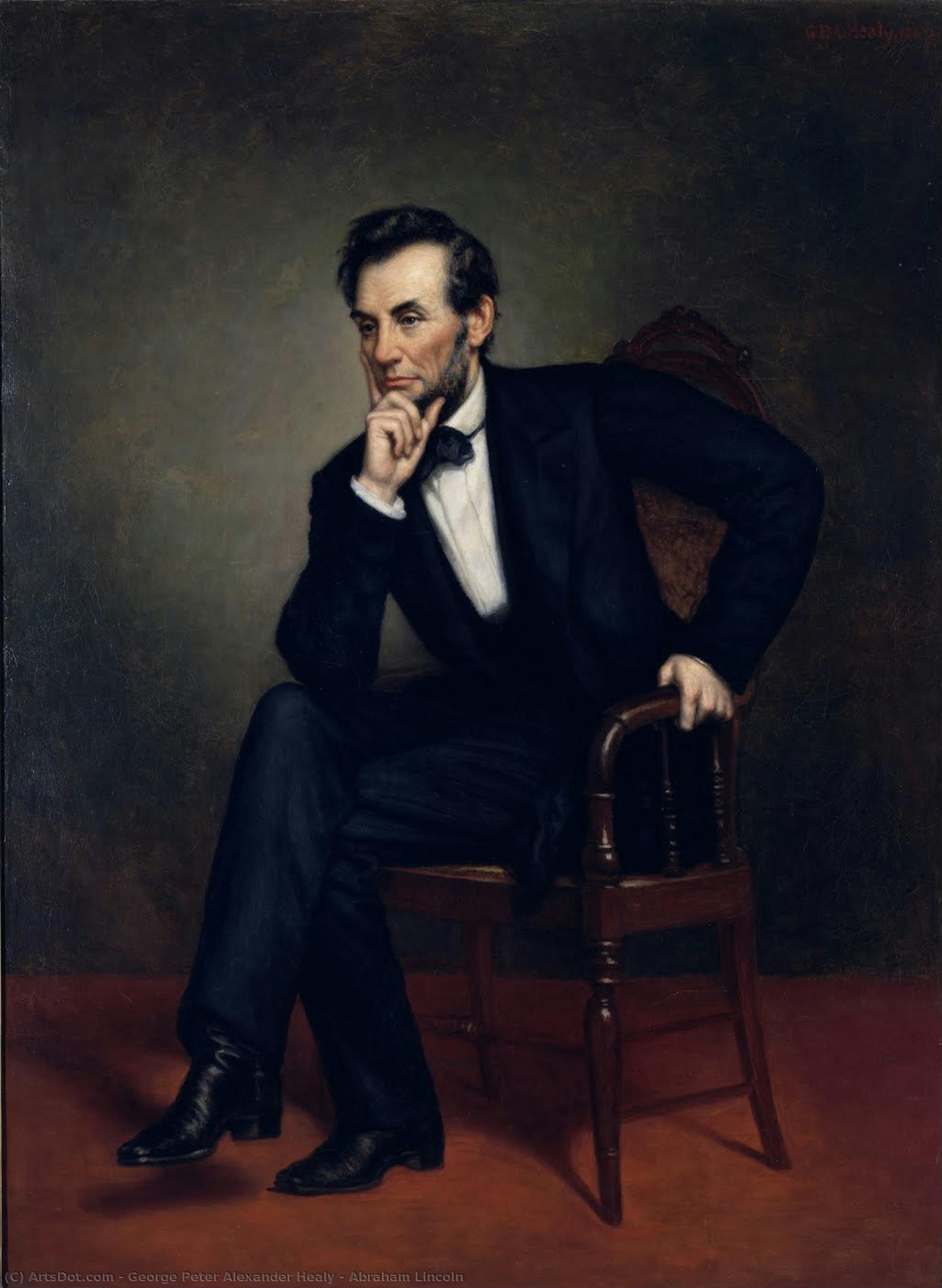
A Portrait of Presidential Reflection: George Peter Alexander Healy’s Abraham Lincoln
George Peter Alexander Healy's “Abraham Lincoln,” painted in 1887, isn’t merely a likeness; it’s a carefully constructed meditation on leadership, contemplation, and the weighty burden of national responsibility. This remarkable portrait transcends simple representation, offering a glimpse into the soul of one of America’s most revered figures – a man grappling with profound moral dilemmas during a nation's defining crisis. Healy, a prolific painter deeply embedded in the American art scene of the late 19th century, masterfully captured Lincoln’s inherent gravitas and quiet intensity, imbuing the image with an almost palpable sense of thoughtfulness.
Healy’s style is distinctly rooted in French academic tradition, yet infused with a uniquely American sensibility. He eschewed overly dramatic poses or theatrical lighting, instead favoring a restrained palette – predominantly muted browns, grays, and deep blues – that lends the scene an air of dignified solemnity. The brushwork is smooth and polished, reflecting Healy’s meticulous attention to detail and his desire to create a finished, refined surface. Notice particularly how he renders Lincoln's face; it’s not a photographic likeness but rather a carefully sculpted representation, emphasizing the lines etched by experience and the subtle nuances of expression that reveal both strength and vulnerability.
The Weight of History and the Power of Posthumous Portraiture
The creation of “Abraham Lincoln” is inextricably linked to the historical context of its time. Painted just a decade after Lincoln’s assassination, the portrait carries an undeniable sense of mourning and remembrance. Yet, it's also remarkable that Healy was able to create this image *after* Lincoln’s death. He relied heavily on life casts of Lincoln’s face – a common practice at the time – as well as recollections from those who knew him, blending these sources with his artistic skill to reconstruct the President’s features. This posthumous portrait is not simply a reproduction; it's an act of preservation, a way to keep Lincoln’s image and spirit alive in the public consciousness.
The choice of setting – a simple chair within what appears to be a modestly furnished room – further emphasizes the quiet dignity of the subject. The plainness of the furniture contrasts sharply with the monumental figure of Lincoln, suggesting that his strength lies not in outward displays of power but in inner resolve and moral conviction. Even the subtle curve of the arm resting on his knee speaks volumes about Lincoln’s character—a gesture of both contemplation and a readiness to act.
Symbolism and Emotional Resonance
Beyond its technical merits, “Abraham Lincoln” is rich in symbolic meaning. The seated posture itself conveys a sense of introspection and deliberation – Lincoln is not delivering a speech or issuing an order; he’s lost in thought, weighing the consequences of his decisions. The closed eyes suggest a moment of profound reflection, inviting the viewer to share in his mental process. The image powerfully evokes empathy and understanding for the immense challenges faced by this complex and transformative leader.
Furthermore, the portrait's enduring appeal lies in its ability to connect with viewers on an emotional level. It’s a reminder of Lincoln’s humanity – his struggles, his doubts, and his unwavering commitment to preserving the Union. “Abraham Lincoln” is more than just a painting; it’s a testament to the power of art to capture not only likeness but also character, history, and the enduring spirit of a nation.
Technical Details & Reproduction Considerations
The original artwork measures 137 x 188 cm (approximately 54 x 74 inches) and is executed in oil on canvas. Healy’s masterful use of glazing techniques creates a luminous quality, particularly noticeable in the rendering of Lincoln's face and clothing. When considering reproductions, it’s crucial to select a high-quality print that accurately captures these subtle nuances of color and texture. The scale of the original is significant; a reproduction at 100cm x 150cm (approximately 40 x 60 inches) would offer a compelling visual experience, while larger formats can truly immerse the viewer in the portrait’s contemplative atmosphere.