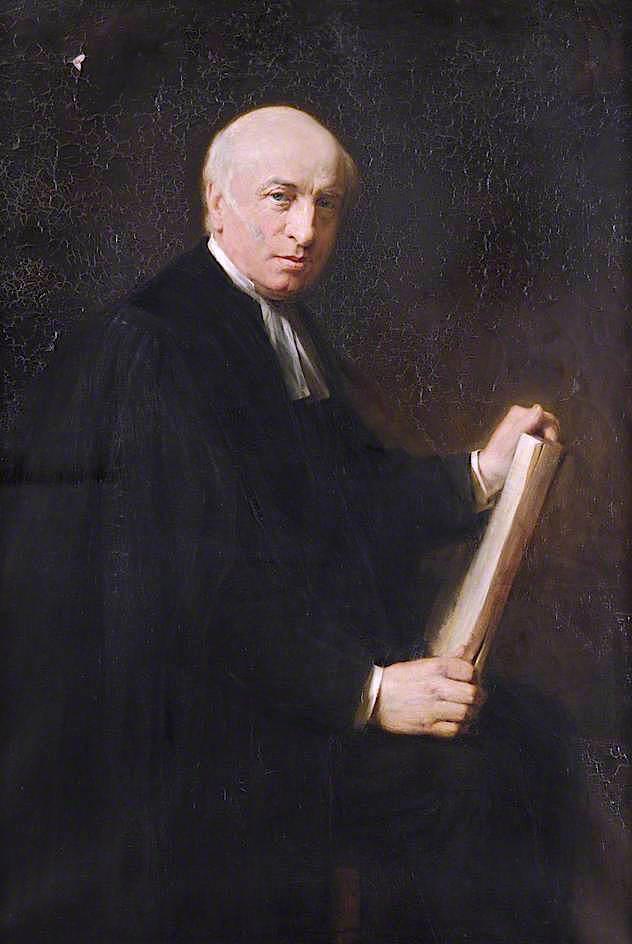
A Portrait of Dignified Resolve: James Lumsden by George Reid
George Reid’s “James Lumsden,” painted in 1874, is more than simply a likeness; it's a carefully constructed tableau of Victorian respectability and intellectual gravitas. The portrait captures a man – identified as Richard James Lumsden – not merely as an individual, but as a representative of his profession and social standing. Reid, a master of the academic style prevalent in 19th-century British art, eschews dramatic gesture or overt emotion, instead favoring a quiet intensity conveyed through meticulous detail and a restrained palette. The painting immediately draws the eye to Lumsden’s face – a study in thoughtful contemplation framed by the severe lines of his clerical attire. His gaze is direct, yet not confrontational, suggesting an inner life rich with knowledge and perhaps a touch of melancholy.
The Language of Form: Technique and Composition
Reid’s technical skill is evident in every brushstroke. The painting is executed in oil on canvas, utilizing a technique known as “impasto,” where thick layers of paint are applied to create texture and depth. This is particularly noticeable in the folds of Lumsden's robe – each crease and pleat rendered with painstaking precision, adding a remarkable sense of tactile realism. The composition itself is carefully balanced, adhering to classical principles of symmetry and proportion. The figure occupies the central space, anchored by a dark, almost neutral background that serves to isolate him and amplify his presence. Linear perspective guides the viewer’s eye through the scene, creating a stable and ordered visual experience. Note the deliberate use of geometric shapes – the oval of the head, the rectangular form of the robe, and the square of the book – contributing to the overall sense of structure and control.
Symbolism Within the Frame: Knowledge and Authority
Beyond its formal qualities, “James Lumsden” is laden with symbolic meaning. The clergyman’s attire immediately signifies his role within a religious institution – a position of authority and moral guidance. Crucially, he holds an open book before him, a potent symbol of knowledge, learning, and the pursuit of wisdom. This isn't merely a decorative element; it speaks to Lumsden’s intellectual pursuits and perhaps even his dedication to scholarship. The inclusion of the book subtly elevates the portrait beyond a simple likeness, transforming it into a representation of an enlightened individual deeply engaged with ideas. The dark background further reinforces this symbolism, suggesting a space dedicated to contemplation and study – a sanctuary for the mind.
A Window into Victorian Society: Context and Legacy
“James Lumsden” offers a fascinating glimpse into Victorian society’s values and expectations. The portrait reflects the era's emphasis on respectability, education, and social standing. George Reid himself was a significant figure in Canadian art during this period, known for his murals and portraits that often depicted scenes of rural life and celebrated national identity. His work embodies the artistic trends of the time – a blend of academic realism with elements of Romanticism and a growing interest in depicting everyday subjects. The painting’s enduring appeal lies not only in its technical mastery but also in its ability to evoke a sense of timeless dignity and intellectual curiosity, qualities that continue to resonate with viewers today. Reproductions of this piece provide an accessible way to appreciate Reid's skill and the cultural context in which it was created – a testament to the power of portraiture to capture both individual identity and broader societal values.