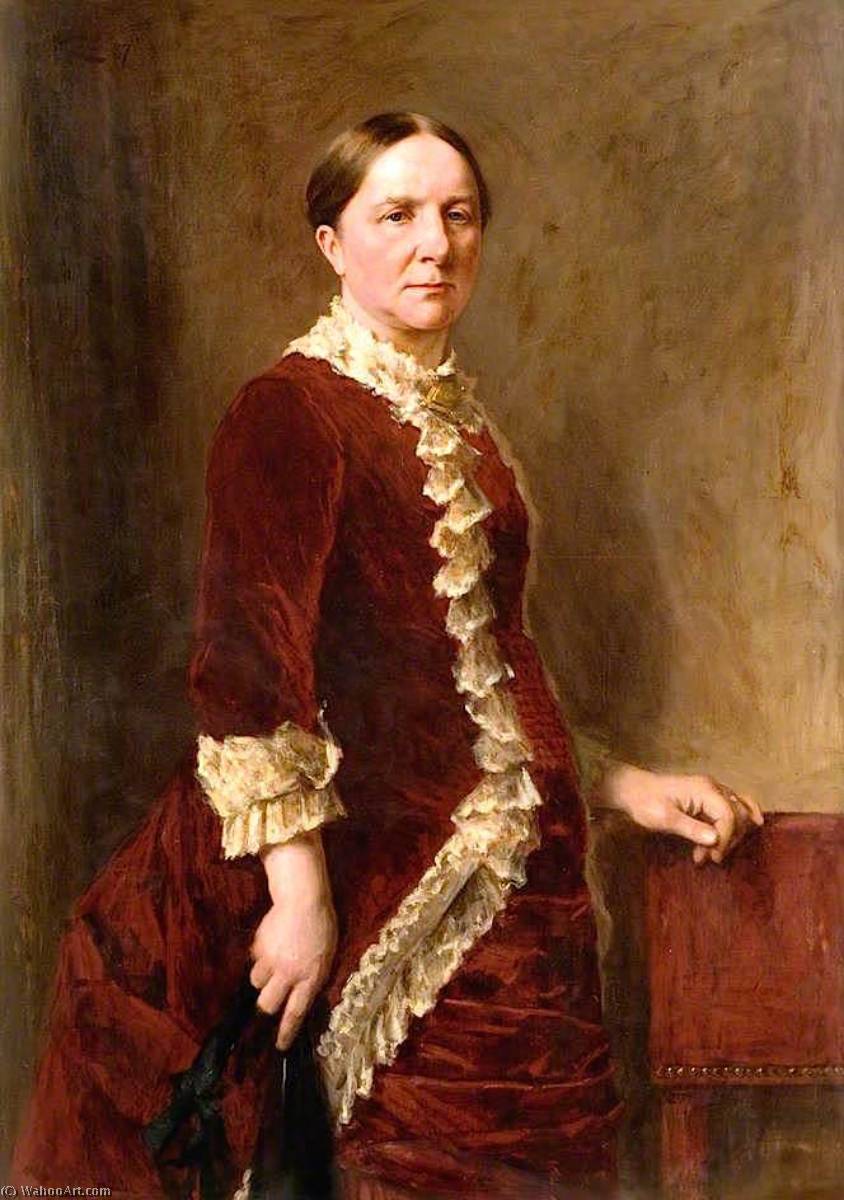
Admire George Agnew Reid’s ‘Mrs Alexander Hay Moncur,’ a stunning Victorian portrait showcasing rich detail & luxurious elegance. Explore this 1887 oil painting's beauty and historical significance.
George Agnew Reid (1860-1947): Explore the work of this pivotal Canadian genre painter, muralist & educator. His emotionally resonant scenes of Ontario life shaped a national artistic identity.
Discover McManus: Dundee's Art Galleries & Museums! Explore Scottish & international art, local history, and natural sciences within a stunning Victorian Gothic building – all with free admission!
George Agnew Reid’s ‘Mrs Alexander Hay Moncur’: A Victorian Portrait of Dignity and Luxury
The painting Mrs Alexander Hay Moncur by George Agnew Reid stands as a testament to the artistic sensibilities of the Victorian era, capturing not merely likeness but also an essence of character—a quiet dignity underpinned by understated elegance. Created in 1887, this oil on canvas piece resides within the Dundee Art Galleries and Museums Collection, offering art enthusiasts a glimpse into a pivotal moment in Canadian art history. Reid’s masterful execution blends meticulous observation with expressive brushwork, resulting in an image that transcends mere representation to convey a profound sense of atmosphere and emotion.
Style and Technique: Chiaroscuro and Victorian Aesthetic
Reid's artistic style is firmly rooted in Impressionism yet tempered by the conventions of academic painting—a deliberate fusion that exemplifies the broader aesthetic currents of his time. He employs chiaroscuro, skillfully manipulating light and shadow to sculpt the figure’s form and imbue the scene with depth. The artist meticulously builds up layers of pigment using a glazing technique, achieving remarkable tonal richness and luminosity. Notice how Reid captures the subtle nuances of light filtering through the window, illuminating Mrs Hay Moncur's face and highlighting the folds of her velvet gown—details that speak to his dedication to capturing the textures and subtleties of reality. The overall composition adheres to Victorian ideals of balance and restraint, prioritizing clarity of form and harmonious color palettes.
Subject Matter: A Portrait Embodied in Luxury
Mrs Alexander Hay Moncur herself is depicted seated on a bench within a richly furnished interior—a deliberate choice that underscores the social status of its subject. The woman’s gaze is direct yet serene, conveying composure and inner strength. Her attire – a deep crimson velvet gown adorned with delicate lace detailing – symbolizes wealth and refinement, reflecting the Victorian preoccupation with demonstrating social standing through material possessions. Reid's attention to detail extends beyond mere costume; he meticulously renders the textures of the fabric—the velvety sheen of the dress and the intricate weave of the lace collar—creating an immersive experience for the viewer. The inclusion of a small black reticule adds to the formality of the scene, reinforcing its symbolic significance as a marker of Victorian etiquette.
Historical Context: Reid’s Influence and Artistic Legacy
George Agnew Reid emerged from the fertile landscapes of rural Canada West, born in 1860 in Wingham, Ontario—a formative experience that profoundly shaped his artistic vision. His father recognized and supported his burgeoning talent, allowing him to pursue studies at the Ontario School of Art and later at Philadelphia’s Pennsylvania Academy of Fine Arts. Reid's exposure to European artistic traditions—particularly Jean-Joseph Benjamin-Constant and Thomas Eakins—influenced his stylistic choices and instilled a respect for established techniques. He was particularly drawn to mural painting, inspired by Puvis de Chavannes, and actively championed the application of art within civic spaces. His work continues to resonate today as an exemplar of Victorian genre painting—a genre characterized by its focus on capturing everyday life with psychological insight and artistic virtuosity.
Emotional Impact: Capturing Inner Grace
Ultimately, ‘Mrs Alexander Hay Moncur’ succeeds in conveying a palpable sense of grace and dignity—qualities that define the portrait's enduring appeal. Reid’s masterful use of chiaroscuro and glazing creates an atmosphere of quiet contemplation, inviting viewers to engage with the subject’s inner life. The painting’s harmonious color palette and meticulous attention to detail contribute to its overall beauty and sophistication, cementing Reid’s place as one of Canada’s most celebrated artists. It serves as a poignant reminder of Victorian artistic ideals—a celebration of form, texture, and psychological nuance that continues to inspire admiration centuries later.