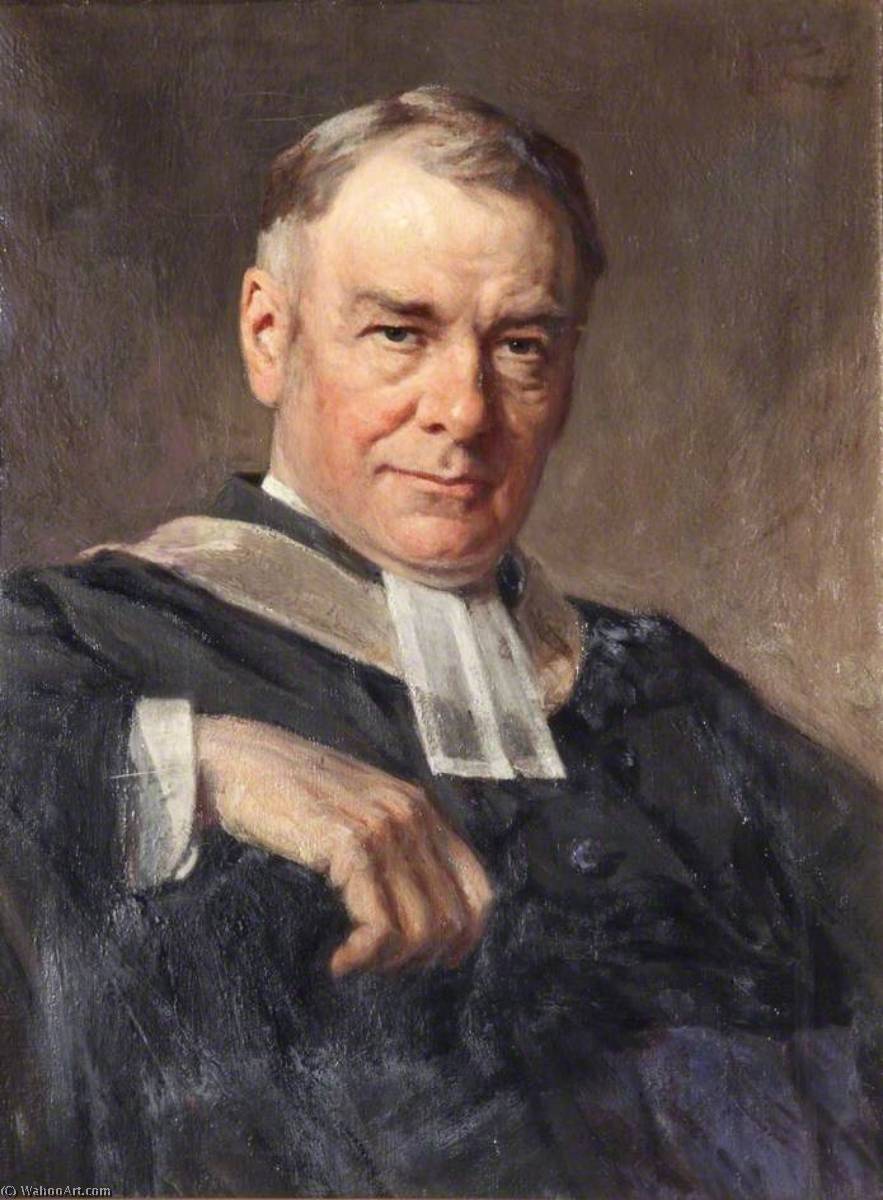
George Reid’s Reverent Portrait of John Watson
George Agnew Reid (1860–1947), born in Wingham, Ontario, Canada, stands as a pivotal figure in Australian art history—a sculptor and painter whose distinctive style fused Romantic idealism with meticulous realism. His oeuvre is marked by an unwavering devotion to capturing the human form with unparalleled grace and sensitivity, exemplified powerfully in “Reverend John Watson,” completed in 1907.
Subject Matter and Composition
The painting depicts Reverend John Watson, a respected clergyman of considerable influence during his time. Reid skillfully portrays Watson seated in a dignified posture, bathed in soft light emanating from an unseen source—a technique characteristic of the artist’s penchant for atmospheric illumination. His gaze is directed outwards, conveying contemplation and perhaps a hint of melancholy, inviting viewers to engage with the subject's inner life.
Style and Technique: Romantic Realism
Reid’s artistic approach transcends mere imitation; it embodies what critics termed “Romantic Realism.” He meticulously studied anatomical detail—a legacy of his formative years at Philadelphia’s Pennsylvania Academy of Fine Arts—yet infused his canvases with emotive brushstrokes that imbue them with palpable warmth and depth. Reid employed a glazing technique, layering translucent washes of pigment over underpaintings to achieve luminous color gradations and subtle tonal variations. This meticulous process ensured that the painting captured not only Watson's physical appearance but also the essence of his character.
Historical Context: The Dawn of Federation
"Reverend John Watson" was created during a period of significant social and political transformation in Australia—the lead-up to Federation in 1901. Reid’s artistic endeavors reflected the broader cultural anxieties and aspirations of the era, grappling with questions of identity, morality, and national unity. The painting's solemn demeanor speaks to the values upheld by Victorian society, emphasizing piety, intellect, and civic responsibility.
Symbolism and Emotional Impact
Beyond its formal qualities, “Reverend John Watson” resonates with profound symbolic significance. The robe symbolizes spiritual authority and devotion—a testament to Watson’s vocation as a clergyman. Reid's masterful rendering of facial expression captures the complexities of human emotion—a subtle nuance that elevates the portrait beyond mere likeness. The painting evokes feelings of serenity, introspection, and reverence, prompting viewers to contemplate themes of faith, contemplation, and the enduring legacy of Victorian ideals.
Conclusion: A Timeless Masterpiece
"Reverend John Watson" remains a cornerstone of Australian art—a testament to George Reid’s artistic genius and his ability to transform observation into evocative representation. Its luminous palette, meticulous technique, and poignant portrayal of human dignity continue to inspire admiration and captivate audiences today.