A Portrait of Grace and Quiet Dignity: Unveiling George Reid’s Masterpiece
George Reid's “The Honourable Mrs Graham (after Thomas Gainsborough)” isn’t merely a portrait; it’s a carefully constructed tableau of Georgian elegance, imbued with the subtle melancholy of a life lived within the constraints and expectations of its time. Completed around 1792, this remarkable work transcends simple likeness, offering instead a profound meditation on femininity, social standing, and the quiet beauty found in restraint. Reid, deeply influenced by the masterful Thomas Gainsborough himself – a debt he acknowledged with evident admiration – has crafted an image that simultaneously echoes and subtly diverges from the original, imbuing it with his own distinct sensibility.
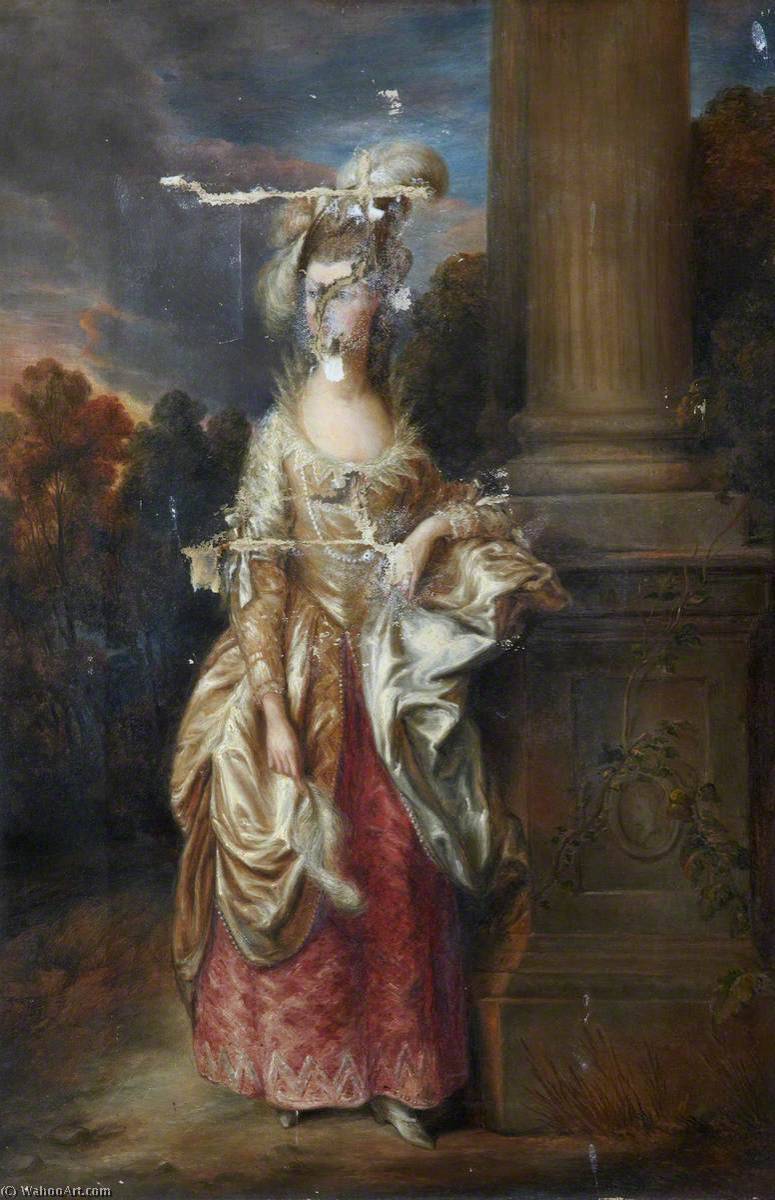
The painting immediately draws the eye to its subject: Mrs. Mary Graham, a woman of considerable social standing, rendered in exquisite detail. Her posture is remarkably poised, suggesting both composure and a hint of introspection. She rests her hand lightly on her hip, a gesture that speaks volumes about self-assurance without arrogance. The delicate lace at her neckline and the intricate folds of her gown – rich fabrics hinting at wealth and status – are meticulously rendered, showcasing Reid’s skill in capturing texture and light. The background, a carefully orchestrated landscape featuring a classical column and glimpses of a formal garden, provides a subtle yet crucial context, anchoring Mrs. Graham within a world of refined beauty and aristocratic leisure.
Echoes of Gainsborough: Style and Technique
Reid’s debt to Thomas Gainsborough is undeniable, particularly in the painting's overall composition and use of light. Like Gainsborough, Reid masterfully employs chiaroscuro – a dramatic contrast between light and shadow – to sculpt the figure and create a sense of depth. The soft, diffused lighting suggests an outdoor setting, perhaps dawn or dusk, lending the scene a contemplative mood. The brushwork is remarkably smooth and refined, reflecting Reid’s training in the academic tradition while also hinting at his own artistic vision. He skillfully captures the subtle nuances of fabric texture, the delicate sheen of lace, and the gentle play of light on Mrs. Graham's face – all hallmarks of Gainsborough’s approach.
However, Reid doesn’t simply imitate; he subtly transforms. While Gainsborough often imbued his portraits with a lively sense of movement and character, Reid’s subject possesses a greater stillness, a quiet dignity that borders on solemnity. The gaze is direct yet restrained, conveying an air of thoughtful observation rather than overt expression. This subtle shift in tone reflects the prevailing aesthetic sensibilities of the late 18th century – a move towards formality and restraint following the exuberance of the Rococo period.
A Window into Georgian Society: Symbolism and Context
“The Honourable Mrs Graham” offers a fascinating glimpse into the social dynamics of Georgian England. The portrait’s meticulous detail speaks to the importance placed on appearances and social standing within that era. Mrs. Graham's attire, with its layers of fabric and elaborate embellishments, clearly signifies her wealth and status. The inclusion of the classical column in the background further reinforces this sense of aristocratic refinement, referencing the ideals of ancient Greece and Rome – values highly prized by the British elite.
Furthermore, the painting subtly hints at the constraints placed upon women during that period. While Mrs. Graham possesses a certain poise and self-assurance, her expression is carefully controlled, reflecting the societal expectations of female decorum. The portrait serves as a poignant reminder of the limited opportunities available to women in Georgian society – their lives largely defined by marriage, family, and social obligations.
A Legacy of Beauty: George Reid’s Enduring Influence
George Reid's “The Honourable Mrs Graham” remains a captivating work of art, showcasing his exceptional talent as a painter and his deep understanding of the artistic traditions he inherited. It is a testament to the enduring power of portraiture – its ability to capture not only likeness but also character, emotion, and social context. Today, reproductions of this masterpiece continue to inspire admiration for Reid’s skill and offer a valuable window into the world of Georgian society. Its quiet elegance and subtle melancholy resonate with viewers even centuries later, cementing its place as a significant work in Canadian art history.