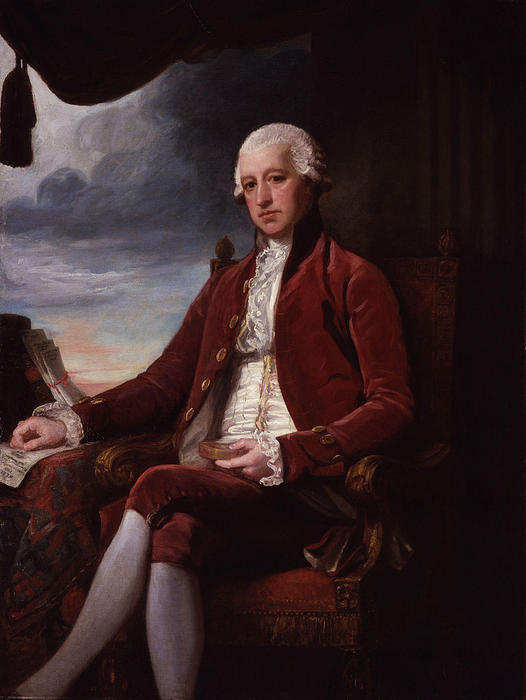
George Romney’s Portrait of King George III: A Window into Georgian Dignity
George Romney's depiction of King George III, completed between 1786 and 1788, stands as a quintessential emblem of the Georgian era—a period defined by stately grandeur and meticulous artistic convention. More than just a likeness of the monarch, this painting embodies the values of British aristocracy during its zenith, offering viewers a glimpse into the intellectual and social landscape of the time.
- Subject Matter: The portrait focuses squarely on King George III seated in a chair, holding a book—a deliberate gesture signifying his erudition and engagement with scholarly pursuits. This pose was common in royal portraits during Romney’s era, reflecting the importance placed upon intellect and governance within the ruling class.
- Style: Romney's style is characterized by Rococo influences blended seamlessly with Neoclassical ideals. The composition prioritizes balance and harmony, mirroring the architectural principles of the period. However, unlike the overtly ornate Rococo style favored by earlier artists, Romney’s approach maintains a restrained elegance, emphasizing naturalism and capturing subtle nuances of expression.
- Technique: Romney employed oil paint on canvas—a technique that allowed for remarkable detail and tonal gradation. His meticulous brushwork captures the texture of fabrics like velvet and satin, contributing to the overall impression of opulent materiality. The artist skillfully utilized chiaroscuro – dramatic contrasts between light and shadow – to sculpt George III’s form and imbue the scene with a sense of depth and realism.
Historical Context: Romney's painting emerged during George III’s reign, a period marked by significant political upheaval—the American Revolution and escalating tensions with France. Despite these turbulent times, Romney successfully conveyed an image of regal composure and dignified authority. The inclusion of the book serves as a symbolic reminder of the king’s commitment to reason and intellectual pursuits amidst the pressures of statecraft.
Symbolism: Beyond its formal elements, the portrait carries subtle symbolic weight. The window behind George III represents enlightenment—a visual allusion to the burgeoning scientific revolution and the belief in rational observation. Furthermore, the empty chair beside the king subtly underscores his position as sovereign ruler, emphasizing the solitude inherent in leadership.
Emotional Impact: Romney’s masterful rendering of George III's face conveys a profound sense of serenity and contemplation. The artist captures not merely physical appearance but also psychological character—a quiet dignity that speaks to the enduring fascination with portraiture as a medium for conveying inner life. This painting continues to resonate today, offering viewers an evocative glimpse into the spirit of Georgian Britain.