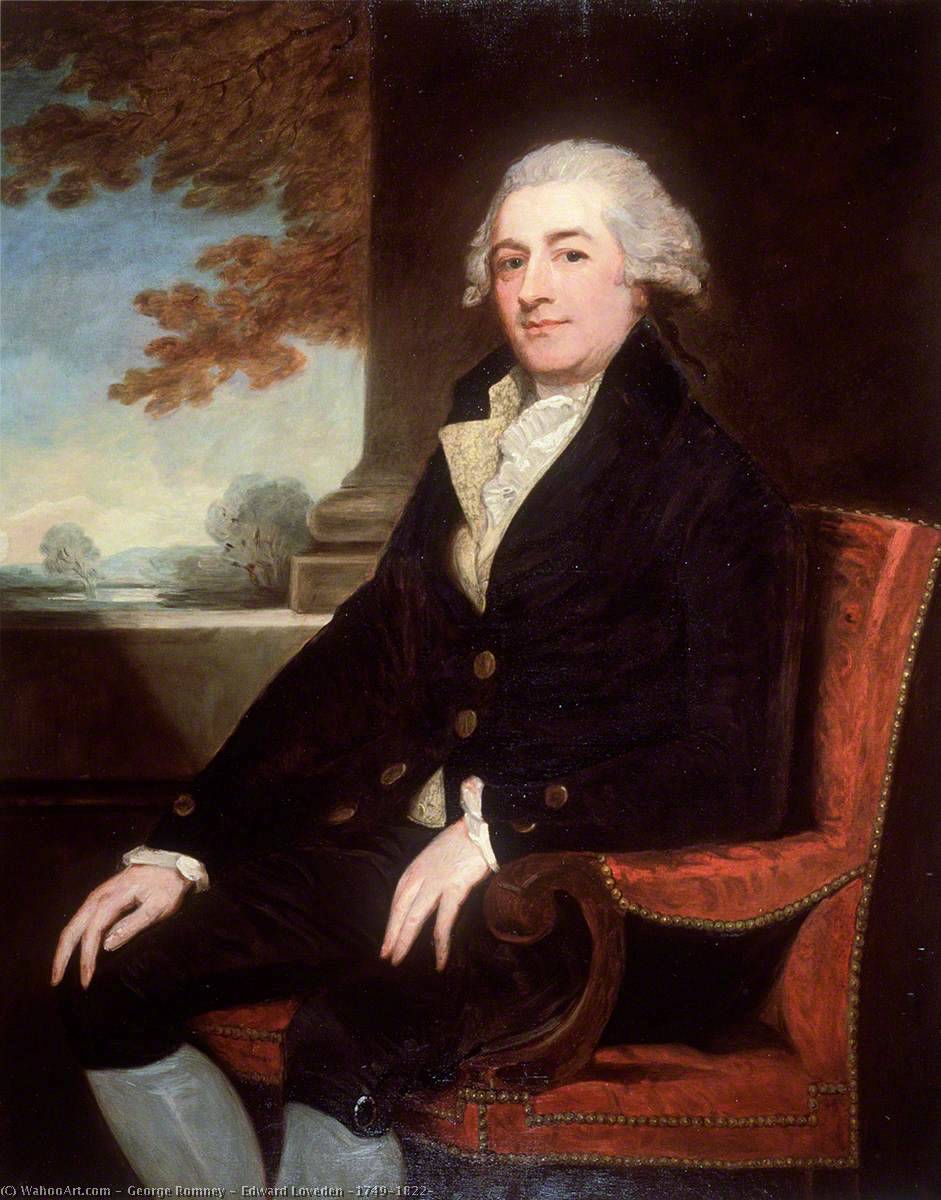
Edward Loveden (1749–1822)

Discover George Romney (1734-1802), the celebrated British portrait painter of high society! Explore his elegant style, captivating portraits & muse, Emma Hamilton. Shop reproductions now!


George Romney (1734 - 1802)

Discover George Romney (1734-1802), the celebrated British portrait painter of high society! Explore his elegant style, captivating portraits & muse, Emma Hamilton. Shop reproductions now!

Llyfrgell Genedlaethol Cymru / The National Library of Wales (Aberystwyth, United Kingdom)

Home to the world-renowned Peniarth Collection of Welsh manuscripts, The National Library of Wales in Aberystwyth offers an immersive journey through Celtic history and art that invites you to explore our shared heritage.

Edward Loveden (1789) – A Portrait of Georgian Ambition

  • George Romney’s “Edward Loveden” offers a captivating glimpse into the world of 18th-century British society, meticulously rendered in 1789. This portrait, measuring 127 x 102 cm, is more than just a likeness; it's a carefully constructed tableau reflecting the status and aspirations of its subject – Edward Loveden himself. The painting’s strength lies not merely in Romney’s technical skill but also in his ability to capture the nuances of Georgian formality and the subtle power dynamics inherent in portraiture during this era.
  • The composition immediately draws the eye to Loveden, seated with an air of quiet confidence on a chair upholstered in rich red cushions. His attire – a black jacket over a crisp white shirt, complemented by a powdered wig and meticulously groomed mustache – speaks volumes about his position within the social hierarchy. Romney’s masterful use of light and shadow sculpts Loveden's features, emphasizing his intelligence and bearing. The subtle details, such as the texture of the fabric and the sheen on his shoes, demonstrate Romney’s dedication to realism and his ability to convey a sense of tangible presence.

Romney’s Portrait Style and Technique

  • George Romney was a pivotal figure in the development of British portraiture. Influenced by both English and Continental artistic traditions, particularly those he encountered during his apprenticeship with Christopher Steele in Paris, Romney developed a distinctive style characterized by its naturalism and psychological depth. Unlike some of his contemporaries who favored idealized representations, Romney sought to capture his subjects’ individual personalities and character traits.
  • His technique involved meticulous observation and careful brushwork. Romney employed a layering method – *glazing* – building up color gradually through thin, translucent washes. This approach allowed him to achieve subtle gradations of tone and create a luminous effect, particularly evident in Loveden’s clothing and the background landscape. The use of warm earth tones—ochres, browns, and reds—contributes to the painting's overall richness and depth.

Historical Context and Symbolism

  • Created in 1789, “Edward Loveden” reflects the burgeoning commercial and political landscape of Britain. The figure’s attire and setting suggest a man involved in trade or perhaps even public service – a common subject for portraits commissioned by wealthy merchants and politicians during this period. The inclusion of the background trees, subtly rendered, adds to the sense of an outdoor setting, possibly referencing the importance of land ownership and rural estates within Georgian society.
  • The presence of two secondary figures in the background, though smaller in scale, is a deliberate compositional element. They likely represent Loveden’s family or associates, reinforcing his social standing and highlighting the importance of connections within this era. Romney's ability to integrate these elements seamlessly into the main portrait demonstrates his skill as a storyteller through visual means.

Emotional Impact and Artistic Legacy

  • “Edward Loveden” transcends a simple depiction of an individual; it’s a window into a bygone era. Romney's ability to capture the subject's dignity and composure evokes a sense of admiration and respect. The painting’s enduring appeal lies in its technical brilliance, historical significance, and the psychological insight that Romney brings to his portraits.
  • This reproduction offers an exceptional opportunity to own a piece of art history – a testament to George Romney's genius and a captivating representation of Georgian society. Its dimensions (127 x 102 cm) make it suitable for a variety of interior spaces, adding a touch of elegance and sophistication to any room.