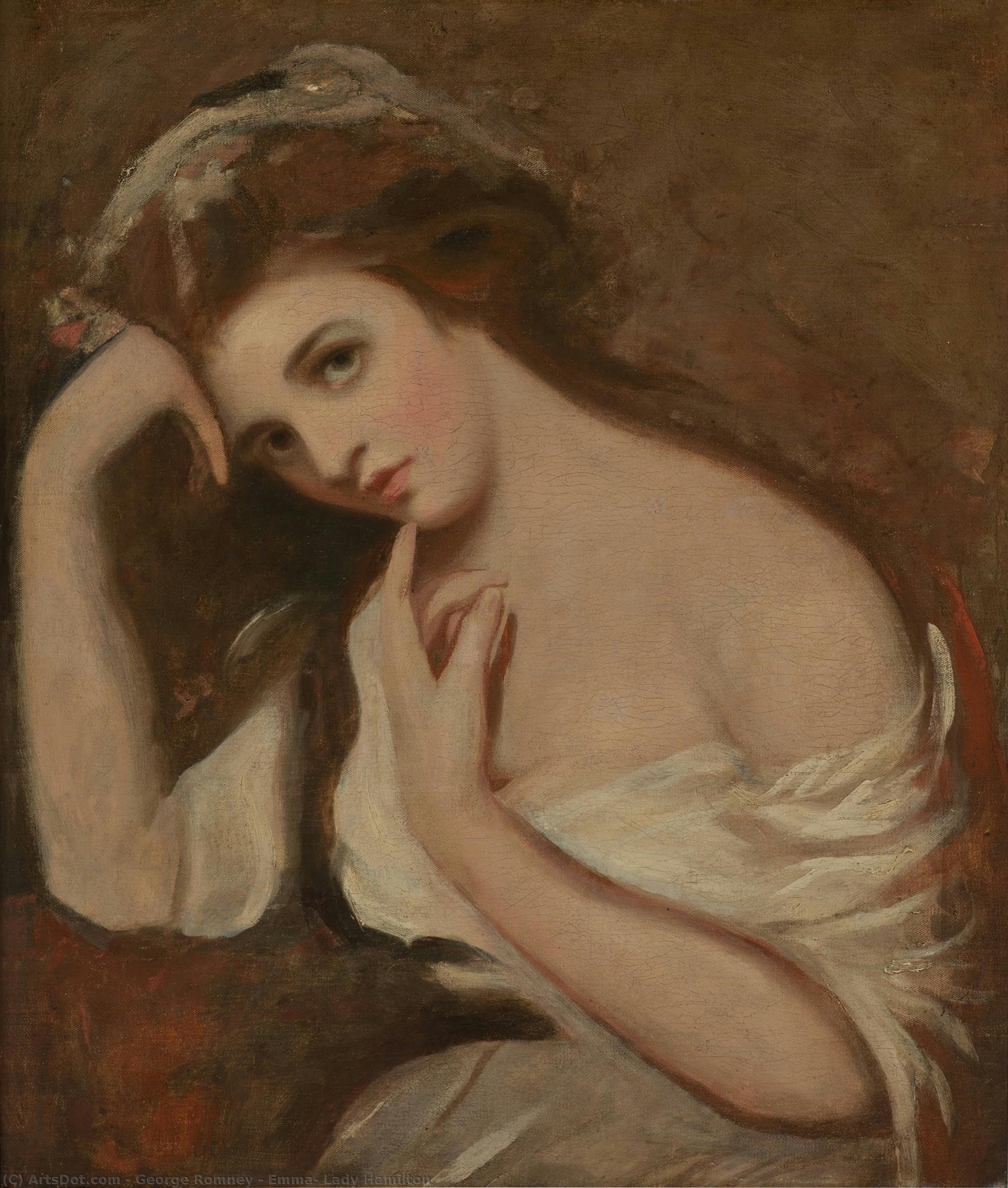
Emma, Lady Hamilton

Romantic George Romney’s serene Emma Hamilton captures a moment of contemplative beauty amidst birdsong—a captivating portrait reflecting the elegance of Regency England and inviting you to bring this timeless masterpiece into your home.


George Romney (1734 - 1802)

Discover George Romney (1734-1802), the celebrated British portrait painter of high society! Explore his elegant style, captivating portraits & muse, Emma Hamilton. Shop reproductions now!

USC Fisher Museum of Art (Los Angeles, United States of America)

Discover European masters like Rubens & Warhol alongside contemporary art at the USC Fisher Museum of Art in Los Angeles! Explore rotating exhibitions, free admission, and a rich collection affiliated with USC.

George Romney’s Emma Hamilton: A Portrait of Passion and Artistic Mastery

  • Subject Matter: This captivating portrait depicts Emma Hamilton, the charismatic mistress of William Pitt the Younger, a prominent figure in British politics during the Napoleonic Wars. Romney skillfully captures Hamilton's gaze—a contemplative stare directed towards an unseen horizon—suggesting introspection and conveying a profound sense of inner life.
  • Style: Romney’s style exemplifies Neoclassical elegance, prioritizing idealized beauty and restrained emotion. He adheres to classical principles of composition and proportion, mirroring the grandeur of Roman sculpture and architecture. The painting avoids excessive ornamentation, focusing instead on capturing the essence of Hamilton's character through subtle gestures and facial expressions.
    • Technique: Romney employed oil paint on canvas, utilizing a meticulous glazing technique that achieved remarkable luminosity and depth. Layers upon layers of translucent pigment created an illusionistic surface, faithfully reproducing the textures of Hamilton’s dress and hair. Careful attention to detail—particularly in rendering the delicate folds of fabric—demonstrates Romney's mastery of artistic craftmanship.
    • Historical Context: Painted in 1791, Emma Hamilton embodies the spirit of Romanticism’s burgeoning influence on British art. While adhering to Neoclassical conventions, Romney subtly infused his work with elements reflecting the emotional intensity characteristic of the period. The portrait emerged during a time of significant social and political upheaval, capturing the allure and scandal surrounding Hamilton's affair with Pitt.
  • Symbolism: Beyond its depiction of Emma Hamilton’s physical beauty, the painting carries symbolic weight. The birds positioned strategically within the composition represent freedom and aspiration—a visual allusion to Hamilton’s desire for independence and her defiance of societal expectations. Furthermore, Hamilton's downward gaze symbolizes contemplation and a connection to something beyond the immediate world.
  • Emotional Impact: Romney succeeds in conveying Emma Hamilton’s inner serenity despite the controversial circumstances surrounding her relationship. The painting evokes feelings of admiration for Hamilton’s resilience and intelligence, prompting viewers to contemplate themes of beauty, desire, and artistic representation. It remains a testament to Romney's ability to capture not only outward appearance but also the intangible qualities that define human character.