Discover George Romney (1734-1802), the celebrated British portrait painter of high society! Explore his elegant style, captivating portraits & muse, Emma Hamilton. Shop reproductions now!
Discover Britain's story through iconic portraits at the National Portrait Gallery! Explore centuries of art, royal figures & cultural moments – a must-see London experience.
A Portrait of Intellectual Companionship: George Romney’s Depiction of Flaxman and Hayley
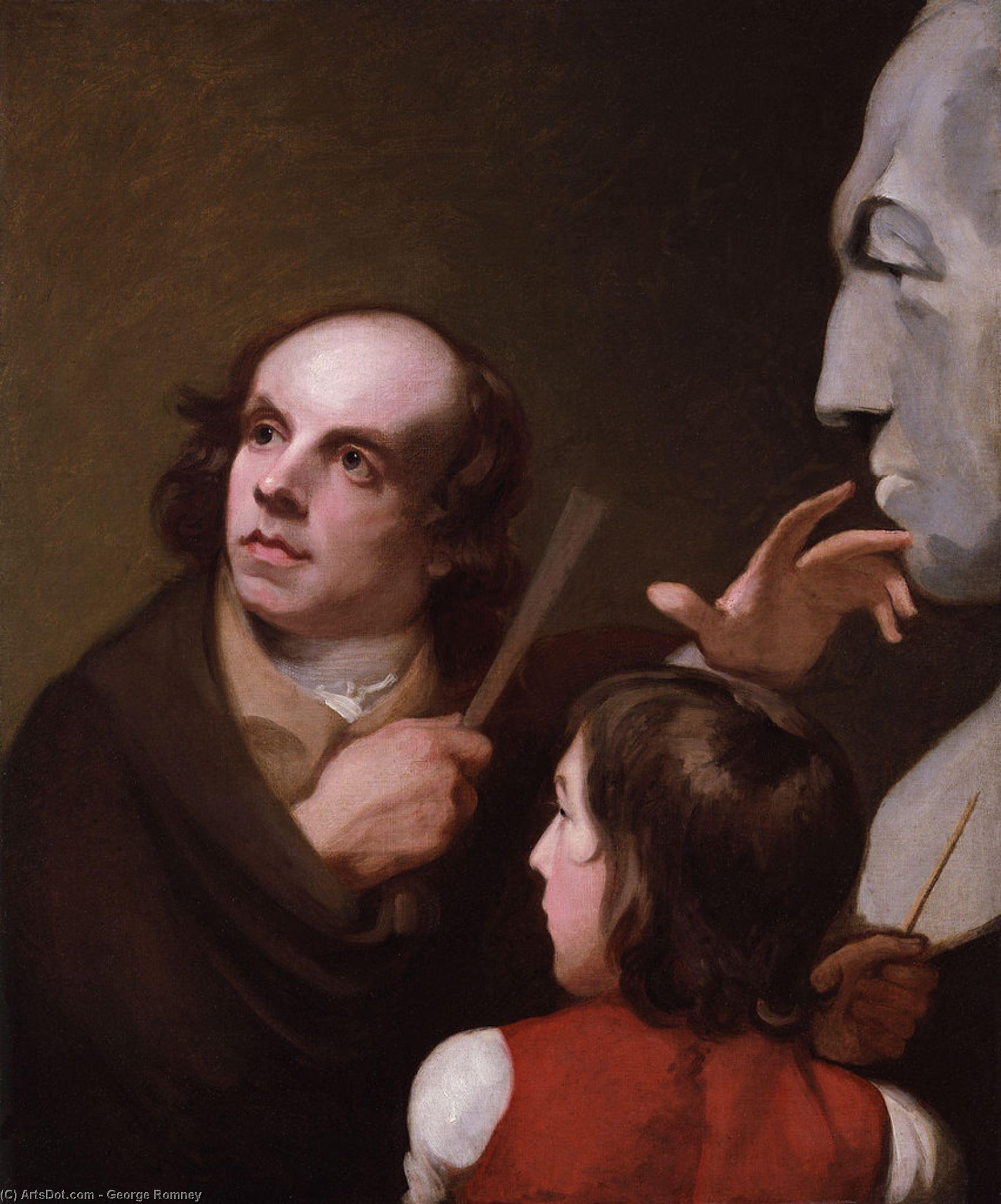
George Romney's “John Flaxman and Thomas Alphonso Hayley,” painted in 1795, transcends a simple likeness; it embodies the spirit of Enlightenment discourse within the opulent salons of Georgian England. This striking portrait captures two prominent figures – John Flaxman, renowned neoclassical sculptor, and Thomas Alphonso Hayley, celebrated poet – engaged in animated conversation amidst an elegantly appointed interior. Romney’s masterful observation of human interaction elevates this artwork beyond mere representation into a study of character and intellectual engagement.
Style and Technique: The Romantic Influence on Neoclassical Precision
Romney skillfully blends the stylistic conventions of neoclassicism with subtle hints of romanticism. While adhering to the meticulous draughtsmanship characteristic of his time—a hallmark of Romney’s oeuvre—the painting possesses a warmth and luminosity that distinguishes it from purely formal compositions. Romney employed oil paint on canvas, utilizing layering techniques to achieve remarkable tonal depth and capturing the nuances of light reflecting off textured surfaces like the waistcoat and drapery. The artist's meticulous attention to detail is evident in the rendering of facial expressions and hand gestures, conveying a palpable sense of immediacy and psychological realism—a departure from the idealized portraits favored by earlier generations.
Historical Context: Reflecting the Age of Reason
The painting’s creation coincides with the burgeoning intellectual fervor of the late 18th century – an era defined by philosophical debates concerning reason versus emotion, and championed by thinkers like Voltaire and Rousseau. Flaxman and Hayley represent opposing poles within this spectrum; Flaxman, a staunch advocate for classical ideals and moral virtue, is depicted as holding a knife—a symbol of precision and intellectual rigor—while Hayley embodies poetic imagination and lyrical beauty. Their discussion underscores the importance of dialogue and contemplation in shaping cultural understanding during this transformative period. Romney’s choice to portray them together speaks volumes about the artistic sensibilities of the time, reflecting a desire to capture both intellect and emotion within a single frame.
Symbolism: The Knife as Instrument of Thought
The inclusion of the knife is particularly noteworthy. Beyond its literal depiction of an everyday object, it functions symbolically as an emblem of intellectual discernment—a tool for cutting through complexities and extracting essential truths. It represents Flaxman’s commitment to clarity of thought and artistic discipline, mirroring the sculptor's meticulous approach to his craft. Simultaneously, it subtly contrasts with Hayley’s expressive gestures, suggesting that beauty and imagination must be tempered by reason and critical analysis. Romney’s subtle use of symbolism elevates the portrait beyond a mere visual record, inviting viewers to contemplate deeper meanings concerning art, philosophy, and human character.
Emotional Impact: Capturing Human Connection
Ultimately, “John Flaxman and Thomas Alphonso Hayley” succeeds in conveying a profound sense of human connection—a testament to Romney’s ability to capture not just appearances but also the spirit of conversation and intellectual camaraderie. The gaze exchanged between Flaxman and Hayley communicates mutual respect and engagement, fostering an atmosphere of thoughtful contemplation. This intimate portrayal resonates with viewers today, reminding us of the enduring power of art to illuminate the complexities of human experience and celebrate the pursuit of knowledge alongside artistic expression.