A Portrait of Quiet Authority: Unveiling John Smith
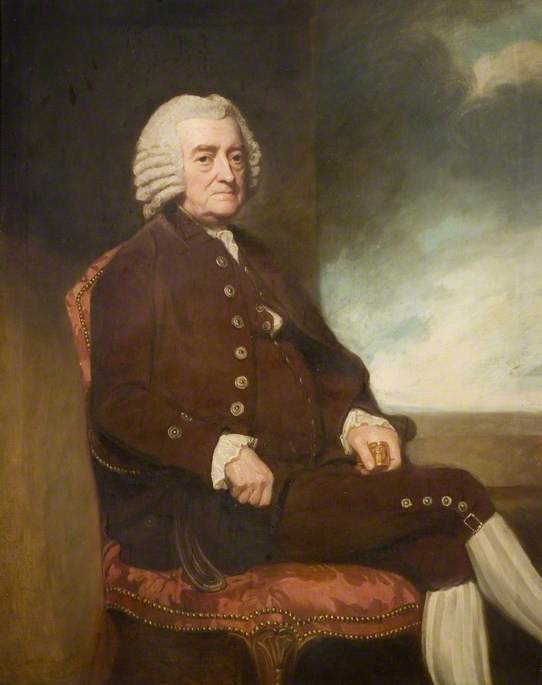
George Romney’s “John Smith (1703–1787)” is more than a simple likeness; it's a meticulously crafted tableau of 18th-century English society, imbued with the subtle power dynamics inherent in portraiture. Painted in 1782, during the height of Romney’s career as a leading court painter, this work offers a rare glimpse into the life of a successful merchant – John Smith himself – a man whose wealth and standing are subtly conveyed through posture, attire, and the carefully arranged details of his surroundings.
Romney's Rococo style, deeply influenced by his time in Paris, is evident in the painting’s delicate brushwork and the soft, diffused lighting. The composition is remarkably balanced, drawing the eye to Smith’s centered form while simultaneously establishing a sense of depth through the inclusion of two chairs and a clock – elements that anchor him within a domestic space yet subtly elevate his status. Note the precision with which Romney captures the texture of Smith's brown jacket, the sheen of his wig, and the slight furrow in his brow, suggesting both intelligence and a certain weariness associated with managing considerable business interests.
The Context of Portraiture: Status and Representation
Portraiture during the late 18th century was a complex social ritual. Commissions were often driven by wealth and status, serving as visual declarations of success and lineage. Romney’s clientele included prominent figures from Parliament, the military, and the merchant class – individuals who understood the power of carefully constructed images to reinforce their position within society. “John Smith” exemplifies this trend; it's not merely a representation of a man but an assertion of his importance.
The inclusion of the clock is particularly significant. Timekeeping devices were symbols of wealth and sophistication, demonstrating access to advanced technology and reflecting a refined lifestyle. The two chairs further contribute to this sense of established comfort and authority – suggesting a life lived within a framework of order and prosperity. Smith’s posture, seated with an air of quiet contemplation, reinforces the impression of a man accustomed to command and decision-making.
Symbolism and Subtle Details
Beyond the obvious markers of wealth and status, Romney employs subtle symbolism throughout the painting. The snuff box in Smith's left hand is a common accessory for gentlemen of his era, signifying refinement and leisure. It’s a small detail that speaks volumes about Smith’s social standing and habits. The muted color palette – dominated by browns, creams, and golds – evokes a sense of understated elegance, reflecting the restrained sensibilities of the Rococo style.
Furthermore, observe the careful attention to detail in the background. The two chairs, one positioned near the left side and another towards the right, create a sense of spatial depth and suggest a well-appointed room. The wall above Smith’s head features a clock, adding another layer of visual interest and reinforcing the theme of time and authority.
A Legacy in Reproduction: Bringing Romney's Vision to Life
Reproductions of “John Smith (1703–1787)” offer an exceptional opportunity to experience the artistry and sophistication of George Romney’s work. The meticulous detail captured in the original painting is faithfully reproduced, allowing viewers to appreciate the nuances of Romney's technique and his masterful understanding of human form and expression. Whether displayed in a formal study or a contemporary living space, this artwork continues to resonate with its timeless elegance and quiet authority.