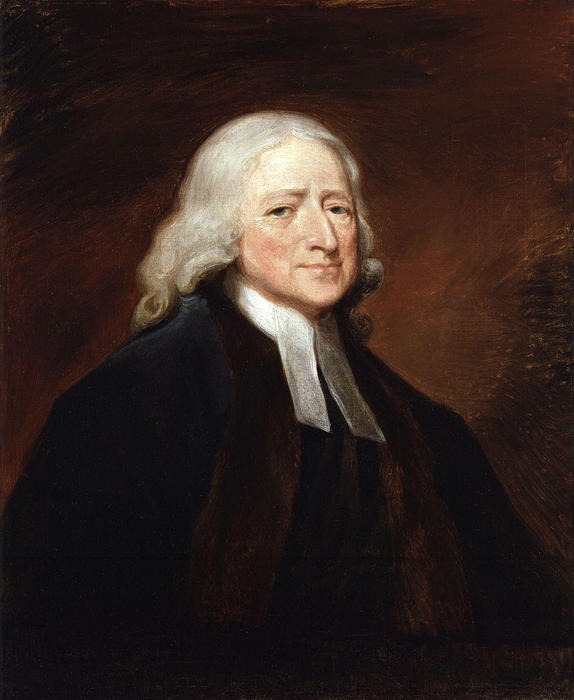
George Romney’s reverent portrait of John Wesley captures the profound spirituality of Methodism's founder during Georgian England. This elegant oil painting showcases Romney’s masterful chiaroscuro and meticulous detail, offering a timeless glimpse into a pivotal moment in British history.
George Romney’s Reverent Portrait of John Wesley
George Romney's depiction of John Wesley stands as a testament to the artist’s mastery in capturing both physical likeness and spiritual essence—a hallmark of Georgian portraiture. Executed around 1789, this painting resides within the collections of Christ Church, University of Oxford, offering visitors a glimpse into Methodism’s formative years and Romney's influential role in documenting the era’s cultural landscape. The artwork itself presents Wesley seated formally against a muted red wall, a deliberate choice that contributes to the solemn atmosphere surrounding him. Romney skillfully employs chiaroscuro—the dramatic interplay of light and shadow—to sculpt Wesley’s figure, emphasizing his dignified posture and conveying an aura of quiet contemplation.
- Style: Romney's style is characterized by elegance and refinement, aligning perfectly with the tastes of the aristocratic patrons he served. He prioritized capturing a subject’s character rather than merely replicating their appearance, resulting in portraits imbued with psychological depth.
- Technique: Romney utilized oil paint on canvas, applying thin glazes to achieve luminous colors and subtle tonal variations. This technique allowed him to render textures realistically—particularly evident in Wesley's clothing—demonstrating meticulous attention to detail.
The historical context surrounding Wesley’s portrait is crucial to understanding its significance. John Wesley was arguably the most important figure in establishing Methodism, a Protestant Christian movement that profoundly impacted British society during the Enlightenment. Romney’s decision to portray Wesley with such reverence reflects the widespread admiration for religious piety and moral reform within the upper echelons of Georgian England. The red wall serves as more than just a backdrop; it symbolizes strength and conviction—visual cues mirroring Wesley's unwavering faith and commitment to his theological convictions.
Symbolism: Romney’s careful composition speaks volumes about the values of his time. Wesley’s attire – a white collar – represents purity and piety, signifying his adherence to Christian principles. The posture conveys dignity and seriousness, reflecting Wesley’s role as a moral leader and intellectual reformer. These symbolic elements elevate the portrait beyond mere representation, transforming it into an emblem of spiritual aspiration.
Emotional Impact: Romney's masterful rendering evokes feelings of serenity and contemplation. Viewers are drawn into Wesley’s gaze—a symbol of inner peace—encouraging reflection on faith and moral responsibility. The painting captures not only Wesley’s physical appearance but also his spirit, cementing Romney’s legacy as one of the greatest portrait painters of his generation. It remains a powerful reminder of the importance of intellectual honesty and moral integrity within the broader context of Georgian society.