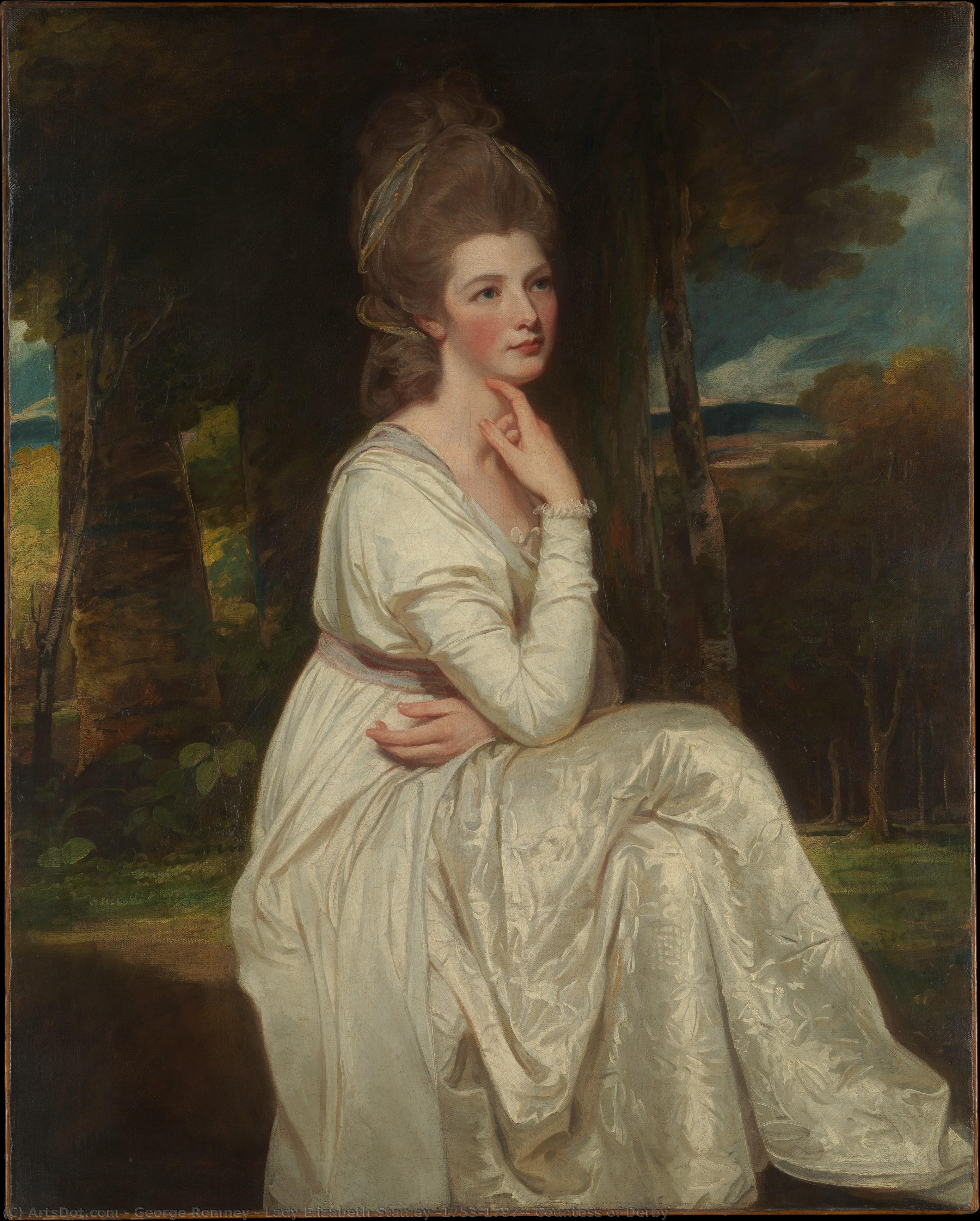
Lady Elizabeth Stanley, Countess of Derby: A Portrait of Grace and Refinement
George Romney's portrait of Lady Elizabeth Stanley, Countess of Derby, painted in 1776, is a captivating example of late 18th-century British portraiture. This oil on canvas masterpiece, currently residing at The Metropolitan Museum of Art, offers a glimpse into the life and times of an aristocratic woman while showcasing Romney's exceptional skill in capturing both likeness and character.
Subject and Historical Context
Lady Elizabeth Stanley (1753–1797) was born into a prominent family and married James John Stanley, 12th Earl of Derby, in 1774. The portrait depicts her at the age of twenty-three, shortly after her marriage and motherhood. The era was characterized by elegance, refinement, and a growing interest in portraying individuals with psychological depth. Romney's work reflects this trend, moving beyond mere representation to convey a sense of personality and inner life.
Artistic Style and Technique
Romney’s style is rooted in the Rococo tradition but exhibits a move towards Neoclassicism. The composition is carefully balanced, with Lady Elizabeth positioned centrally against a picturesque landscape backdrop. Her pose – seated on the grass with her hands gently resting on her chin – exudes an air of quiet contemplation and aristocratic grace. Romney's masterful use of light and shadow creates a soft, diffused glow that highlights the delicate features of his subject and the luxurious texture of her white gown. The brushwork is fluid and expressive, particularly evident in the rendering of the fabric and foliage. The landscape background, while romanticized, adds depth and context to the portrait, suggesting a connection between Lady Elizabeth and the natural world.
Symbolism and Emotional Impact
While seemingly straightforward, the portrait contains subtle symbolic elements. The white dress, a common motif in 18th-century portraits, signifies purity and virtue. The landscape setting, with its trees and distant mountains, evokes a sense of tranquility and timelessness. Lady Elizabeth’s gaze, directed slightly off-camera, suggests an introspective nature and perhaps a hint of melancholy. The overall emotional impact is one of serene beauty and understated elegance. Romney successfully captures not only the physical likeness of his subject but also her inner character – a woman of grace, intelligence, and quiet strength.
Romney's Legacy and Significance
George Romney (1734-1802) was one of the most sought-after portrait painters in England during his time. Though never formally admitted to the Royal Academy, he achieved considerable fame through commissions from prominent members of society. This portrait of Lady Elizabeth Stanley exemplifies his ability to create compelling and psychologically nuanced representations of his subjects, solidifying his place as a significant figure in British art history.