Discover George Romney (1734-1802), the celebrated British portrait painter of high society! Explore his elegant style, captivating portraits & muse, Emma Hamilton. Shop reproductions now!
Tate Gallery
(London, United Kingdom)
Discover British & international art at Tate Britain! Explore centuries of masterpieces, from Turner to modern icons – free entry awaits in London’s riverside gallery.
A Portrait Steeped in Myth and Majesty: George Romney’s Lady Hamilton as Circe
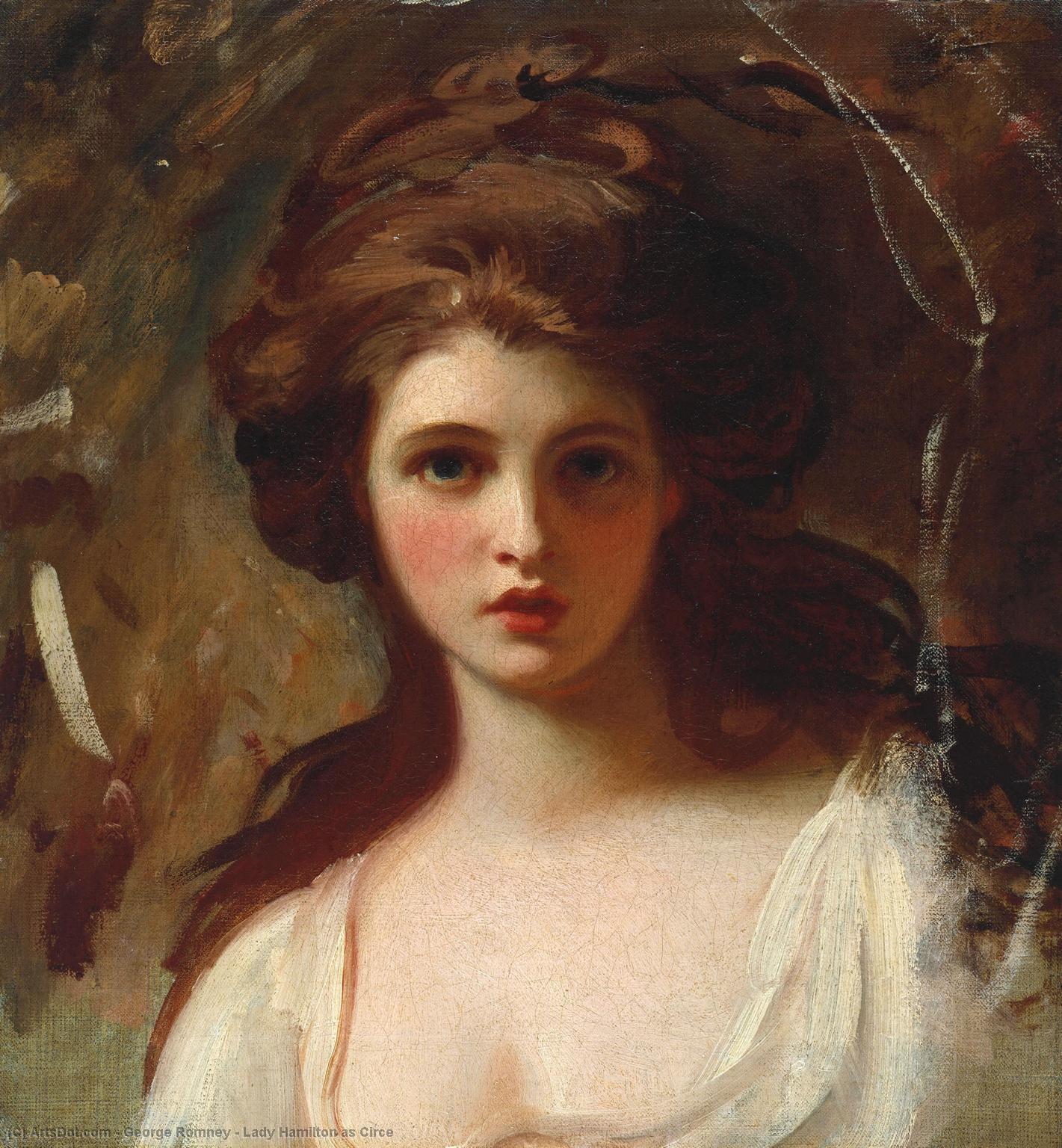
George Romney's “Lady Hamilton as Circe,” painted in 1782, transcends mere portraiture; it embodies the spirit of Neoclassical art—a movement dedicated to reviving classical ideals of beauty and rationality. Housed within the Tate Gallery’s collection in London, this canvas offers a glimpse into a pivotal moment in British artistic history and illuminates the captivating allure of Emma Hamilton, Lord Nelson's mistress.
Subject Matter: Mythological Inspiration Meets Romantic Sensuality
Romney skillfully reimagined Homer’s Odyssey, transforming Lady Hamilton—a celebrated beauty and muse—into Circe, the sorceress famed for her transformative powers. This deliberate choice wasn’t simply decorative; it served as a powerful commentary on Hamilton's perceived influence and charisma. Romney captured Hamilton in a pose that exudes confidence and grace, mirroring Circe’s regal bearing – a figure of formidable intellect and irresistible charm.
Technical Brilliance: The Art of Oil Paint on Canvas
Romney’s technique exemplifies the meticulous precision characteristic of Neoclassical painting. Executed in oil paint on canvas, he achieved remarkable tonal gradation and textural detail. Observe how Romney meticulously rendered Lady Hamilton's skin tones—a testament to his mastery of chiaroscuro—creating a luminous effect that highlights her facial features. The subtle brushstrokes contribute to the overall sense of serenity and sophistication.
Symbolism Within Composition: Birds, Branch & Light
Beyond the central figure lies a carefully orchestrated visual language. A prominent tree branch dominates the upper left corner, providing depth and framing Lady Hamilton’s gaze. Two birds—one positioned centrally and another on the right—represent freedom and aspiration, mirroring Circe's dominion over mythical creatures. The diffused light bathing the scene reinforces the painting’s ethereal quality, aligning with the ideals of enlightenment prevalent during Romney’s time.
Historical Context & Legacy: Neoclassicism and Georgian Society
“Lady Hamilton as Circe” emerged against a backdrop of burgeoning Enlightenment thought and aristocratic patronage. George Romney's work solidified his reputation as Britain’s foremost portraitist, capturing the essence of Georgian society—characterized by elegance, refinement, and an obsession with classical forms. Today, this masterpiece continues to inspire artists and collectors alike, serving as a poignant reminder of Romney’s artistic genius and the enduring power of mythological storytelling within the realm of visual art.