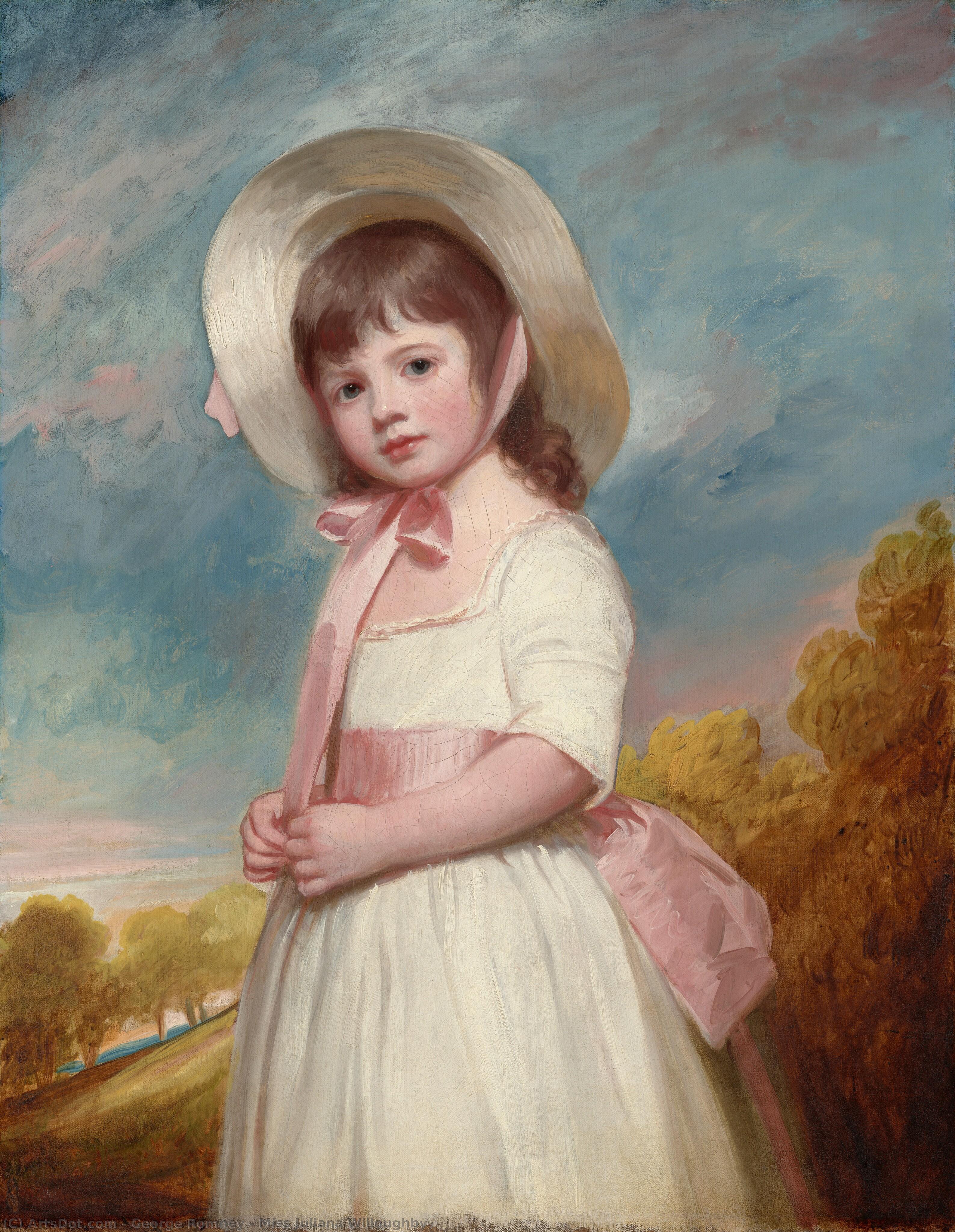
A captivating 1783 portrait by George Romney depicts Miss Juliana Willoughby, a young girl with flushed cheeks and chestnut hair, rendered in a delicate style characteristic of the British Neoclassical period. Discover this exquisite hand-painted reproduction and bring this timeless beauty into your home.
Miss Juliana Willoughby – A Portrait of Innocence and Georgian Grace
- Artist: George Romney
- Date: 1783
- Size: 92 x 72 cm
- Medium: Oil on Canvas
George Romney’s “Miss Juliana Willoughby” is more than just a portrait; it's a meticulously crafted window into the world of Georgian England, offering a poignant glimpse of youthful beauty and societal grace. Painted in 1783, this vertical composition captures a young girl – likely around ten years old – with an arresting directness that transcends the formal conventions of portraiture prevalent at the time. The painting’s immediate impact stems from Romney's masterful use of light and color, bathing Juliana in a soft, almost ethereal glow that emphasizes her delicate features and youthful complexion. Her pale skin contrasts beautifully with the flushed cheeks, a subtle detail indicative of Romney’s keen observation of natural beauty – a hallmark of his style.
A Study in Detail: Technique and Composition
Romney's technique is characterized by its remarkable precision and sensitivity. The loose, lively brushstrokes employed in rendering the landscape behind Juliana create a sense of depth and movement, anchoring her within a believable, albeit idealized, pastoral setting. Note the careful layering of color – the harvest gold and tawny brown hues of the hillside, subtly echoed in the ribbons adorning her dress and hat, demonstrating Romney’s understanding of tonal harmony. The composition itself is carefully balanced; Juliana's angled pose draws the viewer into the scene, while her direct gaze creates an intimate connection. The inclusion of the aquamarine-blue sky, punctuated with streaks of pink, adds a touch of romanticism, reflecting the fashionable pastel palette favored in Georgian interiors and art.
Symbolism and Social Context
“Miss Juliana Willoughby” provides valuable insight into the social customs and values of the late 18th century. The girl’s attire – the white dress, straw hat, and pink sash – were all indicative of her station in life and fashionable trends. The parasol she holds suggests a leisurely afternoon spent outdoors, a common pastime for young ladies of leisure. The inclusion of the clock, though seemingly anachronistic, subtly reinforces the theme of time and fleeting beauty – a preoccupation of the era. Romney’s portraits were highly sought after by the British aristocracy, and this work exemplifies his ability to capture not just physical likeness but also the personality and social standing of his subjects.
Emotional Impact and Artistic Legacy
Ultimately, “Miss Juliana Willoughby” resonates with a profound sense of innocence and vulnerability. Romney’s skill in capturing the girl's expression – her slightly pensive gaze and gentle smile – evokes empathy and admiration. This painting is a testament to Romney’s ability to transform a simple portrait into a powerful statement about beauty, youth, and the fleeting nature of time. As a hand-painted reproduction offered by ArtsDot.com, this artwork provides an unparalleled opportunity to experience the artistry and emotional depth of one of Britain's most celebrated portrait painters.