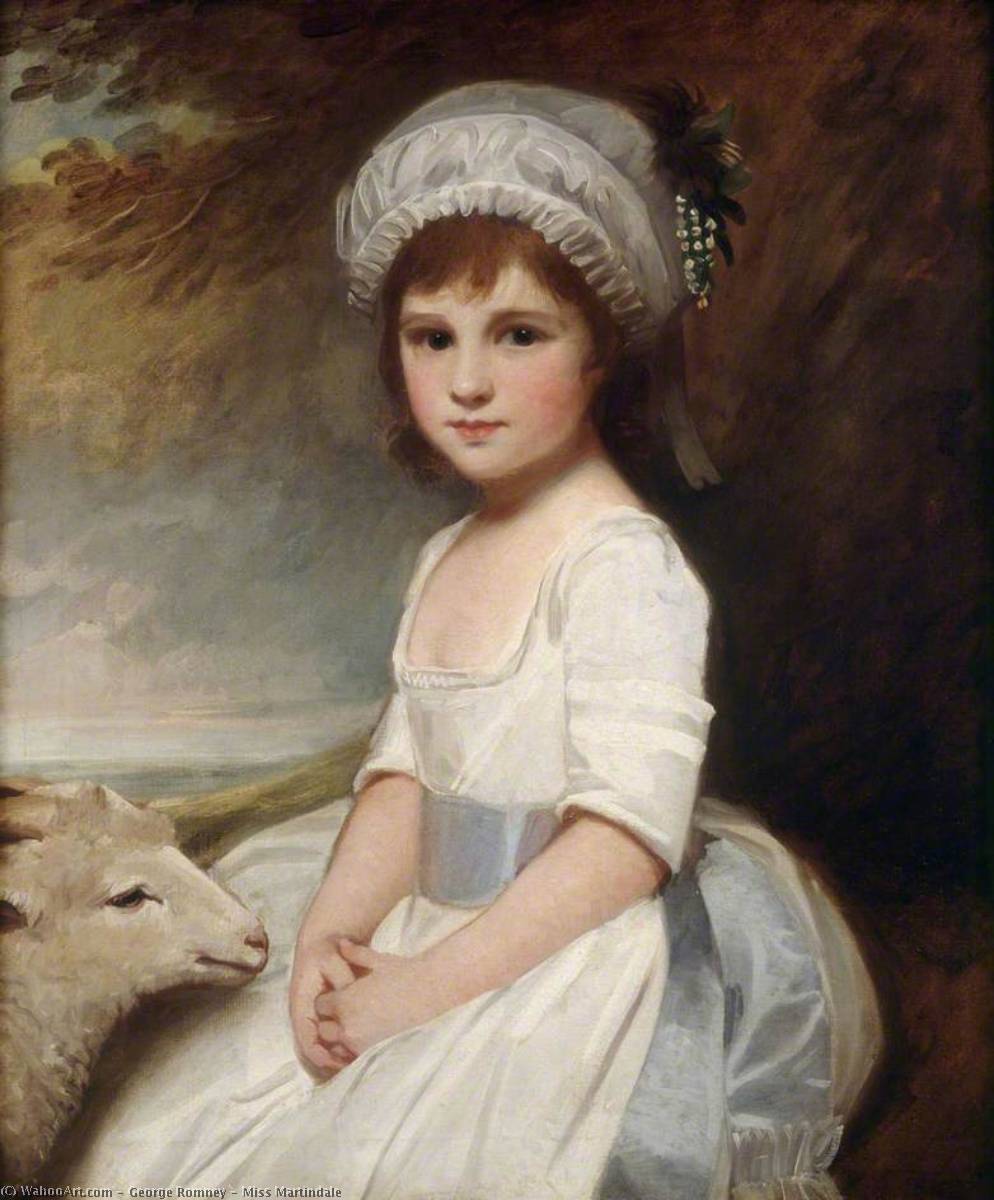
Softly lit portrait of Miss Martindale in a white dress, captured by George Romney during the Georgian era; her serene gaze invites you to discover this timeless masterpiece.
Discover George Romney (1734-1802), the celebrated British portrait painter of high society! Explore his elegant style, captivating portraits & muse, Emma Hamilton. Shop reproductions now!
Discover England's rich history at English Heritage! Explore iconic castles, palaces & gardens across the UK. Family fun, events & heritage await – plan your visit today!
George Romney’s Miss Martindale: An Ode to Innocence and Georgian Elegance
George Romney's “Miss Martindale,” completed in 1782, transcends mere portraiture; it embodies the spirit of Georgian England – a period defined by refined sensibilities and aristocratic patronage. Executed on canvas with meticulous oil paint technique, this artwork offers a glimpse into a world where beauty was meticulously cultivated and social status dictated artistic expression. Currently residing at English Heritage in London, “Miss Martindale” continues to captivate viewers with its serene composition and subtle emotive power.
A Portrait Steeped in Context
The painting depicts a young girl, identified as Miss Martindale, seated gracefully on what appears to be a bench or chair outdoors. Romney’s masterful use of light and shadow establishes an atmosphere of tranquility, highlighting the delicate features of his subject – her luminous complexion and expressive gaze conveying a quiet dignity. The backdrop consists of trees, subtly blurring into the distance, reinforcing the idyllic setting characteristic of Georgian landscape paintings. This scene wasn't simply decorative; it reflected the prevailing fascination with idealized rural life amongst the upper classes during Romney’s time—a deliberate choice intended to portray innocence and virtue.
Technique and Style: Romney’s Signature Approach
Romney’s artistic style is instantly recognizable for its soft, diffused tonal palette achieved through layering thin glazes of oil paint – a technique that exemplifies the Neoclassical influence prevalent in British art during the 1780s. He skillfully captures textures with remarkable precision, particularly evident in the folds of Miss Martindale's dress and the tactile quality of the sheep’s head held delicately in her lap. This meticulous attention to detail speaks volumes about Romney’s dedication to realism tempered by an idealized vision of beauty—a hallmark of his oeuvre. The artist’s ability to convey emotion through subtle facial expressions is particularly noteworthy, hinting at a contemplative inner life beneath the surface composure.
Symbolism Beyond Appearance
The inclusion of the sheep's head isn’t merely a visual element; it carries symbolic weight. Sheep were traditionally associated with purity and innocence—a deliberate allusion to Miss Martindale’s character and virtue. Furthermore, Romney’s choice of pose – seated calmly, gazing outward – reinforces this sense of serenity and contemplation. The overall composition invites viewers to consider themes of femininity, grace, and moral integrity—values highly esteemed within Georgian society.
Emotional Resonance: Capturing a Moment in Time
“Miss Martindale” resonates with an enduring emotional appeal precisely because it captures a fleeting moment of beauty and tranquility. Romney’s portrayal transcends the conventions of portraiture, offering not just a likeness but also an impression of character—a testament to his artistic skill and sensitivity. It serves as a poignant reminder of a bygone era, inviting contemplation on ideals of elegance and virtue that continue to inspire admiration today. A reproduction of this masterpiece would undoubtedly bring a touch of Georgian sophistication into any interior space.