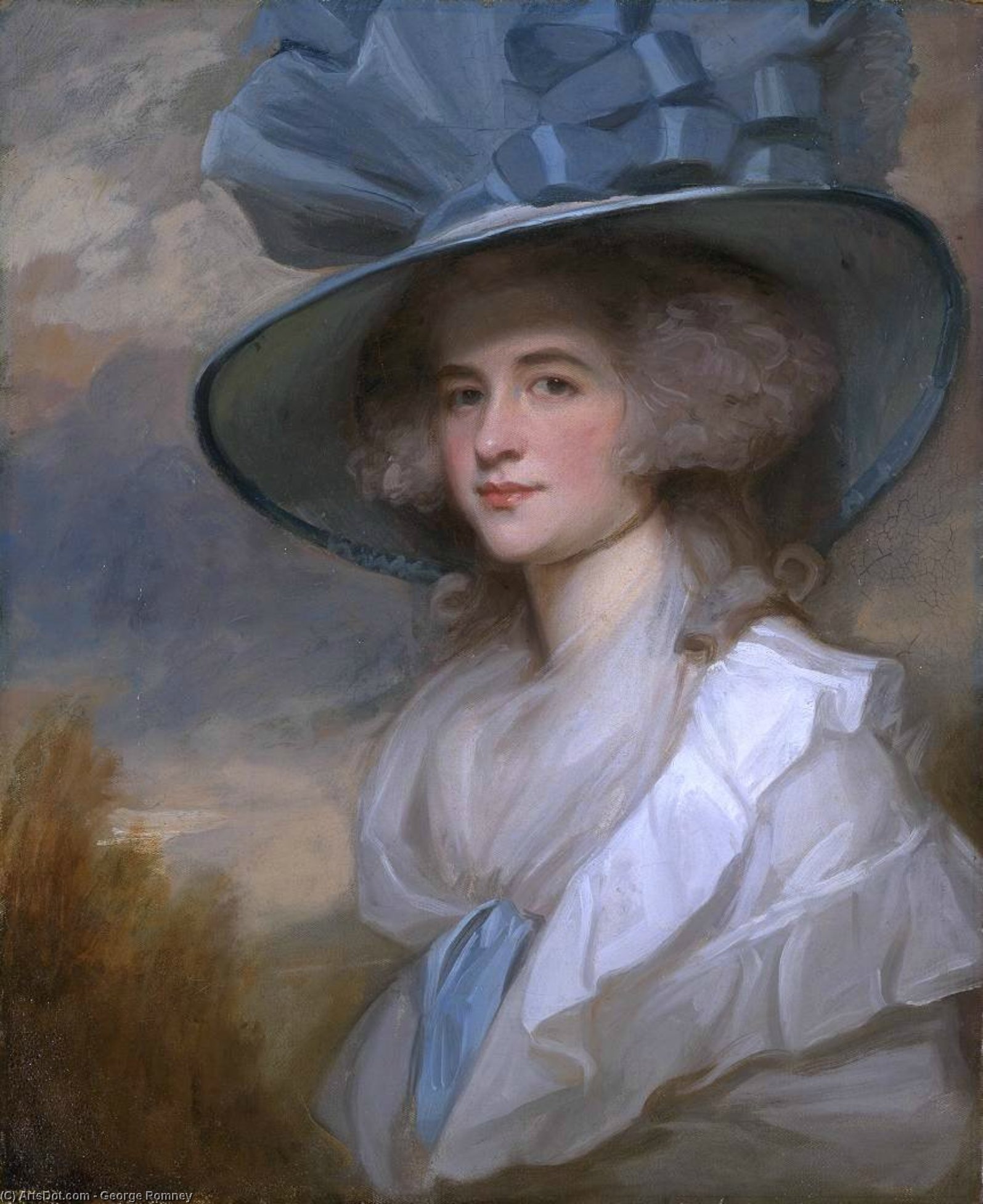
Admire George Romney's exquisite portrait of Mrs Robert Trotter, capturing the elegance and grace of late 18th-century fashion with delicate brushstrokes and soft colors. Explore this iconic piece of British art history.
Discover George Romney (1734-1802), the celebrated British portrait painter of high society! Explore his elegant style, captivating portraits & muse, Emma Hamilton. Shop reproductions now!
Tate Gallery
(London, United Kingdom)
Discover British & international art at Tate Britain! Explore centuries of masterpieces, from Turner to modern icons – free entry awaits in London’s riverside gallery.
A Portrait Steeped in Elegance: Exploring George Romney’s Mrs Robert Trotter
The portrait of Mrs Robert Trotter by George Romney stands as a quintessential emblem of Georgian elegance, encapsulating the refined sensibilities and social conventions of Britain's golden age. Painted in 1788, this artwork transcends mere likeness; it embodies an aesthetic ideal that continues to resonate with audiences today—a testament to Romney’s mastery of technique and his profound understanding of human psychology.
The Subject: A Woman Defined by Grace
Mrs Robert Trotter herself is presented with remarkable composure and dignity. Her gaze meets the viewer's directly, conveying a quiet confidence tempered by gentle vulnerability. Romney skillfully captures her facial features—the delicate curve of her lips, the subtle expression in her eyes—employing meticulous observation to convey not just appearance but also character. The woman’s attire reflects the prevailing fashions of the time: a white gown embellished with elaborate ruffles at the neckline, indicative of aristocratic taste and status. This careful attention to detail underscores Romney's commitment to portraying his subject authentically within the broader cultural landscape.
Romney’s Style: Rococo Influence Meets Naturalism
Romney’s artistic style is firmly rooted in the Rococo tradition—a movement characterized by ornamentation, pastel hues, and an emphasis on sensual beauty—yet he deftly incorporates elements of naturalism, elevating his work beyond mere decorative imitation. The artist utilizes soft brushstrokes to achieve a luminous effect, capturing the subtle nuances of light and shadow that imbue the portrait with depth and atmosphere. Romney’s palette leans heavily towards muted shades of pink, peach, and cream, creating an ethereal backdrop that complements Mrs Trotter's porcelain skin tone. This harmonious blend of Rococo artistry and naturalistic observation distinguishes Romney’s oeuvre from more rigid stylistic conventions.
Technique: Delicate Brushwork and Layered Glazes
Romney’s technique involved painstaking layering of glazes—thin coats of translucent pigment applied sequentially to build up color intensity and achieve remarkable tonal gradations. This meticulous process demanded considerable patience and precision, reflecting Romney's dedication to achieving the highest standards of artistic excellence. The artist skillfully rendered the texture of Mrs Trotter’s hair with delicate brushstrokes, capturing its voluminous curls with astonishing accuracy. Furthermore, Romney employed subtle shading techniques to sculpt the contours of her face, creating a three-dimensional illusion that enhances the portrait’s expressive power.
Historical Context: Portraiture as Status Symbol
The popularity of portraiture during the Georgian era stemmed from its role as a powerful symbol of social status and familial prestige. Commissioning portraits was an expensive undertaking, signifying wealth and influence within the aristocratic circles of London. Romney's clientele included prominent figures—members of the landed gentry and wealthy merchants—who sought to commemorate their achievements and secure their legacy through visual representation. The portrait served not only as a commemoration but also as a declaration of identity—a tangible assertion of one’s position within the hierarchical social order.
Symbolism: Beauty, Virtue, and Domestic Tranquility
Beyond its formal depiction of Mrs Trotter's appearance, the painting subtly communicates broader symbolic ideas. The woman’s serene expression embodies ideals of feminine virtue—peacefulness, modesty, and grace—values highly esteemed in Georgian society. Moreover, the carefully arranged composition evokes a sense of domestic tranquility—a reflection of the aspirations for stability and refinement that underpinned the era's cultural ethos. Romney’s masterful use of color and light contributes to this emotional resonance, inviting viewers to contemplate themes of beauty, honor, and familial harmony.
Concluding Reflection: An Enduring Legacy
George Romney’s Mrs Robert Trotter remains a captivating artwork because it transcends its time period, speaking to universal human emotions and aesthetic sensibilities. Romney's ability to capture the essence of his subject—both physically and psychologically—solidifies his place as one of Britain’s greatest portrait painters. Its enduring appeal lies in its exquisite craftsmanship, its nuanced symbolism, and its capacity to evoke a profound appreciation for Georgian elegance—a legacy that continues to inspire artists and collectors alike.