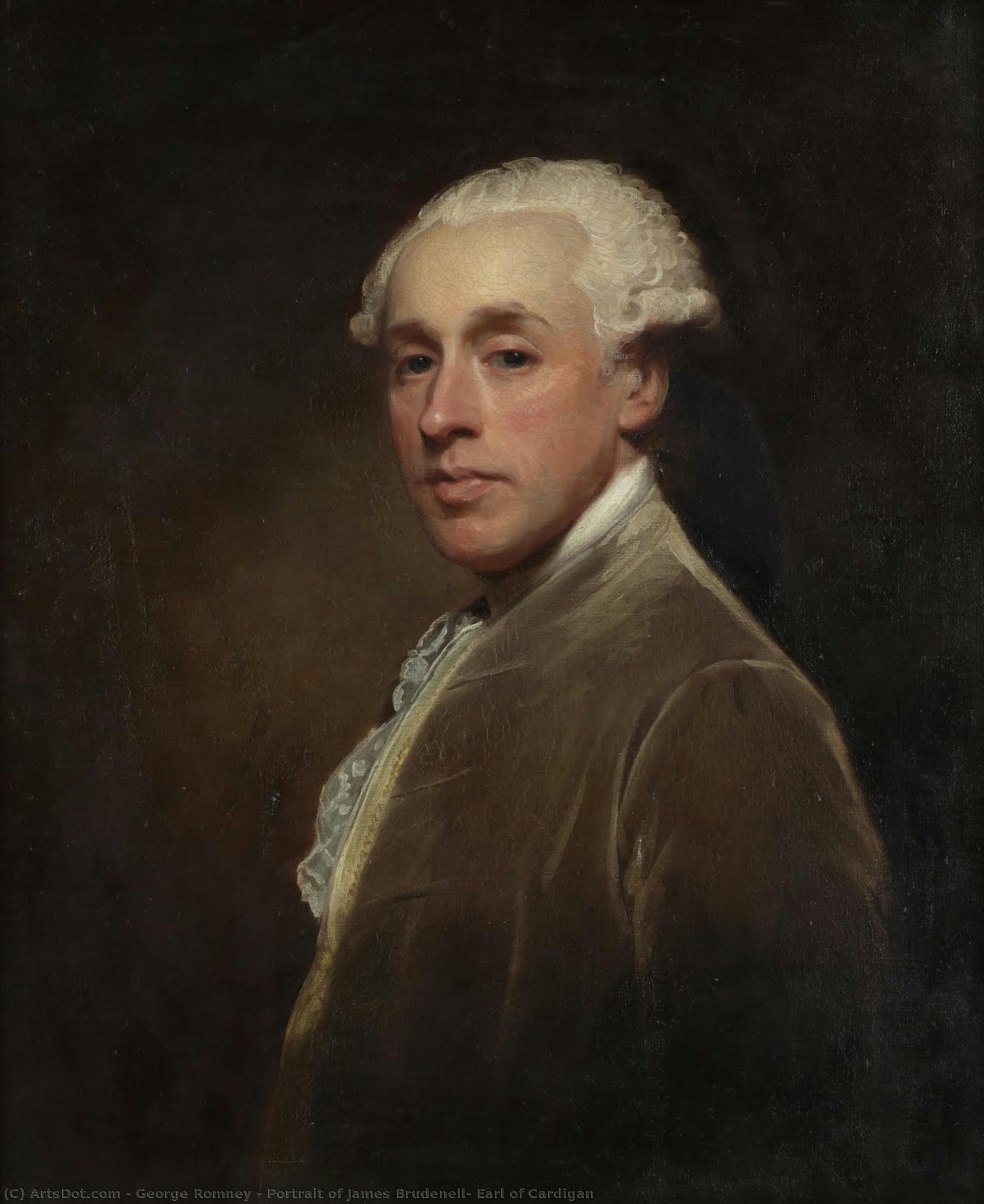
A Glimpse into Georgian Grandeur: The Portrait of James Brudenell, Earl of Cardigan
George Romney’s “Portrait of James Brudenell, Earl of Cardigan,” painted in 1781, is more than a simple likeness; it's a meticulously crafted window into the world of Georgian England – a society defined by military prowess, political maneuvering, and an unwavering pursuit of status. The painting captures not just the physical appearance of Sir James Brudenell, but also his projected image: a man of considerable influence, commanding respect through both his title and his service to the Crown. Romney’s skill lies in his ability to imbue this aristocratic subject with a palpable sense of presence, drawing the viewer into an intimate encounter despite the formality of the pose.

The Master at Work: Romney’s Technique and the Art of the Portrait
Romney was a master of capturing character through subtle details. Note the carefully arranged wig, a symbol of status in the 18th century, its precise curls reflecting both wealth and adherence to fashionable trends. The crisp white shirt with its prominent bow tie speaks to Brudenell’s position within the elite circles of London society. The dark background – a deliberate choice by Romney – serves not as mere backdrop but as a powerful tool for emphasizing the sitter's form and presence, directing the viewer’s attention directly onto his face. The use of mezzotint technique lends a remarkable richness to the tones, creating a velvety texture that softens the sharp lines of the portrait and adds depth to the subject’s features. Romney’s ability to render light and shadow with such precision is evident in the way it highlights Brudenell's face, accentuating his gaze and conveying an air of quiet authority.
A Man of Action: James Brudenell and His Times
James Brudenell, Earl of Cardigan, was a significant figure during the latter half of the 18th century. He began his career as a military officer, serving with distinction in the American Revolutionary War. Later, he transitioned into politics, becoming a Member of Parliament and later a General. His service to the Crown earned him considerable prestige, solidifying his place within the highest echelons of British society. The portrait itself reflects this trajectory – it’s not simply a depiction of a nobleman; it's an advertisement for his accomplishments and a testament to his standing in the world. The painting was created during a period of immense social and political change, as Britain navigated its colonial ambitions and grappled with evolving power dynamics.
Symbolism and Emotional Resonance
Beyond the factual representation of Brudenell’s appearance, the portrait is laden with symbolic meaning. The posture – upright and composed – conveys a sense of self-assurance and control. His direct gaze engages the viewer, inviting us to contemplate his character and ambitions. The overall effect is one of dignified reserve, suggesting a man accustomed to command and respect. While formal, there’s an undeniable magnetism in Brudenell's presence, hinting at the complexities beneath the surface of aristocratic life. The painting ultimately serves as a powerful reminder of the enduring appeal of portraiture – its ability to capture not just likeness but also essence, personality, and the spirit of an age.
Further Research: Explore George Romney’s biography and the historical context surrounding James Brudenell, Earl of Cardigan. The Museo de Arte de Ponce in Puerto Rico houses this remarkable painting. Learn more here.