Discover George Romney (1734-1802), the celebrated British portrait painter of high society! Explore his elegant style, captivating portraits & muse, Emma Hamilton. Shop reproductions now!
Explore Birmingham's rich history & diverse art collection at the iconic Birmingham Museum & Art Gallery! Discover Pre-Raphaelites, industrial heritage, and global treasures – free admission!
A Study in Refinement: George Romney's Portrait of Mrs. Verelst
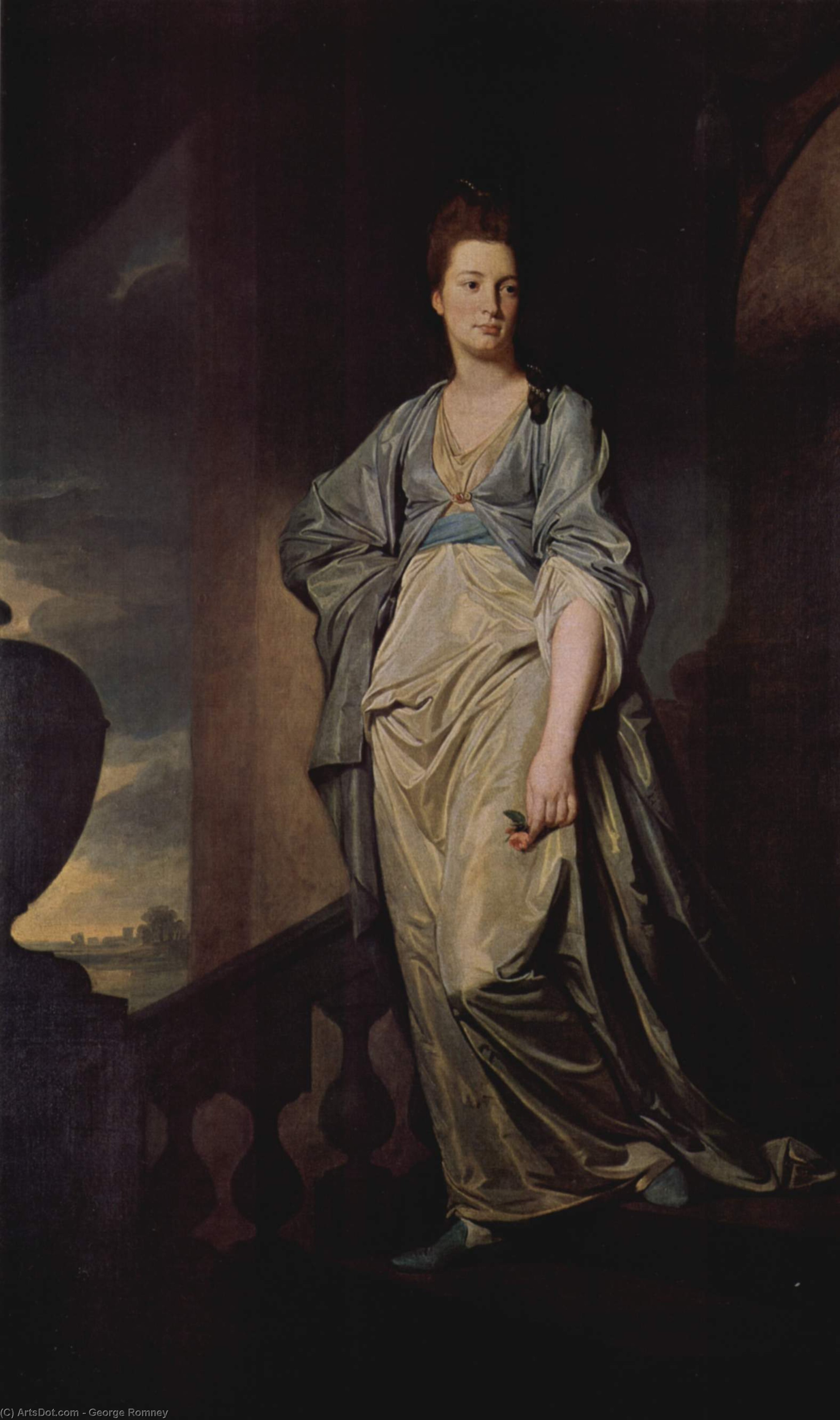
George Romney’s “Portrait of Mrs. Verelst,” painted in 1773, is more than merely a likeness; it’s a meticulously crafted window into the social and aesthetic sensibilities of Georgian England. Executed with remarkable sensitivity and technical skill, this portrait captures not just the physical appearance of its subject but also an underlying sense of quiet dignity and restrained elegance – hallmarks of Romney's distinctive style. The painting depicts Mrs. Verelst, a woman of considerable standing, posed on a grand staircase within what appears to be a richly appointed interior. Her posture, with her hand lightly resting upon her hip, exudes composure, while her gaze directed downwards speaks of both modesty and an awareness of the viewer’s presence.
The Painter's Hand: Technique and Style
- Oil on Canvas: Romney masterfully employed oil paint, a medium that allowed for nuanced gradations in tone and texture – crucial to achieving his signature soft focus.
- Chiaroscuro: The dramatic use of light and shadow, known as *chiaroscuro*, is central to the painting’s impact. Romney skillfully manipulates these contrasts to sculpt Mrs. Verelst's form, emphasizing her features and creating a sense of depth within the composition.
- Loose Brushwork: Unlike some of his contemporaries who favored highly detailed renderings, Romney utilized a looser brushstroke, particularly in the rendering of fabrics and drapery. This technique contributes to the painting’s overall softness and atmospheric quality.
Symbolism and Context – A Glimpse into Georgian Society
The portrait reflects the prevailing conventions of portraiture during the late 18th century, a period dominated by aristocratic patronage and an emphasis on social status. The setting itself—a grand staircase within a luxurious interior—signifies wealth and position. The inclusion of accessories like the necklace and earrings underscores Mrs. Verelst’s elevated social standing. The two vases positioned strategically around the frame are not merely decorative elements; they subtly reinforce the theme of refinement and domestic tranquility, qualities highly valued in Georgian society. Romney's focus on capturing a moment of quiet contemplation rather than an overtly theatrical pose speaks to a shift towards more intimate and psychologically nuanced portraiture.
Emotional Resonance – A Portrait Beyond Representation
"Portrait of Mrs. Verelst" transcends the simple act of representation, offering viewers a glimpse into the inner life of its subject. Romney’s ability to convey a sense of quiet dignity and restrained grace is profoundly moving. The painting's soft palette, combined with his masterful use of light and shadow, creates an atmosphere of serenity and contemplation. It invites us to consider not just Mrs. Verelst’s appearance but also her character and place within the social fabric of her time. This piece remains a testament to Romney’s artistic genius and his profound understanding of human psychology.