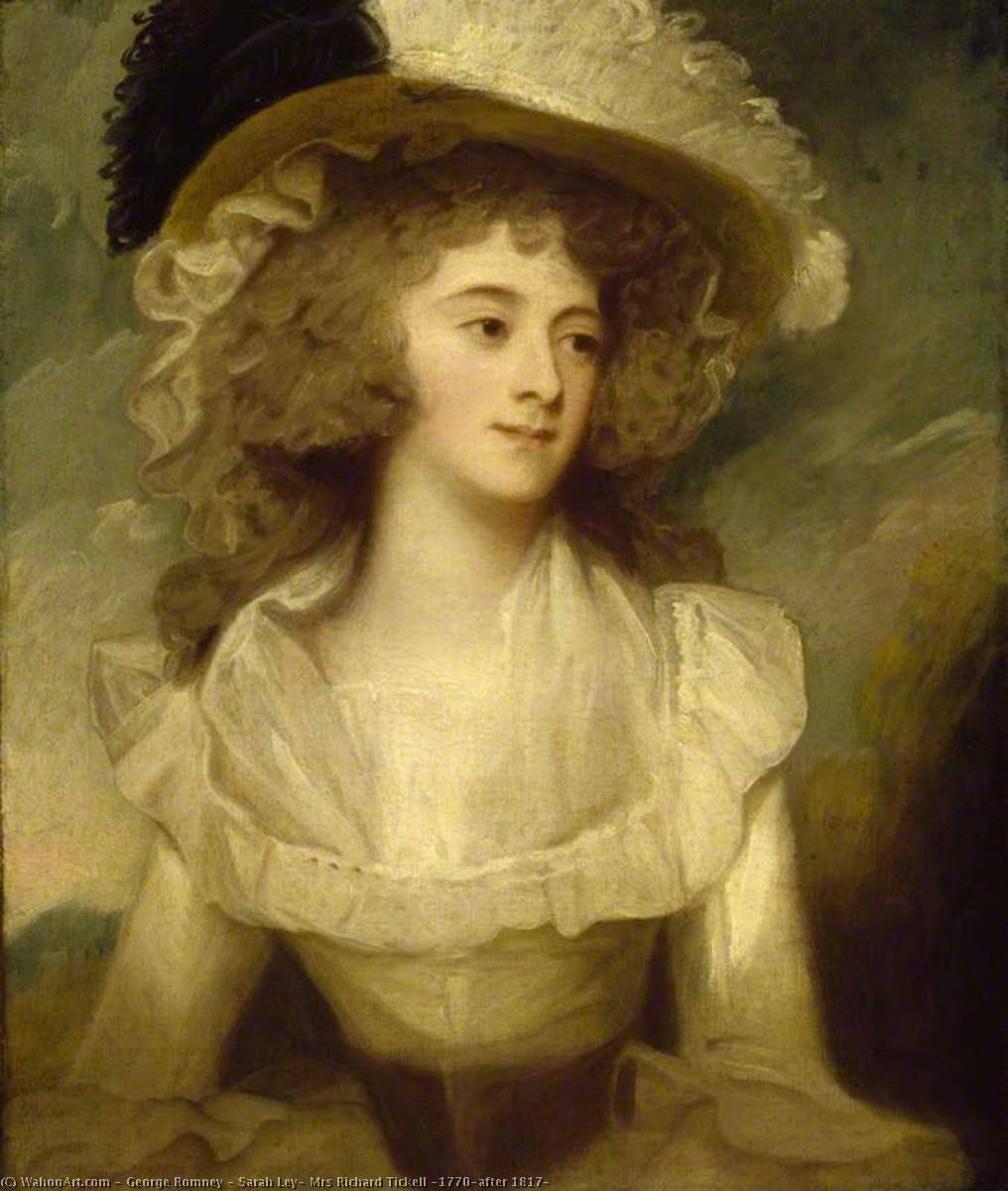
A Glimpse into Georgian Elegance: The Portrait of Mrs Richard Tickell
To stand before this portrait is to step directly into the refined drawing rooms of late eighteenth-century England. George Romney, master chronicler of his age, has captured not merely a likeness, but an entire atmosphere—one steeped in the quiet confidence and palpable elegance of the aristocracy. The subject, Sarah Ley, Mrs Richard Tickell, gazes out with a composure that speaks volumes; it is a gaze both direct and subtly reserved. Romney’s genius here lies in his ability to imbue a formal sitting with an almost intimate connection. The composition, centered around her upper body, draws the viewer into a moment of poised stillness, allowing us to admire the meticulous artistry applied to every fold of fabric and strand of hair.
Mastery of Light and Texture: Technical Brilliance
Technically, this work is a breathtaking testament to oil painting on canvas. Romney employs a soft, diffused lighting scheme that seems to emanate from an unseen source, bathing the sitter in a gentle luminescence. Observe how the light catches the voluminous lace collar and cuffs; the artist has achieved a near-ethereal quality in rendering these delicate textiles. The contrast between the creamy whites of her gown and the subtle, warm tones of her skin and hair is handled with masterful blending. It is this sophisticated handling of tone—the subtle gradations that build depth without harsh lines—that elevates the piece from mere portraiture to a study in luminosity. One can almost feel the weight and texture of the rich fabrics under one's fingertips.
The Symbolism of Status and Fashion
Beyond the technical skill, the painting functions as a cultural artifact. The attire speaks eloquently of wealth and adherence to contemporary high fashion. From the structure of her hat to the cascading folds of her dress, every element is carefully considered signifier of status within Georgian society. These garments are not just coverings; they are statements. They speak of patronage, leisure, and an established place in the social hierarchy. The overall effect is one of controlled opulence—a visual narrative of refined taste that collectors and designers alike find endlessly compelling for decorating spaces meant to evoke historical grandeur.
An Enduring Emotional Resonance
What lingers most with the viewer is the subject's enduring presence. While the portrait anchors us firmly in 1759, its emotional impact feels timeless. It captures a moment of poised femininity—a blend of classical ideals of beauty championed by Neoclassicism and the vibrant reality of human personality. For those seeking an artwork that adds depth, history, and undeniable grace to a room, this piece offers more than decoration; it offers conversation. It invites contemplation on the passage of time, the enduring nature of style, and the quiet power held within a single, beautifully rendered gaze.