A Study in Enlightenment Dignity: Sir Archibald Macdonald
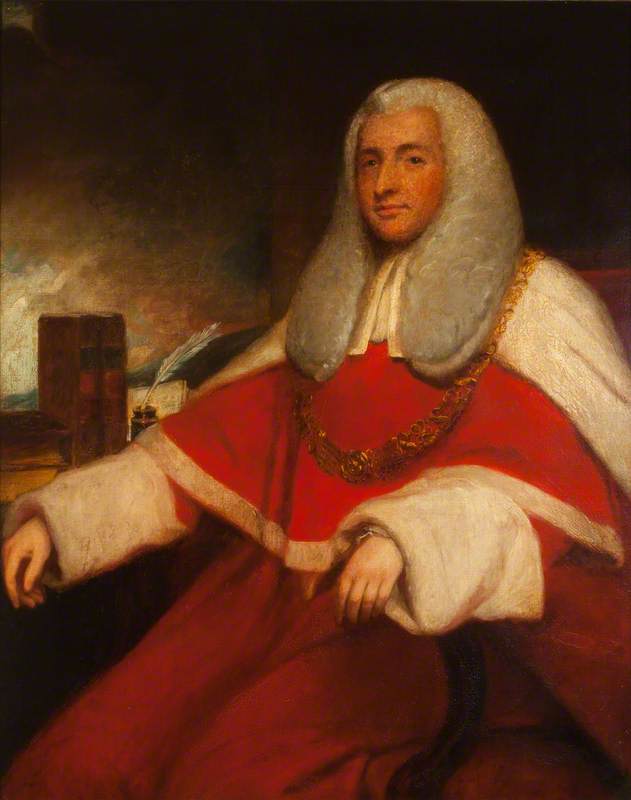
To stand before this portrait of Sir Archibald Macdonald is to step directly into the rarefied air of late Georgian intellectualism. Painted in 1795 by George Romney, the work transcends a mere likeness; it is a carefully constructed monument to status, learning, and established authority. The sitter commands attention not through overt drama, but through an almost palpable sense of measured gravitas. Draped in rich, formal robes and adorned with the period's elaborate wig, he embodies the archetype of the learned gentleman—perhaps a judge, a barrister, or a man deeply embedded within the legal or academic elite of his time. The very posture suggests contemplation, as if the weight of knowledge rests comfortably upon his shoulders.
The Allure of the Scholar’s Setting
Romney has masterfully orchestrated the background to complement the sitter's persona. Behind Sir Archibald, a towering bookshelf rises like a silent testament to accumulated wisdom. The visible volumes are not mere decoration; they are props in a narrative of erudition. They suggest a life spent poring over weighty texts, navigating complex legal precedents, and engaging with the great currents of human thought. To the right, the substantial chair anchors him within this scholarly domain, providing a point of repose for a man whose profession demanded constant vigilance. The interplay between the sitter’s direct gaze and the surrounding intellectual clutter creates a fascinating tension—the individual mind set against the vastness of recorded knowledge.
George Romney's Brushwork and Technique
George Romney, an artist whose career spanned the zenith of British portraiture, captured this moment with remarkable technical finesse. While the subject matter is formal, Romney’s handling of the textures—the sheen on the red robe, the soft fall of the beard, the crisp white collar against the dark wood—speaks to his supreme skill as a painter of flesh and fabric alike. The technique employed allows light to play across the contours of Sir Archibald's face, giving him an enduring vitality that resists the passage of time. It is a portrait executed with academic precision yet imbued with a subtle, almost romantic warmth.
Symbolism and Enduring Appeal
The symbolism within this piece is rich for the discerning collector or designer. The wig and robes speak to adherence to societal structure; the books whisper of Enlightenment ideals—the belief in reason and documented truth. Owning a reproduction of this work brings an air of cultivated history into any space. It suggests that the inhabitant appreciates not only beauty but also the weight of tradition, the value of education, and the dignity inherent in intellectual pursuits. It is a piece designed to elevate a drawing-room or study, transforming it into a chamber worthy of contemplation.