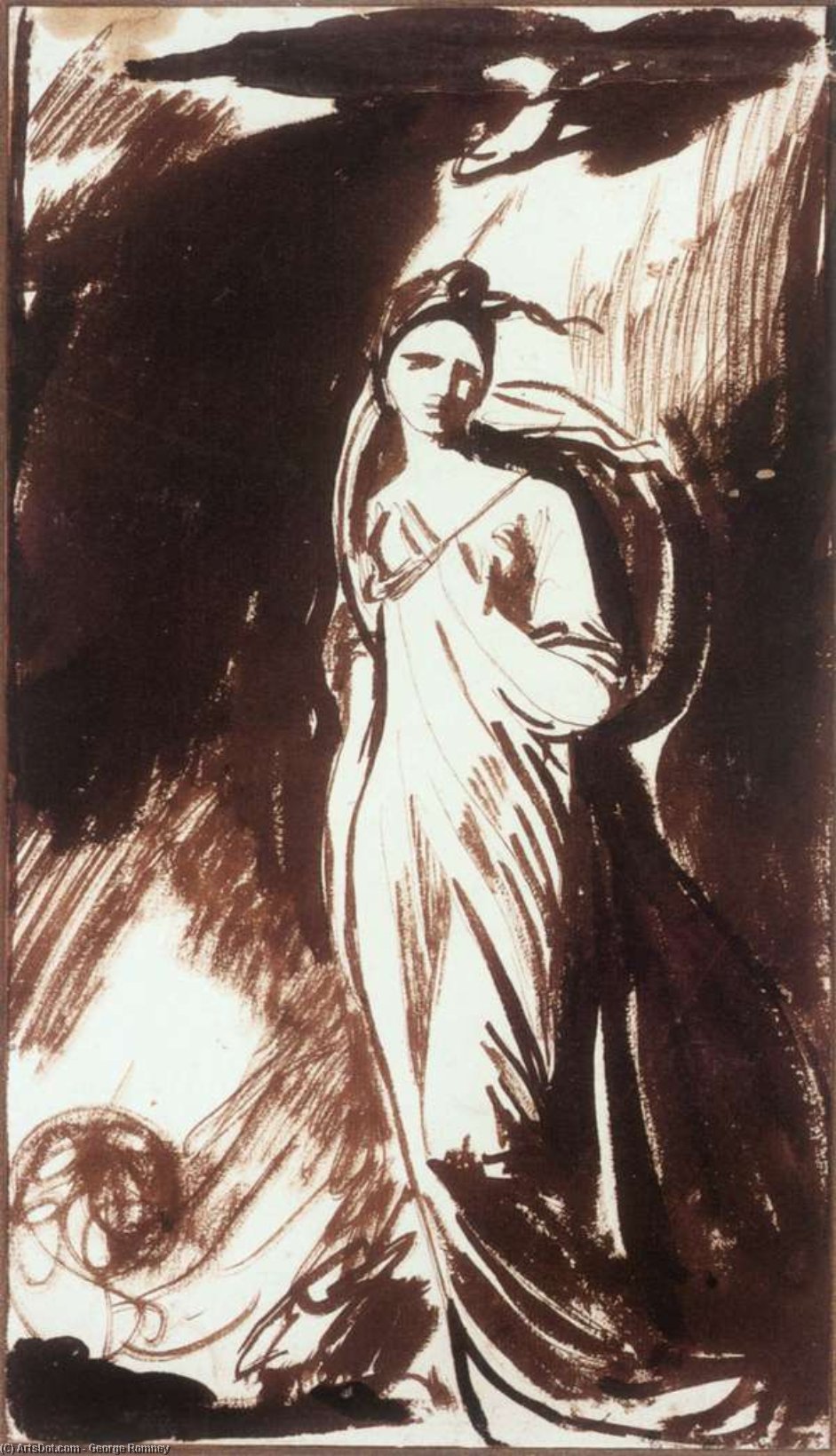
A dramatic study by George Romney featuring Elizabeth Warren as Hebe. Explore this Romantic/Symbolic oil painting’s melancholic mood & expressive style – a unique art piece.
Discover George Romney (1734-1802), the celebrated British portrait painter of high society! Explore his elegant style, captivating portraits & muse, Emma Hamilton. Shop reproductions now!
Explore Scottish art & history at the National Gallery of Scotland! Discover masterpieces by renowned artists, delve into cultural heritage, and experience a stunning neoclassical building in Edinburgh's heart.
Study for Elizabeth Warren as Hebe
George Romney’s “Study for Elizabeth Warren as Hebe” is more than just a preparatory sketch; it's a poignant meditation on femininity, resilience, and the quiet dignity of contemplation—a cornerstone piece within Romney’s prolific oeuvre and a testament to his masterful Romantic style. Executed around 1776, this oil painting on canvas captures a moment frozen in time, offering viewers an intimate glimpse into Romney’s artistic process and revealing profound symbolic layers beneath its deceptively simple surface.
The artwork immediately draws the eye with its dominant palette of muted browns and grays—a deliberate choice that underscores the melancholic mood inherent in the subject matter. Compositionally, Romney centers his figure prominently within the frame, emphasizing her isolation yet simultaneously conveying a sense of inner strength. The swirling, indistinct backgrounds suggest turbulent emotions or perhaps an atmospheric storm, mirroring the psychological complexities explored by Romantic artists of the period. Lines are employed expressively to delineate the woman’s form and imbue movement into the stillness of the scene—a technique characteristic of Romney's signature style.
Romney’s meticulous attention to detail is evident in the rendering of textures; layered brushstrokes create a tactile quality that transcends the two-dimensional canvas, inviting viewers to imagine the artist’s hand at work. The lighting – emanating from an unseen source above – casts dramatic shadows that accentuate the figure's contours and heighten the emotional impact of the piece. Perspective is flattened, eschewing traditional depth cues to foster a dreamlike atmosphere—a stylistic hallmark of Romanticism aimed at capturing subjective experience rather than objective reality.
The subject matter itself speaks volumes about the era’s fascination with idealized beauty and feminine virtue. Elizabeth Warren, depicted as Hebe – the Greek goddess of youth – embodies these ideals. The inclusion of an eagle and urn symbolizes wisdom and immortality—powerful emblems reflecting Romney's belief in enduring values. As Alex Kidson confirms, this particular study possesses remarkable resolution, showcasing final details absent from other versions, demonstrating Romney’s dedication to achieving artistic perfection.
This artwork resides within the National Museum of Wales and was presented through Art Fund 1953, originating from Sir Edward Marsh's collection. Its accession number is D 4649. The painting exemplifies Romney’s Romantic style—characterized by loose brushwork, expressive lines, and a focus on conveying emotion—making it an invaluable addition to any discerning art connoisseur’s collection. It stands as a beautiful reminder of Romney’s ability to capture the essence of human experience with grace and sensitivity.