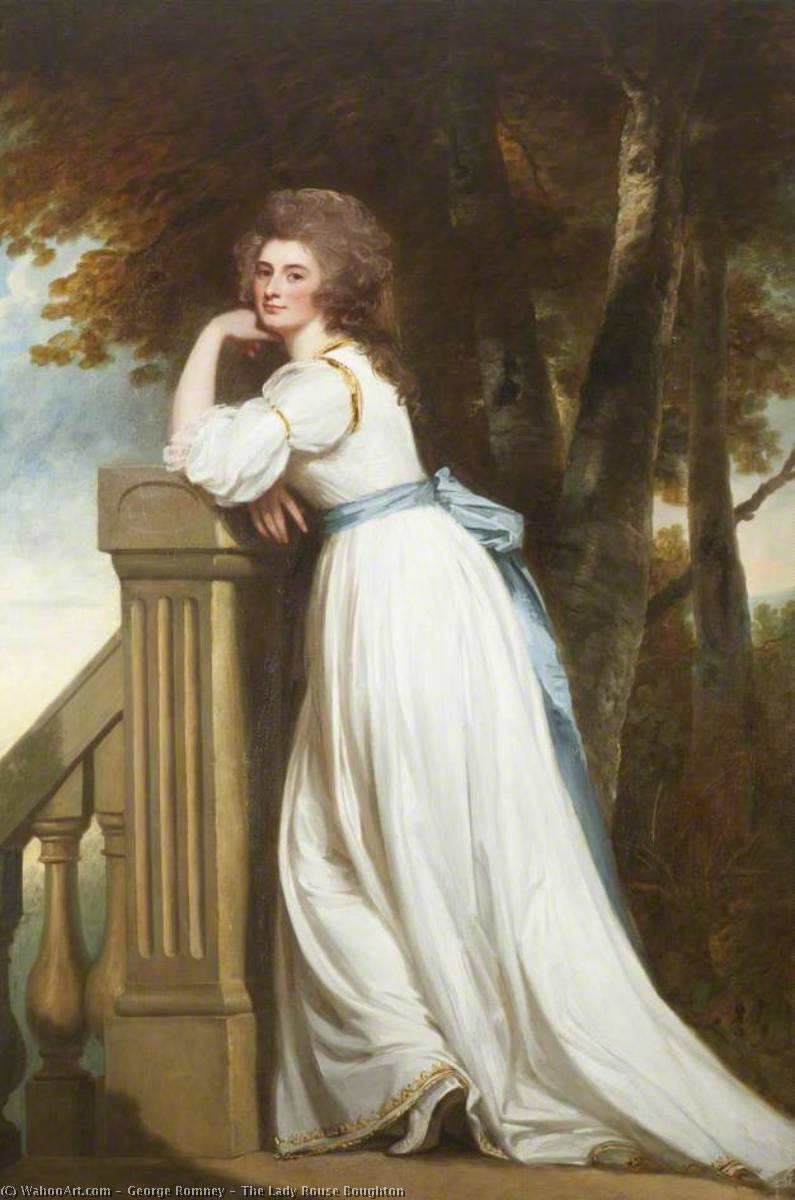
Romney’s ethereal ‘The Lady Rouse Boughton,’ a Rococo masterpiece from 1787, captures Catherine Hall Boughton in opulent elegance against a stately staircase backdrop—a symbol of aristocratic aspiration. Explore this stunning portrait and bring timeless beauty into your home.
Discover George Romney (1734-1802), the celebrated British portrait painter of high society! Explore his elegant style, captivating portraits & muse, Emma Hamilton. Shop reproductions now!
Abbot Hall Art Gallery in Kendal showcases historic & contemporary art, including a renowned George Romney collection! Explore 17th-18th century landscapes & portraits in a Grade I listed Georgian building. Inspiring exhibitions await!
A Portrait Steeped in Elegance: George Romney’s ‘The Lady Rouse Boughton’
George Romney's “The Lady Rouse Boughton,” completed in 1787, stands as a testament to the Rococo style’s enduring fascination with beauty and refined sensibility. Painted during Britain’s Enlightenment era, this portrait captures Catherine Hall Boughton – a woman of considerable social standing – amidst a backdrop that speaks volumes about the aspirations of aristocratic families at the time. Romney skillfully employed oil paint on canvas, utilizing delicate brushstrokes to achieve an ethereal luminosity characteristic of the period. The artist's meticulous attention to detail is evident in every aspect of the composition, from the intricate folds of Catherine’s gown to the subtle shading that sculpts her face and conveys a palpable sense of composure.
- Style: Rococo – Known for its ornate decoration, pastel colors, and emphasis on graceful curves and asymmetrical arrangements.
- Technique: Romney’s masterful brushwork creates an illusionistic depth, blurring the boundaries between reality and idealized beauty. He expertly blended pigments to achieve subtle tonal variations, enhancing the painting's overall visual impact.
The setting—a grand staircase flanked by trees—is more than mere decoration; it serves as a symbolic representation of Catherine’s family’s position within the social hierarchy. The upward gaze of the lady suggests ambition and aspiration, mirroring the broader cultural preoccupation with upward mobility during the Enlightenment. Furthermore, the inclusion of a bench hints at an outdoor gathering – perhaps a formal reception or celebration – reinforcing the portrait's connection to aristocratic life and leisure. Romney’s choice of color palette—primarily muted blues and creams—contributes to the painting’s serene atmosphere, conveying a sense of tranquility and sophistication.
- Symbolism: The staircase symbolizes social status and aspiration; the gown embodies elegance and refinement.
“The Lady Rouse Boughton” transcends its formal subject matter, resonating with viewers today through its masterful execution and timeless portrayal of feminine grace. It exemplifies Romney’s ability to capture not just likeness but also character—a quiet dignity that speaks across centuries. Its delicate beauty continues to inspire interior designers seeking to evoke a sense of aristocratic grandeur and romantic charm. The painting's enduring appeal lies in its ability to transport us back to a bygone era, reminding us of the values – elegance, composure, and aspiration – that continue to define artistic excellence.
Source: WikiArt