Discover George Romney (1734-1802), the celebrated British portrait painter of high society! Explore his elegant style, captivating portraits & muse, Emma Hamilton. Shop reproductions now!
Explore Darwin College, Cambridge—Britain's first graduate-only, mixed-gender college. Discover its rich history, notable alumni like Jane Goodall, and its strengths in sciences, humanities, and law. A unique academic heritage.
The Enigmatic Figure: William Alvey Darwin and George Romney’s Masterpiece
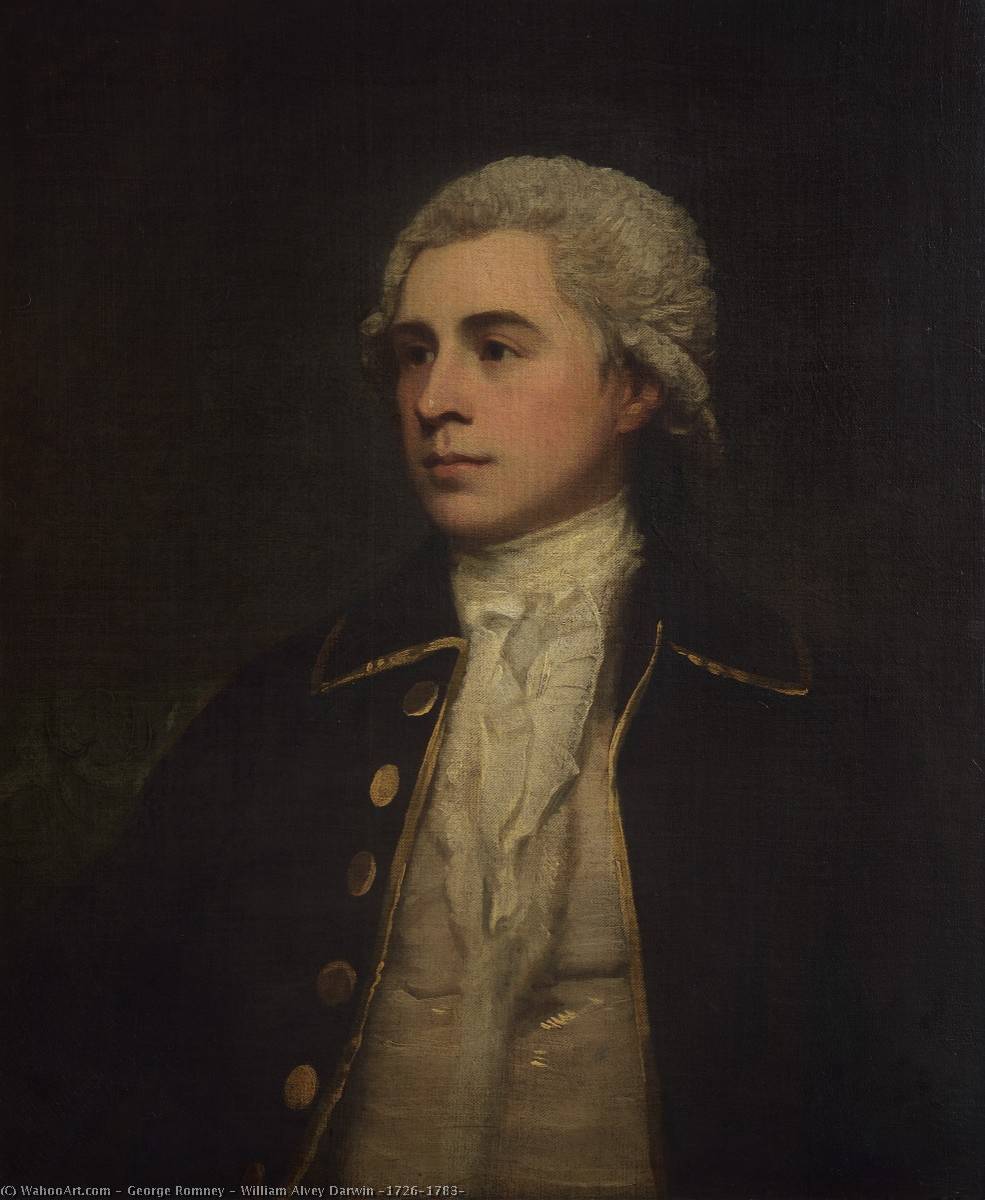
George Romney's “William Alvey Darwin (1726–1783)” is more than a simple portrait; it’s a carefully constructed window into the social and intellectual landscape of Georgian England. Painted circa 1770-1780, this oil on canvas captures not just the likeness of a man, but also an aura of quiet authority and scholarly contemplation. The subject, William Alvey Darwin, a prominent figure in Cambridge society – a lawyer, collector, and antiquarian – embodies the burgeoning interest in classical learning and scientific inquiry that characterized the era. Romney’s skill lies not merely in replicating features, but in imbuing his sitter with an inner life, suggesting a mind engaged in deep thought and a character defined by quiet dignity.
- Composition: The portrait is dominated by Darwin's figure, positioned slightly off-center within a dark, richly textured background. This strategic placement draws the eye immediately to his face, emphasizing his features and creating a sense of intimacy despite the formality of the pose.
- Color Palette: Romney employs a restrained yet sophisticated color palette—deep browns, ochres, and subtle blues—that lends an air of gravitas to the scene. The use of chiaroscuro (the contrast between light and dark) models Darwin’s form with remarkable precision, highlighting his face and hands while subtly obscuring details in the background.
- Clothing & Accessories: Darwin's attire – a meticulously rendered wig, velvet coat, and embroidered waistcoat – speaks volumes about his social standing and connection to the established order. The inclusion of a book resting on a table beside him is a deliberate symbol of his intellectual pursuits, suggesting a man devoted to learning and scholarship.
The Painter’s Hand: Romney's Neoclassical Style
Romney was a pivotal figure in the transition from Rococo portraiture to the more restrained and intellectually rigorous style of Neoclassicism. Influenced by his time studying in Paris, he adopted techniques that prioritized clarity, precision, and an idealized representation of the subject. Unlike the elaborate ornamentation favored by earlier artists, Romney’s portraits are characterized by a sense of understated elegance and a focus on capturing the essence of the individual. He was particularly adept at portraying the subtle nuances of human expression – the slight furrow of his brow, the gentle curve of his lips—revealing a depth of character that went beyond mere physical likeness.
Romney’s meticulous attention to detail is evident in every brushstroke, from the delicate rendering of Darwin's facial features to the subtle textures of his clothing. He was known for his ability to capture not just the outward appearance of his subjects but also their inner qualities and personalities.
Historical Context: Cambridge Society and the Enlightenment
“William Alvey Darwin” is inextricably linked to the vibrant intellectual atmosphere of Cambridge University during the late 18th century. The city was a hub of learning, attracting scholars, poets, and philosophers from across Europe. The portrait reflects this spirit of inquiry and the growing interest in classical antiquity—a movement that profoundly influenced art, literature, and philosophy. Darwin himself was a man deeply immersed in these intellectual currents, actively involved in collecting antiquities and contributing to scholarly debates. Romney’s decision to depict him in such a contemplative pose underscores the importance of intellectual pursuits within this elite social circle.
The painting offers a glimpse into the world of Georgian gentry—a society defined by its commitment to education, refinement, and the pursuit of knowledge.
Symbolism and Emotional Resonance
Beyond its technical brilliance, “William Alvey Darwin” is rich in symbolic meaning. The book represents not only his scholarly interests but also a connection to the past—a reverence for classical learning and a desire to preserve and transmit knowledge across generations. The dark background serves as a visual metaphor for the mysteries of the human mind, suggesting that Darwin’s inner world is complex and profound. Ultimately, the portrait evokes a sense of quiet dignity, intellectual curiosity, and timeless wisdom – qualities that continue to resonate with viewers today.