A Glimpse into the Eighteenth Century: The Spirit of James Stanley
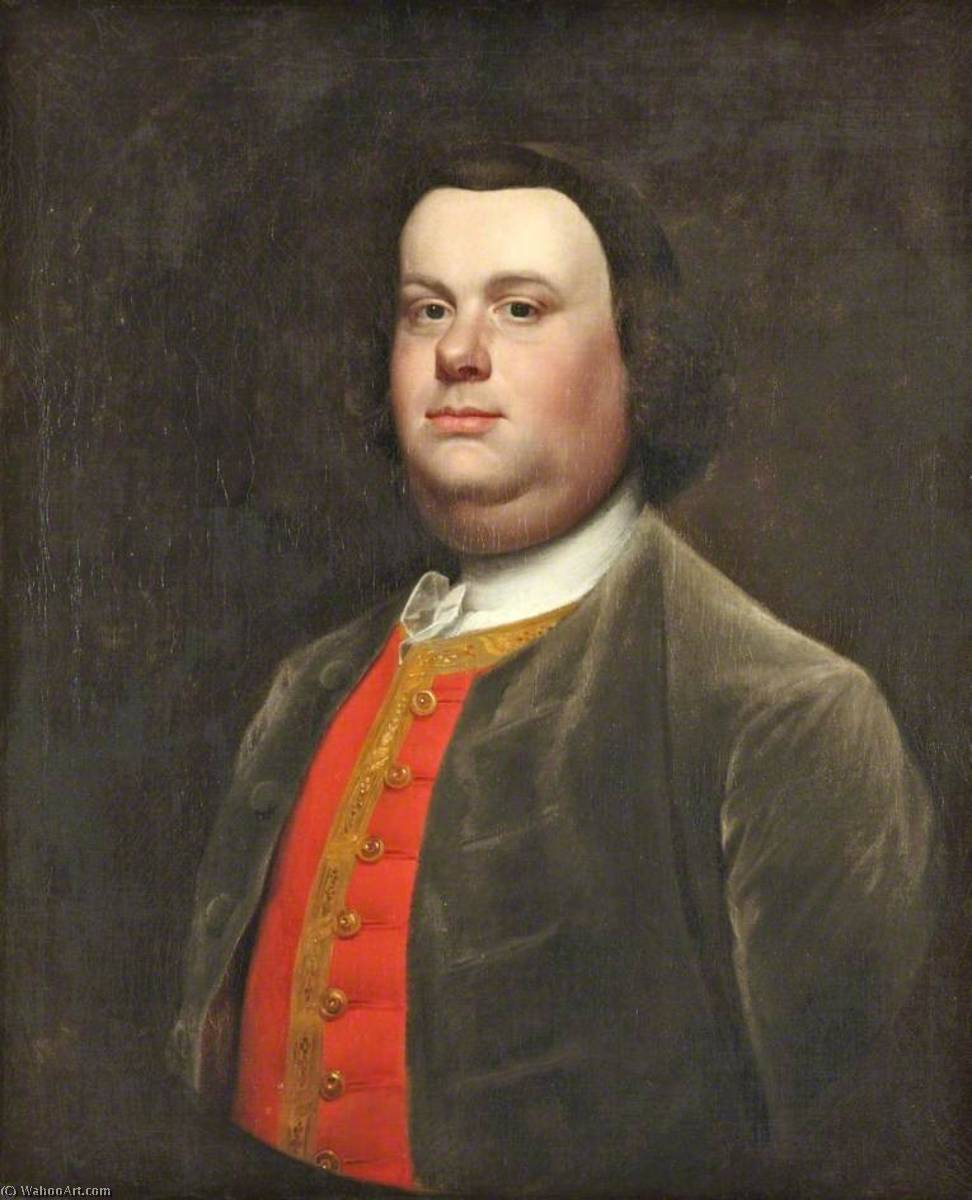
In the mid-1750s, the British art scene was undergoing a profound transformation, moving away from rigid classical ideals toward a more visceral, observational realism. George Stubbs, an artist whose name is synonymous with anatomical mastery, captured this shift perfectly in his 1755 portrait of James Stanley. To gaze upon this canvas is to step directly into the vibrant, textured world of the Georgian era. The subject, a man of evident character, is presented not as a distant, idealized figure, but with a lifelike presence that feels almost immediate. His attire—a striking red jacket adorned with meticulous gold buttons—serves as a brilliant focal point, casting a warm, commanding glow that draws the eye inward toward his spirited expression.
The painting is a masterclass in the use of color and light, where the rich, saturated hues of the scarlet coat contrast beautifully against the softer, luminous tones of his white shirt. Stubbs, though perhaps most famous for his scientific precision in depicting equine anatomy, applies that same unwavering dedication to the human form here. Every fold in the fabric, every glint of light on a button, and the subtle nuances of Stanley’s facial features are rendered with a tactile quality that suggests the weight and texture of the materials themselves. This level of detail does more than just document a likeness; it breathes life into the sitter, creating an emotional resonance that bridges the centuries.
Technique and the Art of Observation
What distinguishes this work is the seamless blend of scientific rigor and artistic flair. Stubbs’s background in anatomical study, honed through dissections and medical observation, informs his approach to portraiture by providing a deep understanding of structure and volume. Even in a portrait of a human subject, one can sense this underlying structural integrity. The artist utilizes light not merely to illuminate, but to sculpt, using subtle transitions between shadow and highlight to define the contours of the face and the heavy drape of the clothing.
For the discerning collector or interior designer, this piece offers a sophisticated balance of drama and elegance. The composition is intimate yet powerful, making it an ideal centerpiece for a room that demands character and historical depth. Whether placed in a traditional study lined with leather-bound books or used as a bold, classical accent in a contemporary gallery-style space, the portrait of James Stanley commands attention. It serves as a window into a bygone era of British elegance, offering a sense of permanence and prestige that only a work of such historical and technical merit can provide.
Ultimately, acquiring a reproduction of this masterpiece is an invitation to surround oneself with the legacy of one of Britain's most innovative painters. It is more than mere decoration; it is an engagement with the very essence of the Romantic movement—a celebration of the beauty found in the precise, the observed, and the profoundly human.